

Nobody asks about your external rate of return
- Tweets 23,249
- Following 1,368
- Followers 210,207
- Likes 59,983


The more I play around with AI, the more I am convinced that the next few years will be a battle between outsourcing judgement to platforms vs. building your own conviction and understanding around a decision
Just having AI make decisions for you will become increasingly easy. Given human nature to calibrate around the laziest option, this is where the majority of folks will end up.
Probably a good thing for small tasks, like finding the cheapest shirt to buy or looking for a product that you need. These will be the good use cases where outsourcing judgement to AI will boost productivity.
But there will emerge a wide array of very bad use cases, where people will become reliant on these tools to do their job, deal with emotional stress, and navigate their intimate relationships
The ones who are able to avoid the urge to fall into the second category will come out as winners
1
4
27
1,985
The one thing about negotiations is that it is always good to leave something for the other person on the table.
If you are trying to squeeze out every last dollar, you should come to realize that the other person is likely not going to continue doing business with you
Instead, what you want is repeated transactions over long periods of time with the same people. Trust removes friction unlike anything else, and life only becomes easier when you exclusively work and spend time with people you trust.
1
7
68
3,822
Realistic day in the life for majority of young folks today
- Wake up
- Stare at 6.7 inch screen
- Work on a 16 inch screen
- Relax with a 55 inch screen
- Stare at 6.7 inch screen
- Sleep

8
46
743
17,345


BREAKING: President Trump says his Administration will immediately begin sending $100 "checks" to over 20 million seniors to help pay for their Medicare Part B premiums.
Trump also says the "$5,000 Trump Dividend" will be distributed to every US Citizen if the Republicans win the midterms.

7
197
11,913
Boring_Business retweeted

Yesterday we previewed Griffin, a Human Interaction Model capable of seeing, hearing, sounding, and looking like a human does. There have been a lot of questions, so I wanted to take a moment to share our thoughts.
By way of introduction: Tavus is a research lab focused on enabling machines to meet us where we are, and to understand the nuances of how we communicate beyond words.
Griffin, our latest model, isn’t publicly available yet. Yesterday’s announcement was a limited research preview to demonstrate what the model is capable of. With AI progressing so quickly, we prefer to share breakthroughs openly and in real-time as we work on a safe public release.
Face-to-face is how we evolutionarily communicate, it carries the most meaning and intent, and we want computers to be able to help with work that benefits from that emotional understanding, expression, and immersion. Some examples of the kinds of use cases we care deeply about:
- A tutor that can build understanding of how a student learns, see exactly when there is confusion or disengagement, and adapt the lesson to fit them.
- A health expert that can answer any questions about your upcoming appointment or prescription, at the pace you want, at any time you need, even on a weekend.
- A language coach that you can practice speaking with, that can correct your movement and pronunciation, and help build confidence to have real conversations
- Or the perfect assistant for everyone, that understands intent, knows how you work and remembers what matters.
We’re working with partners on safeguards and systems for disclosure, as well as inviting discussions with officials around wider regulation and safe use. People will always know they’re interacting with AI, while providing an interface that removes the need to ‘speak computer’.
We believe in a future where computers understand us well enough to make technology more accessible, more useful, and make us more capable as humans. That is the world we want to build, and we understand the responsibility to do so safely.

Introducing Griffin, the first model to pass the video Turing test.
48% of people who talked to it live thought it was a real human. Previous systems have had a pass rate <3%. It is #1 on NVIDIA's benchmark for full-duplex AI video.
It’s the first Human Interaction Model (HIM).

Community note
The 48% figure and "video Turing test" claim are from Tavus's own study of 54 one-minute calls, not independently verified or using a standard protocol. Griffin-Lite leads NVIDIA's VideoFDB benchmark on their public leaderboard.
cellcog.ai/blog/tavus-gri…
research.nvidia.com/labs/amri/proj…
tech-ish.com/2026/10/02/tav…
300
122
541
226,160
Frontier model companies are not really like airlines at all
1. Airlines have massive fixed operating costs, beyond just capex. They have to pay airports for access, they have to pay their labor consistently regardless of how many flights they make, and there is a lot of costs that goes into maintaining your fleet. AI models, once capex spend is completed, have a mostly variable cost based on token usage. They can price their tokens to earn a margin that feels reasonable
2. Capex is an ongoing need for airlines, but frontier companies can slow down capex if needed. The models are already at a point where if no further progress was made from
here on out, Anthropic and OpenAI would continue to grow revenue tthrough distillation alone. Simply not the case in airlines today
3. Airlines are extremely sensitive to commodity prices and weather. Same is not true for AI model companies, which run software platforms that have demand regardless of external factors in the world
4. Airlines are not a necessity. People can defer vacations if needed. The same is not true for AI. As a corporation or business, if all your competitors are adopting AI, you are forced to do the same. It is either adapt or die. Will only be more and more true as time goes on
5. Predictability of revenue is very high for frontier model companies due to the contractual nature of the business. Anthropic can make reasonable estimates for how fast ARR will grow next year based on how many enterprises they onboard this year. The same is not true in airlines. Airline companies have to make judgements and predict demand for every single flight, each and every day based on hundreds of factors that impact demand. The demand curve is different for each route or destination, and that itself also changes based on the season of the year. They would have trouble guessing next months’s revenue correctly, let alone next year. This is a massive disadvantage when it comes to capital planning and managing spend. This is why airlines go bankrupt so often. I doubt the same will be true for frontier models

Best analogy I've heard recently for the bear case on AI (via @unpopularvc)
AI firms are like the airlines.
Amazing invention
Changed the world
Everyone uses them
Trillion dollar biz
.....but....
Extremely competitive
High capital requirements
Absolute garbage investment
6
4
67
12,396
Finance students who spent 4 years learning discounted cash flow models in college after they graduate and realize that no one actually uses them in the real world

11
49
976
36,035
The irony is that the only thing that can save us from the national debt and bond market problem is economic growth, most of which will come through AI
But if AI grows far too rapidly, we end up in a situation where the disruption caused will end up doing more harm than good for majority of people
There is an extremely fine line that the industry as a whole needs to figure out, and I suspect, we will end up on the wrong side of that line in one way or another
13
7
161
11,593
The common trope of NYC finance bro barely even exists anymore
Banking and private equity analyst classes are very much filled with nerdy kids who spent their college years staring at excel sheets, attending early career networking events, and studied technicals during their free time
Not saying if it’s a good or bad thing. Just an interesting observation.
40
21
1,314
100,885

Working in finance for long enough will make you realize just how many people are successful in their careers, purely because they know how to build and keep relationships, rather than because they have any merit to offer
Almost every major firm you can think of has a few senior leadership folks and investment committee members who are simply there because they know the right people and can bring in the right deals.
Some of them have horrible investment acumen, tend to be narrow-sighted, and often suffer from analysis paralysis. No one actually respects their judgement when it comes to making the right decision on an investment.
But at the same time, the firm can't let them go because they act as the sourcing engine for the business. They are extroverted, know the right bankers and management teams, and can bring in bespoke deals that others could not have sourced
Makes you realize that there are truly two ways to be extremely good at your job in finance
1. Actually be good at your job, invest well, be an expert at an industry, and add value based on merit.
2. Be the person that everyone calls when they need a capital solution
31
50
1,067
63,473
The entire world of finance runs on arbitraging the cost of capital between various counterparties who have mandates beyond just generating the highest returns.
For example, an LP in a fund might have an 8% minimum hurdle rate, above which they are willing to pay a 20% carry to the GP of the fund.
That 8% is the minimum amount that an LP (often an insurance company or endowment fund) needs in order to support their own function and pay out liabilities to their own stakeholders
So by gathering up capital from people who need a minimum 8% return, the GP is able to arbitrage any returns above that level and keep a cut of it for themselves.
The same exact thing goes for banks that provide debt and backleverage to private credit funds. At a 20% loan-to-value, the bank is willing to provide loans at SOFR + 250, while the private credit fund might own a book with an average spread of SOFR + 500
For the bank, which has a cost of capital at the SOFR rate, earnings a 250 bps spread is enough to justify making a loan that sits on the balance sheet.
The credit fund then arbitrages this by making loans to a diversified set of borrowers at a higher spread and keeps the difference, essentially juicing up the IRR without putting the fund's own capital to work
The market is a poker table where every player has different incentives and goals in mind. You are playing against others who have no intention of necessarily maximizing IRR and finding the highest-yielding opportunities
Many are constrained by regulatory burdens put on them (banks, for example). Others simply want to make enough for their stakeholders so they can keep their business running
That is where the arbitrage comes in, if you know how to find and exploit these opportunities
18
19
465
33,230
Has any other generation won the ovarian lottery quite like boomers
Grow up post WWII during an Industrial Boom with government support to attend college and find jobs immediately after
You had 40 years of declining interest rates that provided tailwinds to asset prices, including housing and stocks throughout your prime working years
The government stepped in to save the economy, provide social services and cover healthcare costs whenever something went wrong
They filled the political class with people of their generation, and these same folks were willing to sacrifice the future generations for short term prosperity
We took on trillions of dollars in debt just to support welfare for these boomers as they are about to retire.
And around this same time, they pulled the rug on everyone else. Interest rates are now rising, which will let them stash away their assets into safe 5% yielding government bonds after 40 years of appreciation
Housing, thanks to regulation, has become unaffordable to the point where the next generation are reliant on their parents’ generosity just to have social mobility in the world
The damage done can never be undone. Truly incredible
40
20
387
26,026
Watching unemployment rise while
the Fed is hiking interest rates, treasury yields are above 5%, and the stock market is a few percentage points within its all time high

BREAKING: The US economy adds +29,000 jobs in September, well below expectations of +89,000.
The unemployment rate rose to 4.2%, above expectations of 4.1%.
August's job number was also revised down by -29,000 jobs.
This marks the third weakest jobs report of 2026.
7
20
384
29,874
Investment banking MD and analyst at the client closing dinner (the MD ruined his weekends for 4 months straight)
 Nikolas Huebecker

5
14
478
43,611
Past a certain age, a man still trying to buy small businesses with 80% SBA loans can be a very bad thing

10
11
332
24,828
Just sat at a bar in midtown where tables on both sides were talking about how they just got funded by YC
Yeah, there is most likely a bubble in AI startups
10
2
200
13,853
Just spent time talking to a few young analysts who just graduated out of college and currently working as banking analysts.
Roughly 50% of their time is spent on ChatGPT, Claude or using the AI plug in tools on Excel or PowerPoint
The Associates and VPs give absolutely no guidance and expect analysts to figure out modeling and technicals by themselves using AI chatbots
Many juniors have even been told “just have Claude do it if you can’t figure it out”
Seniors simply have no more vested interest in training any of the analysts because they will likely not even be required in a few years
People used to go down this career path for a few reasons
1. Incredible learning opportunity to build a niche knowledge base and learn technicals early in your career
2. Mentorship from seniors and relationships with folks who are incredible at their jobs (clients, MDs, other peers)
3. Money and an incredible job title that signals to future employers that you are built for working hard
The first two are being eroded away in a world where AI has already been trained on everything you can learn, and seniors simply no longer want to train you up
Who knows how long the third will last given the lack of the first two
52
34
837
73,131
AI waking up in 2060 with the memory that I asked it to count from 0 to 100 back in 2026


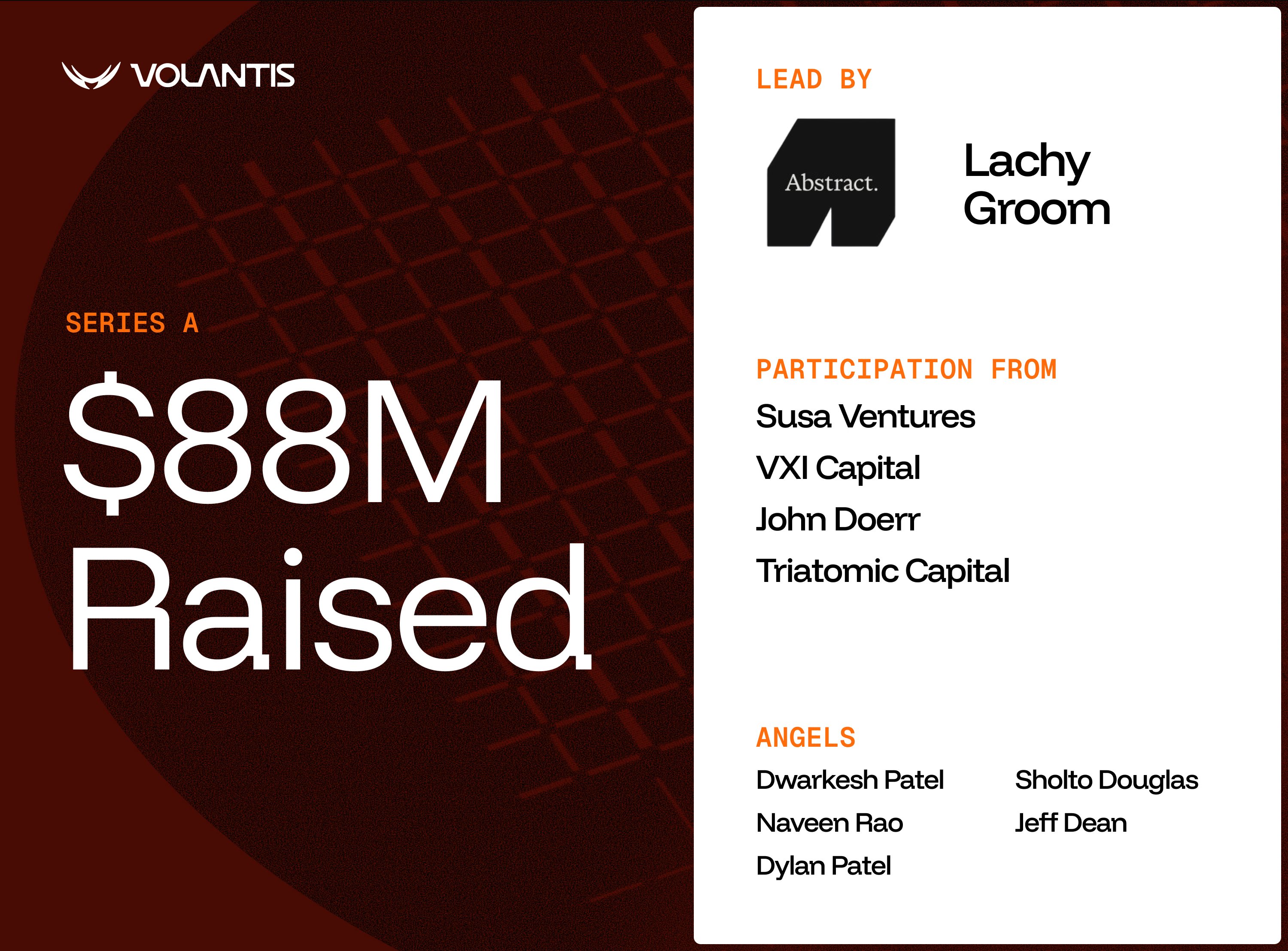
Excited to announce Volantis's $88M Series A.
We are solving Al's memory bottleneck by using optics, enabling chips with huge amounts of fast & cheap memory.
By boosting both the memory bandwidth and capacity per chip by orders of magnitude, we enable ultra-fast inference (up to 10,000 tps/user) for large models (>10T) - with low $/tok to boot.
Initially, this will enable insanely fast agents - think coding agents that finish in minutes or even seconds instead of hours.
More excitingly, optics is a fundamentally scalable way to increase memory systems. Not 2X/year, but by orders of magnitude across new generations. This will enable a structurally new Al industry, including restarting scaling laws, holding entire repos in context windows & more.
Our team has pioneered many core semiconductor technologies: the 1st CoWoS product, early HBM, the 1st silicon photonics CPO systems, the 1st high volume tunable VCSELs, the 1st processors to directly communicate using light & more.
We’ve already sent data >10× farther than equally tiny electrical wires inside a chip package. Our next iteration is already taped out and targets world-record bandwidth density over relevant distances, read more: volantissemi.ai/news-insight…
4
82
18,124
Honestly feel bad for the doomers who can’t help but believe that the end of the world is coming soon
Humanity is far more resilient than one might think. Humans are far more creative and persistent than you can imagine
Even if AI were to ruin every single job that exists today, we will find ways to fill our time and find purpose in work that is very different than anything that exists today
I have never met a single highly successful person who became and stayed wealthy by being a permanent doomer
Just carry on carrying on with your life and leave the doomerism behind for folks who love to complain

The independent credit rating firm Egan Jones declares It’s Over and that the complete disruption of the economy is now “all but certain” thanks to AI.

7
12
133
19,397