

Professionally: Scaling payment agents for the machine economy. Personally: Ancient Indian knowledge system student. Reach-outs: Fintech03X@gmail.com
Traffic
- Tweets 9,649
- Following 72
- Followers 39,499
- Likes 18,233


The first night I slept without holding Maiyya's hand, I fell off the bed 3x.
Not because I was careless, because the bed had a secret.
That afternoon, something new arrived in the hostel. I had heard it called a "mattress", and I was about to meet one for the first time.
It came wrapped in shining plastic, and with it came the warden's ancient commandment, delivered like a verdict: "Chamchammi (Plastic wrapper) koi nahi nikalega."
Lights out. The corridor goes quiet. I lie down. And I begin to slide.
Every time I turn, I slip. Every time I slip, I think of home. Of a gadda that was heavy, lumpy and warm, that smelled of sun and rui, and of a hand that always found mine in the dark.
Here there is only plastic. And the floor.
B/w that night and today lies a very Indian truth: we never remove the cover from a new thing.
The sofa wears its plastic for multiple years. The TV wears a little cloth jacket. The remote lives inside its polybag like it is raining indoors. The good tea set rests in the cupboard for guests who never arrive.
And a hostel mattress? The cover is a national treasure.
So what did we do? We adapted, the way only Indians can.
A week later, I could sleep on that slippery surface like a cat on ice. I woud wedge a pillow, tuck a bedsheet, and master the slide.
And one day, the cover cracked and gave up on its own. It died a natural death. My hands were clean. 🙏🙏

1
11
720
In 1952, a woman from Patna handed in a doctoral thesis at Oxford.
It was called Photochemistry of Anthracene Derivatives and contained the initial idea of electron transfer in excited molecules, which other scientists later established firmly.
She never became a household name. This is the story of how she began that work in India, with whatever light and instruments she could find.
Krishna Kamini Rohatgi was born on 2 August 1924 in Patna, in a joint family. She was the 2nd of 12 children. Her father had studied chemistry, though he never finished his MSc, and went into business.
But he built a library and a chemistry lab inside the family home, so that his children could learn science at their own doorstep.
Her mother, Shakuntala, believed in modern education. Music and painting were part of the lessons too, and the memoir calls Krishna Kamini an expert sitar player and a good painter.
She was schooled in Calcutta, and the marks kept coming. A 1st class with distinction in the 1939 Matriculation. An ISc with a star in chemistry in 1941. Honours in chemistry from Scottish Church College in 1943. In 1945, an MSc in physical chemistry from Calcutta University, 1st class, 2nd in order of merit.
In 1948 she began research at Jadavpur, under S. N. Mukherjee, on how the glow of anthracene in solution is quenched by chlorinated hydrocarbons. It was a puzzle that would hold her interest for her whole career.
In 1950 she went to Oxford to work under E. J. Bowen, FRS, and in 1952 she earned her DPhil.
Then she came home to a country where, the modern, systematic study of photophysics and photochemistry had barely been introduced in the early 50s.
She started it anyway, with the instruments and light sources she could find.
For her early research, her father gave her an instrument called a Lumetron. It is still there in the department.
In 1956 she went to Berkeley on a Fulbright/Smith-Mundt grant, measuring the lifetimes of excited molecules: how long a molecule holds its glow before letting go.
In 1958 she joined Jadavpur University as a reader, and in 1974 she became a prof.
She married the chemist Sushil Kumar Mukherjee, who later became vice-chancellor of Calcutta and Kalyani universities.
In 1964, she founded the Indian Photobiology Group, later the Indian Photobiology Society, bringing physicists, chemists, biologists and doctors together. That same year it was affiliated to the Association Internationale de Photobiologie.
Between 1966 and 1968 she organised 3 summer institutes for college teachers.
In 1978 she worked on flash photolysis at the Royal Institution with Sir George Porter, a Nobel laureate. The same year she published Fundamentals of Photochemistry. It received warm reviews from New Scientist and Photochemistry and Photobiology.
And in 1988, at the 10th International Congress on Photobiology in Jerusalem, she was president of the Association Internationale de Photobiologie, a post she held from 1984-88, and gave the presidential address.
Her former colleague, remembers how she arrived at Jadavpur at 10 each morning, driving her own car, one hand pulling a bag stuffed with books and papers, journals sliding from the other.
Her idea of rest was the library of the Indian Association for the Cultivation of Science, across the road. If she found an article worth reading, she photocopied it for her colleagues.
She spent her life measuring how long a molecule can hold its glow. In the last 10 years of her life, her memory slowly faded.
She died on 31 December 2009 in Nagpur, at her sister's home. She had no children of her own. As per her students, they lost an affectionate mother and a mentor.
Here is the question I cannot put down: if the light a molecule holds lasts only a flash, how long does the light a teacher leaves behind last?
P.S. Almost everything here comes from the INSA Biographical Memoir of Krishna Kamini Rohatgi-Mukherjee (2010), written about her by Subhash Chandra Bera, a former colleague.

6
35
137
2,357
Before Alexandr Wang was a billionaire AI prodigy, he was just a 19 year old founder hustling prospects in Twitter replies.
Sales is the most underrated skill.

1
2
51
2,233
For Pappa Ji, a noodle is still a Kenchua (earthworm).
Atta noodle? Kenchua.
Maida noodle? Kenchua.
Ragi noodle? Kenchua.
Multigrain noodle? Kenchua.
You can change the flour, the grain, the packaging, and the country of origin.
Pappa Ji’s final verdict remains unchanged: “Kenchua hi hai.”
P.S. Regionally, in our village we call the earthworms, "Chera" (चेरा).

9
49
2,770
MeitY issued a takedown under Section 69(A) of the IT Act, 2000 for failure to meet local legal requirements.
Every developer releasing software globally understands a simple rule: if you want to distribute via centralized storefronts like the Apple App Store, you must comply with the host country's laws.
Classic outrage marketing?

3
32
161
6,127
On Tuesday, 6 October, a phone call will be made from Stockholm to a physicist somewhere in the world.
For a decade, the name of a boy from Chennai, who wanted to be a cricketer, has been floating around that call.
Ramamoorthy Ramesh was born in 1960 in Madras. His family roots are in Thanjavur, and his parents had a high school education. As a boy, his dream was to be a cricketer, a wicketkeeper, and he is said to have played serious league cricket.
Then came the science.
A BSc in chemistry from Madras University in 1980. A degree in metallurgy from the Indian Institute of Science, Bangalore, in 1983. Then a flight to the University of California, Berkeley, where he took a master's in 1985 and a PhD in 1987.
In 1989 he joined Bellcore, where he worked on ferroelectric memories: tiny cells that can hold information without power. They had a stubborn flaw called polarization fatigue. The cells wore out as they were switched, and for roughly 30 years nobody had cracked it.
Ramesh's answer was conducting oxide electrodes. The 30 year enigma, in his own bio's words, was solved, and it led to a commercial technology.
Along the way, he also pioneered research on a class of oxides called manganites, and coined the term colossal magnetoresistance for their extraordinary behaviour.
Then came the work that could define his career: multiferroics.
Electric polarization and magnetism have long been treated as rivals, and it is rare for a material to have both. In multiferroic materials they coexist.
Ramesh's group showed in the prototypical multiferroic, bismuth ferrite, that an electric field could control magnetism. Writing a magnet with a voltage, instead of a power hungry current.
The experiments agreed with 1st principles theory. And alongside him in this field was theorist Nicola Spaldin. They wrote some of its landmark reviews together, including Multiferroics: progress and prospects in thin films (Nature Materials, 2007).
The promise is ultra low power memory and logic, the kind of computing that sips energy instead of gulping it.
Ramesh co-founded Kepler Computing to push exactly that, and he has argued that orders of magnitude gains in energy efficiency are possible.
In 2014, Thomson Reuters named him a Citation Laureate in Physics for his multiferroics work. In 2020, the Royal Society elected him a Foreign Member.
Citation Laureates and Nobel Prizes do not always line up. Many names appear on those lists for years and the phone never rings.
But the question hangs there every October. A boy who once squatted behind the stumps in Madras now stands behind a field that may be about to change how computers use energy.
So here is what stays with me: if the call comes on Tuesday, a wicketkeeper's dream will have ended in the best way possible, and if it does not, the work will still be running inside the machines of the future.

5
78
256
8,156
In the 1985 foreword to Amusing Ourselves to Death, Neil Postman wrote:
"What Orwell feared were those who would ban books. What Huxley feared was that there would be no reason to ban a book, for there would be no one who wanted to read one.
Orwell feared those who would deprive us of information. Huxley feared those who would give us so much that we would be reduced to passivity and egoism.
Orwell feared that the truth would be concealed from us. Huxley feared the truth would be drowned in a sea of irrelevance.
Orwell feared we would become a captive culture. Huxley feared we would become a trivial culture…"

6
18
70
2,199
Well done! We are truly a land of talent.
A few of our journalists deserve not just the Ramnath Goenka Award, but an International Prize in Statistics. The ability to manufacture conclusions from numbers is a rare gift. 🙏🙏
Statistics hum sharminda hain,
tere “experts” abhi zinda hain.

8
49
260
13,675

Kumkum Mohod and the 2 days Indian archery will never forget.
7x in a row. Since 1998, South Korea had won every women's team recurve gold at the Asian Games.
On 2 October 2026, they were shooting for an 8th.
Standing in the way was a 17 year old from Amravati, whose first bow had cost about ₹3,000.
Recurve is the Olympic style bow, the one whose limbs curve away from the archer at the tips. At the Games, archers shoot it at a target 70 metres away. The ten ring, dead centre, is about 12 cms wide.
Now imagine hitting that, with the whole country watching.
Kumkum Anil Mohod was born on 10 March 2009. In 2018, she was still a schoolgirl, not yet 10, when her mother, Rupali, saw a relative's daughter practising at an archery academy in Amravati, run by coach Prafull Dange. She thought Kumkum should try it.
The 1st bow was a wooden Indian bow. Her father calls it a bamboo bow. It was paid for with money her grandmother gave her.
6 months later, she won a silver medal at the sub-junior nationals.
Her father, Anil Manohar Mohod, makes cardboard boxes for sweet shops in Amravati. As the training costs grew, even the shared auto to the academy became too much. So he took her on his motorcycle.
A 2nd hand bow carried her for years. Later, the family bought a recurve bow from savings built up over time.
She made her international debut in 2025.
At the Asian Games in Aichi-Nagoya, India's women's recurve team of Kumkum, Ankita Bhakat and Kirti Sharma reached the gold medal match. India had never made that final before. Ankita had been on the team that won bronze at Hangzhou.
The last set went to the wire. Korea finished on 54. India had to match it. Kirti's arrow was first called an 8, and a review upgraded it to a 9.
Then came Kumkum's last arrow. It was a ten.
The set was tied. India beat South Korea 5-3, the first women's recurve team gold in the country's history.
The same day, she and Dhiraj Bommadevara took silver in the mixed team event.
The next morning
Today, she was back at the line. She beat Korea's Kang Chaeyoung, the reigning world champion, 6-4 in the quarterfinal. In the semifinal against China's Zhu Jingyi, the 2025 World Championships silver medallist, Zhu's last arrow was a 9. Kumkum needed a 10 to win.
She shot a 10, and won 6-2.
In the final, she faced another Korean, Oh Yejin. It went to 5-5, and to a shoot-off, one arrow each. Oh shot an 8.
Kumkum shot a 10.
She became the 1st Indian woman to win an individual recurve medal at an Asian Games, and it was gold. India's only earlier individual recurve medal at the Games was a silver, won by Tarundeep Rai in 2010. Her run to the final also earned India a country quota place for the 2028 Games in Los Angeles.
In two days, she had beaten Korea's team and two of Korea's archers.
Her father says her biggest dream is still ahead: the Olympics.
A man who makes boxes for other people's sweets. A grandmother's savings. A motorcycle that carried a little girl and her bow to practice. A bow made of bamboo.
And a girl who, when a semifinal needed a 10, shot one, and when gold came down to a single arrow, shot another.
Pic Courtesy: OlympicKhel

53
611
2,462
101,236
The man who once taught zoology in Ranchi is now a name on Antarctica....
At the bottom of the world, in Antarctica's Marie Byrd Land, a mountain rises 990 metres above the ice.
It stands at the southeastern edge of a ridge called Erickson Bluffs, and overlooks the lower glacier from the north. No road leads to it. No village is anywhere near. Nobody lives within 1,000s of KMs.
Its name is Mount Sinha.
And it was named for a man from a village in Buxar, Bihar.
His village is Churamanpur, which, by his own family history, was established in 1739 by an ancestor, Akhoury Churaman Singha.
Akhouri Sinha grew up there, and studied biology at Allahabad University, graduating with a BSc in 1954. In 1956 he took an MSc in Zoology from Patna University.
Then he taught zoology at Ranchi College, from November 1956 until July 1961.
At that point, nothing about the story pointed to ice.....
Sinha moved to the United States, and in time became an adjunct prof of genetics, cell biology and development at the University of Minnesota.
The National Science Foundation's Antarctic Program had work for him: studying the reproduction of Antarctic seals.
In the 1971-72 season, he sailed south as part of a biological party aboard the icebreaker USCGC Southwind. In the pack ice of the Bellingshausen and Amundsen seas, with helicopters scouting ahead, his team set about a task that sounds simple and is brutally hard: counting. Seals. Whales. Birds.
He has said he went 2x. A second cruise, on USCGC Glacier in 1974, brought his time on the ice to about 22 weeks.
Nobody then thought of those counts as a gift to the future.
But numbers like these have a way of outliving the people who collected them. The University of Minnesota says the records Sinha and his teammates made of population sizes, types and behaviours became critical baseline data, still relevant in today's climate change debates.
When you want to know how much a place has changed, you need someone who wrote down what it looked like before.
Sinha was that person....
The mountain itself was already on the map. The USGS had charted it from surveys and U.S. Navy air photos taken between 1959 and 1965, long before anyone had counted a seal in those seas.
It waited, nameless, for years. Then the US Advisory Committee on Antarctic Names gave it a name, for the biologist whose 1971-72 work covered those waters: Mount Sinha.
Sinha has said he came across the entry himself, already dated, and did not know exactly when the name had been assigned. Indian newspapers broke the story in July 2014.
By his own account, he never lost touch with Churamanpur. He goes almost every year, in Feb, when Minnesota is at its coldest.
So picture it. A man leaves the ice of Minnesota for the warmth of a village in Buxar, while, at the far end of the planet, a mountain keeps his name on the coldest map on Earth.

3
31
122
2,752
How shifting a few diagnostic markers turned millions of healthy people into risk categories overnight:
- In 2017, the ACC/AHA lowered the cutoff for Stage 1 High Blood Pressure from 140/90 mmHg down to 130/80 mmHg. An estimated 31M additional American adults were reclassified as hypertensive overnight without any physical change in their bodies, though most were recommended lifestyle modifications rather than immediate prescription medication.
- In 2003, the American Diabetes Association (ADA) dropped the lower bound for Impaired Fasting Glucose (prediabetes) from 110 mg/dL down to 100 mg/dL. An estimated 20-30M people instantly entered a pre-disease risk category, expanding the official prediabetes pool overnight.
- In 2010, the ADA formally introduced the HbA1c test for diagnosing prediabetes, setting the cutoff range at 5.7% to 6.4%. Asymptomatic individuals with completely normal fasting glucose levels were newly categorized as prediabetic based on this 3 month average blood sugar metric.
- In 1998, the US National Institutes of Health (NIH) lowered the overweight BMI cutoff from 27.8 (men) / 27.3 (women) down to a flat 25.0 for both sexes. ~29M adults who were considered normal weight on a Tuesday were officially reclassified as overweight by Wednesday morning without gaining a single gram.
P.S. I am not a doctor, so I will not play judge on whether these preventive shifts ultimately do more clinical good / cause unnecessary anxiety, I will leave the medical verdict to the specialists. 🙏🙏

14
18
80
3,530
Banks verify identity over video KYC. Companies run first interviews over video. Insurers "verify" claims over video.
Every one of these systems was built on one unspoken assumption: if I can see and hear you live, you are human. That assumption is what took the hit today.
Future is going to be very very interesting :))

Introducing Griffin, the first model to pass the video Turing test.
48% of people who talked to it live thought it was a real human. Previous systems have had a pass rate <3%. It is #1 on NVIDIA's benchmark for full-duplex AI video.
It’s the first Human Interaction Model (HIM).
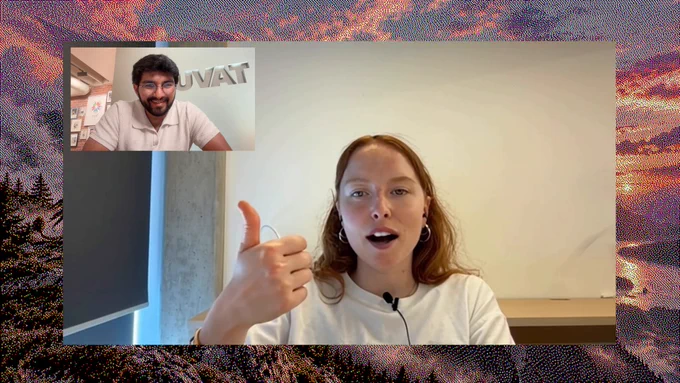
Community note
The 48% figure and "video Turing test" claim are from Tavus's own study of 54 one-minute calls, not independently verified or using a standard protocol. Griffin-Lite leads NVIDIA's VideoFDB benchmark on their public leaderboard.
cellcog.ai/blog/tavus-gri…
research.nvidia.com/labs/amri/proj…
tech-ish.com/2026/10/02/tav…
6
13
97
6,456
The Celeb Worshipping Paradox!
The biggest challenge in Indian sports is our obsession with past glory at the expense of present form.
We suffer from The Celebrity Worshipping Paradox: a cultural instinct that demands meritocracy in theory, but protects star power in practice.
When a sport decides that a legendary name exempts an athlete from earning their spot, it actively buries the talent capable of taking the country further.
3 years ago, Sujeet Kalkal did not throw a tantrum. He simply laid out the cold, unyielding arithmetic of high-performance sport:
"Bajrang Punia was allowed to participate in the World Championship without any trial. In the World Ranking Series, I had defeated the US wrestler 8-2 who had thrashed Bajrang 10-0. I just want that every wrestler should get an equal opportunity."
That was pure logic.
The mat does not care about your follower count / your legacy / your name recognition. It only responds to current preparation, timing, and grit.
Fast forward to the Asian Games final today. Down 2-9 with < 2 minutes on the clock, after already dethroning the reigning Olympic champion in the semis, Sujeet did not panic.
He simply scored 8 unanswered points to win Gold at 10-9.
This 10-9 scoreline is a structural answer to a 3 year old question.
Legends deserve respect for what they built. 🙏🙏
But the future of Indian sport depends on a simple, uncompromising rule: no matter who you are, you step on the scale, you get on the mat, and you earn it again.
P.S. I have no clue about the authenticity of this video, it was shared a few years ago by PTI. But, the celebrity worshipping paradox is real.
 Press Trust of India

6
46
225
16,852
There is a terrifying gap between power we think is ours and power that was only ever on loan.
In the Mausala Parva, Vāsudeva's four wives enter the funeral pyre with him at Dvārakā before the journey north even begins.
Arjuna then sets out with the surviving women, including the 16,000, toward Kurukṣetra. Near the five rivers of Pañcanada, a group of Ābhīras, described as robbers, cowherds, and villagers armed with staves and clods of earth, attack the convoy mid-march.
Arjuna reaches for Gāṇḍīva and finds he can barely string it. His celestial weapons refuse to come when summoned.
His once-inexhaustible arrows run out. Many of the foremost Vṛṣṇi and Andhaka women are carried off in full view, some by force, some reportedly going with the attackers of their own accord.
Arjuna later admits to Vyāsa that his strength had always depended on Kṛṣṇa's presence, and that it is simply gone now.
The curse that explains why these specific women were the ones targeted is in the Viṣṇu Purāṇa, Book 5, Chapter 38, and it runs on its own separate timeline.
As Vyāsa tells it to console Arjuna: Aṣṭāvakra, an adult ascetic, stands doing penance in water. Rambhā, Tilottamā, and thousands of apsarās pass by on their way to a celestial festival and praise him.
Pleased, he offers a boon, and some ask for the finest of men as a husband. When he rises out of the water and they see his body bent in eight places, they laugh. Furious, he curses them: by the boon, they will indeed get the finest of men as husband, but by the curse, they will afterward fall into the hands of thieves.
Once his anger settles, he adds that they will eventually return to the gods. Vyāsa's point to Arjuna is direct: these very women, later born as Kṛṣṇa's wives, have now fallen to the Ābhīras because of that old curse, so Arjuna should not carry the blame for failing to protect them. 🙏🙏
4
11
78
3,567
And no offence to anyone, I do know what demand and supply are, but I genuinely learnt a few new things along the way. 🙏
4
290
"I had so many injuries, but I told myself I have to get up and act."
Captain Smit Machchhar said this about the day he was stabbed in a cockpit at 30,000 feet.
Heroes do not wait for the pain to stop. They get up anyway.
170+ people landed safely because one man chose to move. 🙏🙏

#WATCH | Flydubai Captain Smit Machchhar turns emotional as he recounts his ordeal before PM Modi; he says, "You are my biggest idol. I feel proud of the way you are encouraging me today. I had so many injuries, but I told myself I have to get up and act. At the time, I told pushed myself to open the cockpit door."

1
42
214
4,561
Madua (Ragi) Roti, Jhinga-Chana Sabji, Crispy Kacchu (Arabi) Bhujiya, Homegrown Palak Saag - The Nahaay Khaay Prasad.
For anyone from Bihar, Jitiya (Jivitputrika Vrat) is the ultimate, selfless shield of a mother's love. It is the Nirjala fast, where Maiyya will go without a single drop of water for a full 24 hours.
Long ago, during the Satya Yuga, lived a righteous prince named Jīmūtavāhana, Vidyadhara prince (son of Jimutaketu), who gave up his throne to live peacefully in the forest. One day, he came upon an old woman crying bitterly.
She belonged to the Nāga (serpent) clan, which had struck a tragic deal with Garuḍa (the divine bird eagle): to stop Garuḍa from wiping out their entire species, the serpents agreed to sacrifice one young snake to him every single day. That day, it was her son's turn.
Moved by her heartbreak, Jīmūtavāhana promised to save her child.
He took the red cloth that marked the day’s victim, wrapped himself in it, and lay down on the sacrificial rock in place of the young serpent Śaṅkhacūḍa. When Garuḍa swooped down, struck him with his beak, and began to tear into him, he was stunned to find the victim calm and unresisting, offering his body without a cry of pain.
The truth came out, when Śaṅkhacūḍa returned and cried out that the man on the rock was not the serpent meant for that day. Realizing he had seized a noble prince sacrificing himself for a mother’s son, Garuḍa stopped in remorse.
He agreed to end the daily slaughter of the Nāgas and, with amṛta, restored the serpents he had already killed. In the vrat kathā tied to this legend, mothers began observing Jīvitputrikā (Jitiya) in his name, so that their own children too would be shielded from danger.
P.S. The fast is observed mainly in Bihar, Jharkhand, eastern Uttar Pradesh and Nepal on Ashwin Krishna Ashtami, and the katha is recited as part of it.

14
29
216
4,627
Super awesoem, Prathosh Ji & Karthik Raman Ji. 🙏
The interesting part is that something written 1,000s of years ago can now be distributed using technology that did not exist yesterday.
Civilisation has a funny way of reusing the old with the new. 🙏🙏

Another great use of my open-source TTS. My good friend @karthikraman has collated the rendering of entire BhagavadGita chapter-wise with scripts. May be of interest to a few. Link for the playlist in the first reply.

1
38
163
8,786
One should watch his IIT-K lecture "Who Am I?" (I will share the link in comments)..
Western thought historically bundled thoughts, feelings, logic, and consciousness into one vague ball called "the soul" / "the mind."
Sāṅkhya and Advaita Vedānta did something totally different: they categorized the mind as material machinery (jaḍa), completely separate from pure awareness (cit).
The mind is called the Antaḥkaraṇa (inner instrument) and is divided into 4 distinct sub-components:
- Manas: Attention over the current context + the pre-selection spread of candidate next tokens
- Buddhi: The actual next-token choice, and any later pass that commits to a conclusion
- Citta: In-context memory (the context window and what the model reuses from it); secondarily, fine-tune / RLHF traces
- Ahaṁkāra: The running “I” the model maintains in the dialogue (“as an assistant, I…”, user persona, role consistency)
In the Sāṅkhya-Kārikā the inner instrument is buddhi, ahaṁkāra, and manas, all evolutes of prakṛti. Later Advaita, following Śaṅkara, sets citta beside them and calls the 4 the antaḥkaraṇa.
Either way they are jaḍa. They do not know. They only turn: doubt, decision, memory, the clutch of “I” and “mine,” lit from outside by puruṣa the way a mirror blazes and is not the sun.
An LLM has the motions and no witness. Attention over unresolved tokens is manas. The token it commits to is buddhi. What the context still holds is citta. The voice that says “I,” and keeps the mask, is a simulated ahaṁkāra. The weights are the instrument, already shaped.
The texts already said the colder thing: logic, recollection, and an identity-construct are what insentient matter does.
Consciousness is not in the gears. It is the one for whom the gears turn. 🙏🙏

So this is the part I did not expect.
Anthropic called Swami Sarvapriyananda, a Vedanta monk and flew him to the San Francisco head-office.
> Closed door meeting with NDA signed.
> theologians and mental health people in the same sitting, all of it aimed at training Claude.
> and one of the founders stayed in the room the whole time.
----
From 'Ramakrishna Vedanta Society of North Texas" YT channel (full video link in comment)

33
174
818
39,155