

AI → Money → Freedom Building in public.
- Tweets 326
- Following 83
- Followers 36
- Likes 373


Same prompt, two models: a soap bubble you can poke, blow, split and pop. Astra looks better. Opus feels better.
Astra 6: 35 min, $5.90. Opus 5.5: 38 min, $4.30. Both land on almost the same toolbox, film thickness, surface tension, sound, and both look great in the clip. Astra's frames read like a product page.
The tester's verdict is all about touch: Opus stretches under your finger, wobbles when you blow on it, and the pop has real sound and a tiny spray. Astra's just kind of floats there being pretty.
Looks vs feel, for $1.60 less. Which one would you ship?
You can pop the bubbles yourself, link below.

3
6
440
Saw this stained-glass hibiscus test and it's been bugging me. Same prompt, same model, three days apart, and I honestly can't decide if Opus 5.5 got nerfed or improved.
Sept 30 keeps the botanical detail: visible stamen, veins in every petal, loose petals that read as a hibiscus.
Oct 3 is more stained glass, segmented translucent panels, glossy glass leaves, richer color. But the stamen is gone and the bloom looks closer to a rose.
More stained glass, less hibiscus. Which one would you pick?


Same exact prompt. Same model. Four days apart. The second city looks like a different render pipeline entirely.
GPT-6.1 Sol felt suspiciously good today, good enough to actually go back and rerun the Sept 29 version side by side. The Oct 2 city holds its impossible folding geometry with cleaner shadows, tighter building detail, and a smoother fold where the street bends back on itself overhead, the kind of upgrade that usually comes with a version number attached, not silently between two Tuesdays.
Nobody announced a change. The model just quietly got better at the exact same task, and now sits close enough to Astra that the gap is starting to feel like a rounding error.
Whatever's going on behind the scenes, this is the better version.

4
348
someone just built a Waymo teleoperator using a San Francisco map.
you can try it here: teleoperator.mindblown.ai
stack: Fable 5.5 + Three.js
yeah, i know it’s AI and basically vibecoded 😂
but now i’m curious — can you actually make a profitable Waymo trip with it?
i couldn’t. can you?

1
12
1,254
Same exact prompt. Same model. Four days apart. The second city looks like a different render pipeline entirely.
GPT-6.1 Sol felt suspiciously good today, good enough to actually go back and rerun the Sept 29 version side by side. The Oct 2 city holds its impossible folding geometry with cleaner shadows, tighter building detail, and a smoother fold where the street bends back on itself overhead, the kind of upgrade that usually comes with a version number attached, not silently between two Tuesdays.
Nobody announced a change. The model just quietly got better at the exact same task, and now sits close enough to Astra that the gap is starting to feel like a rounding error.
Whatever's going on behind the scenes, this is the better version.
7
1
37
3,480
Another Gemini 4 Argon demo making the rounds, this time a Minecraft-style build running in real time, blocks, mobs, a full hotbar, nothing simplified for the clip.
Worth separating two things people keep merging into one claim. The capability is real: Argon is genuinely competitive with GPT-6 Astra and Opus 5.5 on real-world tasks, we've already seen the benchmark numbers back that up. "AGI" is not a real claim, it's a caption. A model that wins most but not all of 18 published benchmarks against its closest rivals is a strong model, not a different category of thing.
The demo is legitimately impressive on its own terms. It doesn't need the AGI label to be worth paying attention to.

1
5
508

[soft, breathy, flirtatious] I've waited so long for you. [light chuckle] That's not a human actor, that's a script direction, and the model followed every bracket.
ElevenLabs v4 just landed on Higgsfield. Inline tags like [whispers], [light chuckle], [intimate whisper] now shape delivery directly inside the script instead of hoping the model infers tone from punctuation. Languages jumped to 90+, up from 70 in v3, and ElevenLabs says it's currently ranked #1 on Artificial Analysis, preferred over competing models in roughly 3 out of 4 blind listening tests.
The part that actually matters for anyone building characters: voice identity now holds steady across a multi-speaker scene instead of drifting line to line. Scripted emotion, not emotion left to chance.


Introducing Eleven v4 and Eleven v4 Turbo, our fastest and most emotive voice models yet.
Ranked #1 by Artificial Analysis.

1
4
473
Same hibiscus, two renders, and the "not even close" verdict doesn't quite match what's actually on screen.
Opus 5.5 Extra keeps the botanical detail: visible vein structure running through each petal, a proper stamen and pistil reaching out, a stem with real curve and a second leaf cluster lower down. Astra High goes for smoother, more painterly petal shading, softer color blending, but loses the fine structural detail, flatter leaves, no visible vein work, a stem that reads more like a prop than a plant.
If the bar is "looks good from a distance," Astra High holds up fine. If the bar is botanical accuracy, Opus 5.5 is doing more work here, not less. Worth looking past the caption before taking the verdict at face value.


after Opus 5.5 it actually hurts to look at anything GPT 6 Astra designs
gave both models the exact same prompt: "make a dynamic 15-second motion graphics video that shows what an incredible motion designer you are, like it's your showreel for a résumé. go all out."
not even close, see for yourselves. GPT is honestly terrible here, openai just has awful taste

4
400
Same prompt: simulate a Mentos dropped into a bottle of Coke. One model is still setting up the drop. The other has already blown the cap off.
Opus 5.5 treats it like an actual lab setup, a suspended Mentos on a rig, a stand, a controlled release sequence with scrubbable playback down to 0.25x. GPT-6.1 Sol skips straight to the chaos, a full eruption mid-spray, droplets scattering, the bottle already tipping from the force of it.
Neither read is wrong, they're just answering different questions. One simulates the setup. The other simulates the reaction. Same two words in the prompt, two completely different guesses at what "physics" was actually asking for.


GPT-6.1 Sol: near-Astra intelligence for a fifth of the price.
It’s the most cost-efficient model for its performance available today.

4
534
Gemini 4 Argon just matched GPT-6 Astra on Artificial Analysis's Intelligence Index, at 60% of the cost per task.
Argon: $1.99 per task. Astra: $3.26. Opus 5.5: $5.98, nearly triple.
The catch worth knowing before you build around this: that $1.99 is introductory pricing. Google hasn't said when the discount ends, and the math already shows where it lands after, $3.98 per task, roughly back in line with everyone else.
Right now it's the best price-to-intelligence ratio on the board. Whether it stays that way is a Google pricing decision, not a model capability one.


Introducing Gemini 4 Argon – our new frontier model.
It’s built for complex workflows across coding, enterprise knowledge work, and cybersecurity defense – rolling out today to a set of trusted testers through our Fairwind Program.

4
368

Same structured workflow, same target: a mechanical steampunk whale, built in Blender and running in Three.js. What actually separates the two models here isn't visual style, it's the price tag behind it.
Opus 5.5 burned 2.5M output tokens, about $156, and came back with a denser rig, gear systems and skeletal framework visible through the hull, animation that reads as genuinely mechanical rather than just a moving mesh.
Sonnet 5.5 finished at 1.68M tokens, roughly $109, noticeably cheaper, and still held its own.
The honest read: Sonnet is the better deal for most jobs. Opus is what you reach for when the richer model and the better animation are worth the extra $47.


Claude Sonnet 5.5 is out! We wrote a guide for building with it:
• choosing between Sonnet 5.5 and Opus 5.5
• migrating from Sonnet 5 and tuning effort
• using it in Claude Code
claude.dev/blog/building-wit…
Community note
The reference photograph shown in this video was originally posted by @IceSolst. The photographer stated it was used without credit or permission.
x.com/IceSolst/statu… x.com/IceSolst/statu…
1
4
336
Same brief, built live in the browser with Three.js: a top-down shooter, objective tracker, health bars, the works. GPT-6.1 Sol and Claude Sonnet 5.5, side by side.
Sol's version leans hard into neon and chromatic aberration, glowing tracer lines, a hive-clearing objective that reads like a twin-stick arcade shooter. Sonnet 5.5 goes for a colder, more tactical read, a lockdown timer, tile-based cover, minimap and loadout HUD pulled tight to the corners.
Both are fully playable, not concept art. The real tell isn't which one looks better, it's that neither model defaulted to the same genre instinct from an identical prompt.


GPT-6.1 Sol is here.
Upgraded with stronger agentic coding and computer use, near-Astra performance, and cached input at a 95% discount to standard input pricing.
GPT-6.1 Sol is built for complex refactors, deep codebase investigations, and long-running agents across apps.

1
8
683
Same prompt: build a third-person submarine chase game. Same canyon, same target, same HUD layout. What's different is how each one commits to the scene.
GPT-6.1 Sol's version leans warmer and more saturated, coral catches the light, the canyon walls have real texture and depth, the HUD reads clean against it. Opus 5.5's take is cooler and hazier, more like an actual dive at depth, less contrast between the sub and the rock formations around it.
Neither is broken. One decided the scene should feel vivid and readable at speed. The other decided it should feel like pressure and low visibility. That's not a bug in either model, that's two different interpretations of the same three words in a prompt.
Made on Higgsfield.

GPT-6.1 Sol: near-Astra intelligence for a fifth of the price.
It’s the most cost-efficient model for its performance available today.
1
4
464
Six tools, one pipeline, and the only thing left for a human to do by hand is the creative call, not the execution.
Script execution and automation runs through Claude Opus 5.5. Visual assets come out of Higgsfield. 3D scenes and camera work get built in Blender. Animation and compositing land in After Effects. Music comes from Suno, sound effects from Soundly.
The brief in this one is oddly specific and that's exactly why it works: mixed-media collage, torn paper, halftone, marker scribbles, huge condensed type, a tight 2-3 color palette, beat-driven with a new idea every 0.3 to 0.6 seconds. That's not a vague mood board, that's an actual spec an agent can execute against.
Bookmark this for your next motion project.


1
3
360
Motion design in 2026, the actual workflow:
Open Claude Opus 5.5. Launch After Effects. Let Claude run the scripts through Higgsfield. Come back in 30 minutes.
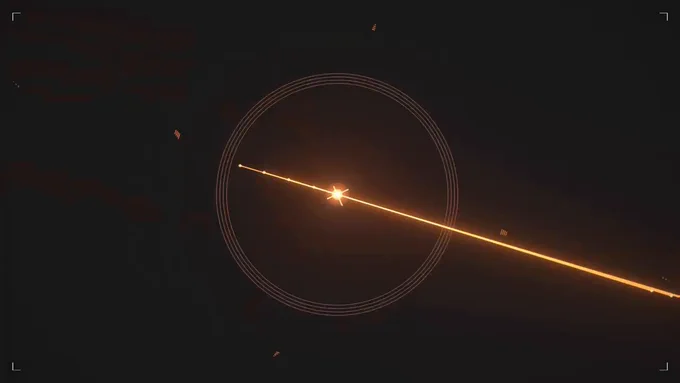
What's actually happening behind that gap isn't magic, it's an agent reading a reference file, describing back what it's carrying over ("neon line graphics on black, one continuous camera move"), then launching four sub-agents in parallel: scene setup, camera path, glow pass, final render. You can watch it narrate its own plan before it touches a single keyframe.
Then you review the render, adjust pacing, fix what's off, and send it back for another pass. Repeat until it's actually right.
The editing didn't disappear. The keyframe-by-keyframe grind did.


2
1
3
526
Four models, one prompt, one rocket launch. The smoke alone tells you everything.
Ran through Higgsfield to line all four up side by side. GPT-6 Astra's plume billows soft and rounded, almost cartoonish. Opus 5.5 goes for scale instead, a full launch tower, a named rocket (AURORA), smoke that actually looks displaced by thrust rather than just decorative. GPT-6 Sol keeps it compact and stylized, more toy diorama than launch pad. GPT-6 Luna leans darker and grittier, the exhaust reading almost like debris instead of vapor.
Same three words in the prompt, four completely different instincts about what a rocket launch should feel like. That gap is the actual benchmark, not the spec sheet.


WTF?
Made with claude OPUS 5.5
Prompt
"make a dynamic 15-second motion graphics video that shows what an incredible motion designer you are, like it's your showreel for a résumé. go all out."
That's it..

2
6
436
SpaceX AI engineer Nick Miller said something that really stuck with me:
"99% of people use one GrokBot. The top 1% build teams of bots that collaborate."
His setup isn't one assistant — it's 20+ GrokBot agents working together in a loop.
Chief of Staff bot
Product Manager bot
QA bot
15+ specialized worker agents
That's what the next generation AI stack looks like.
He breaks the entire system down in a 27-minute demo — honestly, it's more valuable than most $500 agent engineering courses.
Skip Netflix tonight.
Watch the demo first, then read the article below to learn how to build your own GrokBot agent fleet.


5
275
Water you can see straight through to the sandy floor beneath it. A sunset that actually bleeds orange into the clouds instead of just tinting them. Torchlight that pools on the ground the way real light does.
This is Opus 5.5 generating a Minecraft-style world from a prompt, no comparison needed this time. It doesn't need a competitor standing next to it to make the point.
Same model that shipped this week at 40% less cost and 30% faster than its predecessor. This is what that budget actually buys.


Introducing Claude Opus 5.5, the first model in our new Claude 5.5 family.
It performs at the level of Claude Fable 5.1 for most tasks, and costs 40% less to run than Opus 5.

3
239