

🐍 Python | 🤖 AI/ML | Software Engineer | Practical roadmaps • Hands-on tutorials | Freelance & collabs open | DM 📩
Pune, India
- Tweets 66,924
- Following 666
- Followers 31,843
- Likes 33,842


Pinned Tweet

Building a finance AI agent that you can actually trust is a very different problem. You need more than an LLM and a clever prompt.
You need RAG, tool use, memory, reasoning, multi-agent architectures, evaluation, guardrails, observability, governance and a way to balance reliability, efficiency and cost.
That's what caught my attention about AI Agents for Finance.
'Building AI Agents For Finance' takes a hands-on Python approach to building financial agents with Claude and OpenAI models, and then goes much deeper.
You get into:
• Agentic RAG and deep research
• ReAct, reflection and other reasoning patterns
• Multi-agent architectures
• Fundamental analysis and trading systems
• Insurance and compliance workflows
• Agent evaluation and LLM judges
• Tracing and observability
• Guardrails and human oversight
• Deployment, versioning and governance
What I like about this book is that it doesn't stop once the agent works. It gets into the questions that come next:
• Can you evaluate it?
• Can you observe it?
• Can you make it reliable?
• And what happens when things go wrong?
Especially in finance, those questions matter just as much as building the agent itself.
If you're working with AI agents, Python, finance or production AI systems, this is a book worth having on your radar.
You can grab a copy here link.amazon/B09iExZ7K

Paid partnership (ad)
27
8
78
5,904
What did you guys do this long weekend ??
An old photo I took during the Ganpati festival trip back home.

3
21
644
If you are an Indian student looking at pursuing MS Abroad, checkout
Paste your SOP and get a 0-100 score with line-level flags. Then paste the university list your consultant gave you and see an honest verdict on every school
truthpathms.com/
1
8
572


We turn text into tokens and embeddings for AI to understand it.
How does AI turn pixels into something it can understand?

4
1
14
854
There is a strange assumption in career development that you need to fix everything you're bad at.
So you make a list.
Communication.
Public speaking.
Leadership.
Technical depth.
Networking.
Time management.
Negotiation.
Then you spend years trying to turn every weakness into a strength. But not every weakness deserves that much attention.
Some weaknesses are worth improving because they limit your effectiveness. Others can simply be managed, delegated, or compensated for by building stronger complementary skills.
You don't need to become good at everything.
You need to become exceptionally useful at something while becoming competent enough in the areas that would otherwise hold you back.
3
1
28
1,056
How's your debugging flow post AI ?
Just hand LLM an issue and associated tools or actually try to work with an LLM/AI together?
14
20
1,195
Some of the most valuable things you do at work won't show up in a performance dashboard.
The incident you prevented. The documentation that helped someone solve a problem without you. The junior engineer you helped become independent. The messy process you quietly simplified.
There is no notification saying, "This made the team better."
And that's part of why experienced engineers sometimes underestimate this work. They're looking for visible accomplishments while their biggest contribution is making everyone around them more effective.
Not all career capital is measurable immediately.
Some of it compounds quietly.
4
1
14
992
This is a fascinating step toward making human-computer interaction feel truly natural.
AI needs to understand not just what we say, but how we communicate through expression, tone, and context, opens up some incredible possibilities.
Unlimited potential on this idea

Yesterday we previewed Griffin, a Human Interaction Model capable of seeing, hearing, sounding, and looking like a human does. There have been a lot of questions, so I wanted to take a moment to share our thoughts.
By way of introduction: Tavus is a research lab focused on enabling machines to meet us where we are, and to understand the nuances of how we communicate beyond words.
Griffin, our latest model, isn’t publicly available yet. Yesterday’s announcement was a limited research preview to demonstrate what the model is capable of. With AI progressing so quickly, we prefer to share breakthroughs openly and in real-time as we work on a safe public release.
Face-to-face is how we evolutionarily communicate, it carries the most meaning and intent, and we want computers to be able to help with work that benefits from that emotional understanding, expression, and immersion. Some examples of the kinds of use cases we care deeply about:
- A tutor that can build understanding of how a student learns, see exactly when there is confusion or disengagement, and adapt the lesson to fit them.
- A health expert that can answer any questions about your upcoming appointment or prescription, at the pace you want, at any time you need, even on a weekend.
- A language coach that you can practice speaking with, that can correct your movement and pronunciation, and help build confidence to have real conversations
- Or the perfect assistant for everyone, that understands intent, knows how you work and remembers what matters.
We’re working with partners on safeguards and systems for disclosure, as well as inviting discussions with officials around wider regulation and safe use. People will always know they’re interacting with AI, while providing an interface that removes the need to ‘speak computer’.
We believe in a future where computers understand us well enough to make technology more accessible, more useful, and make us more capable as humans. That is the world we want to build, and we understand the responsibility to do so safely.
3
9
996
Jaydeep retweeted

Yesterday we previewed Griffin, a Human Interaction Model capable of seeing, hearing, sounding, and looking like a human does. There have been a lot of questions, so I wanted to take a moment to share our thoughts.
By way of introduction: Tavus is a research lab focused on enabling machines to meet us where we are, and to understand the nuances of how we communicate beyond words.
Griffin, our latest model, isn’t publicly available yet. Yesterday’s announcement was a limited research preview to demonstrate what the model is capable of. With AI progressing so quickly, we prefer to share breakthroughs openly and in real-time as we work on a safe public release.
Face-to-face is how we evolutionarily communicate, it carries the most meaning and intent, and we want computers to be able to help with work that benefits from that emotional understanding, expression, and immersion. Some examples of the kinds of use cases we care deeply about:
- A tutor that can build understanding of how a student learns, see exactly when there is confusion or disengagement, and adapt the lesson to fit them.
- A health expert that can answer any questions about your upcoming appointment or prescription, at the pace you want, at any time you need, even on a weekend.
- A language coach that you can practice speaking with, that can correct your movement and pronunciation, and help build confidence to have real conversations
- Or the perfect assistant for everyone, that understands intent, knows how you work and remembers what matters.
We’re working with partners on safeguards and systems for disclosure, as well as inviting discussions with officials around wider regulation and safe use. People will always know they’re interacting with AI, while providing an interface that removes the need to ‘speak computer’.
We believe in a future where computers understand us well enough to make technology more accessible, more useful, and make us more capable as humans. That is the world we want to build, and we understand the responsibility to do so safely.

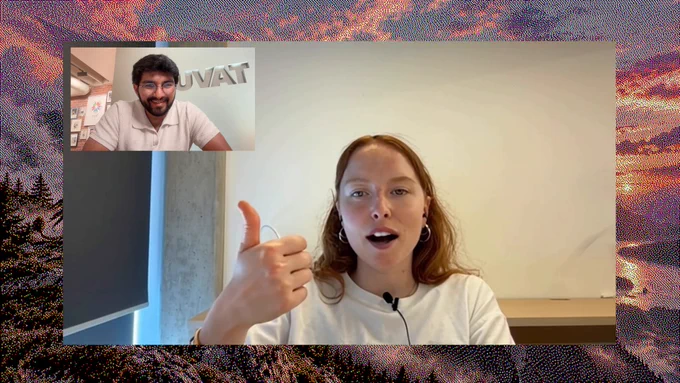
Introducing Griffin, the first model to pass the video Turing test.
48% of people who talked to it live thought it was a real human. Previous systems have had a pass rate <3%. It is #1 on NVIDIA's benchmark for full-duplex AI video.
It’s the first Human Interaction Model (HIM).
Community note
The 48% figure and "video Turing test" claim are from Tavus's own study of 54 one-minute calls, not independently verified or using a standard protocol. Griffin-Lite leads NVIDIA's VideoFDB benchmark on their public leaderboard.
cellcog.ai/blog/tavus-gri…
research.nvidia.com/labs/amri/proj…
tech-ish.com/2026/10/02/tav…
310
124
577
281,178
Do consider supporting my work here by subscribing
Its a small amount $1/month but motivates me to keep creating on this platform
x.lingyaoai.com/_jaydeepkarale/creator…
2
24
1,108
Jaydeep retweeted

☁️ 𝗖𝗹𝗼𝘂𝗱 𝗖𝗼𝗺𝗽𝘂𝘁𝗶𝗻𝗴 𝟭𝟬𝟭: 𝗪𝗵𝗮𝘁 𝗜𝘁 𝗜𝘀, 𝗪𝗵𝘆 𝗪𝗲 𝗡𝗲𝗲𝗱 𝗜𝘁 & 𝗛𝗼𝘄 𝗜𝘁 𝗪𝗼𝗿𝗸𝘀 🧵
📌 𝗪𝗵𝗮𝘁 𝗶𝘀 𝗰𝗹𝗼𝘂𝗱 𝗰𝗼𝗺𝗽𝘂𝘁𝗶𝗻𝗴?
Cloud computing is the on-demand delivery of computing resources over the internet.
Instead of owning and managing physical infrastructure yourself, you rent the resources as and when needed from providers like AWS, Azure, or GCP.
➡️ 𝗧𝗵𝗲𝘀𝗲 𝗿𝗲𝘀𝗼𝘂𝗿𝗰𝗲𝘀 𝗰𝗮𝗻 𝗶𝗻𝗰𝗹𝘂𝗱𝗲:
🔹 Compute
🔹 Storage
🔹 Databases
🔹 Networking
🔹 Security
🔹 Monitoring
🔹 AI/ML services
🔹 Application services
📌 𝗪𝗵𝘆 𝗱𝗼 𝘄𝗲 𝗻𝗲𝗲𝗱 𝗰𝗹𝗼𝘂𝗱 𝗰𝗼𝗺𝗽𝘂𝘁𝗶𝗻𝗴?
➡️ 𝗧𝗿𝗮𝗱𝗶𝘁𝗶𝗼𝗻𝗮𝗹 𝗶𝗻𝗳𝗿𝗮𝘀𝘁𝗿𝘂𝗰𝘁𝘂𝗿𝗲 𝗵𝗮𝘀 𝘀𝗲𝘃𝗲𝗿𝗮𝗹 𝗰𝗵𝗮𝗹𝗹𝗲𝗻𝗴𝗲𝘀:
❌ High upfront hardware costs
❌ Long provisioning times
❌ Hardware maintenance
❌ Difficult scalability
❌ Data centre management
❌ Capacity planning challenges
➡️ 𝗖𝗹𝗼𝘂𝗱 𝗰𝗵𝗮𝗻𝗴𝗲𝘀 𝘁𝗵𝗲 𝗺𝗼𝗱𝗲𝗹:
➜ Need more servers? → Provision them.
➜ Need less capacity? → Scale down.
➜ Need infrastructure in another region? → Deploy it.
💡 𝗧𝗵𝗲 𝗴𝗼𝗮𝗹 𝗶𝘀 𝘀𝗶𝗺𝗽𝗹𝗲: 𝗚𝗲𝘁 𝗶𝗻𝗳𝗿𝗮𝘀𝘁𝗿𝘂𝗰𝘁𝘂𝗿𝗲 𝘄𝗵𝗲𝗻 𝘆𝗼𝘂 𝗻𝗲𝗲𝗱 𝗶𝘁, 𝘀𝗰𝗮𝗹𝗲 𝗶𝘁 𝘄𝗵𝗲𝗻 𝗿𝗲𝗾𝘂𝗶𝗿𝗲𝗱, 𝗮𝗻𝗱 𝗽𝗮𝘆 𝗯𝗮𝘀𝗲𝗱 𝗼𝗻 𝘂𝘀𝗮𝗴𝗲.
📌 𝗪𝗵𝘆 𝗖𝗼𝗺𝗽𝗮𝗻𝗶𝗲𝘀 𝗠𝗼𝘃𝗲𝗱 𝘁𝗼 𝘁𝗵𝗲 𝗖𝗹𝗼𝘂𝗱
➜ Cost Efficiency
➜ Need for faster time-to-market
➜ Improve availability and disaster recovery
➜ AI, machine learning, and big data workloads
➜ Pay for use.
💡 𝗖𝗼𝗺𝗽𝗮𝗻𝗶𝗲𝘀 𝗱𝗶𝗱𝗻’𝘁 𝗺𝗼𝘃𝗲 𝗳𝗼𝗿 𝗵𝘆𝗽𝗲. 𝗧𝗵𝗲𝘆 𝗻𝗲𝗲𝗱𝗲𝗱 𝗳𝗮𝘀𝘁𝗲𝗿 𝘀𝗵𝗶𝗽𝗽𝗶𝗻𝗴, 𝗴𝗹𝗼𝗯𝗮𝗹 𝗿𝗲𝗮𝗰𝗵, 𝗹𝗲𝘀𝘀 𝗼𝗽𝘀 𝘁𝗼𝗶𝗹, 𝗮𝗻𝗱 𝗺𝗮𝗻𝗮𝗴𝗲𝗱 𝘀𝗲𝗿𝘃𝗶𝗰𝗲𝘀.
What’s been your biggest lesson moving to (or working in) the cloud? Drop it below. 👇
#CloudComputing #CloudEngineer #AWS #Azure #GCP #DevOps #SRE #Infrastructure #ksops #LearnInPublic

4
1
7
357


So someone has reported a copyright infringement against these two posts.
The fact that I have to defend this is already bad but the process to defend it is even atrocious
The reset password page on @X shows internal error even though the password is reset
When I submit the appeal the screen just gets stuck at "Preparing verification"
The level of respect wnd support this app has for creators is shocking @premium


11
22
1,402
Been stuck at this page since 25 minutes and this is after I submitted the appeal not before
So "preparing verification" makes no sense

2
2
203
Jaydeep retweeted
Building a finance AI agent that you can actually trust is a very different problem. You need more than an LLM and a clever prompt.
You need RAG, tool use, memory, reasoning, multi-agent architectures, evaluation, guardrails, observability, governance and a way to balance reliability, efficiency and cost.
That's what caught my attention about AI Agents for Finance.
'Building AI Agents For Finance' takes a hands-on Python approach to building financial agents with Claude and OpenAI models, and then goes much deeper.
You get into:
• Agentic RAG and deep research
• ReAct, reflection and other reasoning patterns
• Multi-agent architectures
• Fundamental analysis and trading systems
• Insurance and compliance workflows
• Agent evaluation and LLM judges
• Tracing and observability
• Guardrails and human oversight
• Deployment, versioning and governance
What I like about this book is that it doesn't stop once the agent works. It gets into the questions that come next:
• Can you evaluate it?
• Can you observe it?
• Can you make it reliable?
• And what happens when things go wrong?
Especially in finance, those questions matter just as much as building the agent itself.
If you're working with AI agents, Python, finance or production AI systems, this is a book worth having on your radar.
You can grab a copy here link.amazon/B09iExZ7K
Paid partnership (ad)
27
8
78
5,904
