









Pinned Tweet

"First do it, then do it right, then do it better."
Just start. The journey to success often begins with a single step, but that first step can be the hardest to take. It's easy to get caught up in the fear of failure or the desire for perfection, but I hope this quote I first shared in 2013 can be a reminder of the importance of simply getting started as we go into 2024.
Just Start Somewhere
"Start slow if you have to. Start small if you have to. Start privately if you have to. Just start." - James Clear
Taking that first step doesn't require perfection or immediate mastery. The key is to overcome inertia and take action, as this action will lead to progress, learning, and (if you’re lucky and consistent) ultimately success.
When you start, you allow yourself the opportunity to grow, adapt, and move forward.
The Power of Starting
Beginning a new project or habit often feels daunting. According to psychologists, we tend to overestimate the pain of starting and underestimate our ability to persist.
However, studies show that "small starts" predict eventual success better than initial enthusiasm or early progress. This phenomenon is known as the fresh start effect - taking the first step energizes us and bolsters motivation.
So focus on starting without putting pressure on perfection. Progress and course corrections will follow.
First, Do It: Embrace the MVP Mindset
Doing it = get the simplest MVP out.
A Minimum Viable Product (MVP) represents the simplest version of a product or idea that allows you to test, gather feedback, and iterate.
By embracing this mindset (just get something done - it's OK if rough, a prototype, a draft), you focus on progress over perfection, understanding that getting something out into the world is far more valuable than waiting for the perfect moment.
Expand Your Comfort Zone
Venturing outside one's comfort zone can elicit fears of failure. Leaning into discomfort not only builds confidence and skills, but research shows it makes us more receptive to learning. Recognize that fear is often the mind's way of urging us to grow. Don't let it stop you from progressing.
Then, Do It Right: Refine and Correct
Doing it right = fix correctness issues.
Once you've taken that first step and put your MVP out into the world, it's time to refine and correct. This stage is about learning from feedback, identifying areas of improvement, and making adjustments accordingly.
It's a chance to iterate on your idea, ensuring that it meets the needs of your audience or customers while aligning with your vision.
Cultivate Curiosity and Resilience
Meeting new challenges with curiosity and resilience makes venturing outside our comfort zone more sustainable and enjoyable. Cultivate curiosity about growth opportunities and your capacity to rise to them. Set mini-challenges to incrementally expand your horizons.
When facing inevitable setbacks, avoid self-criticism and tap into resilience - the ability to recover, learn and continue progressing.
Self-compassion, adaptability and maintaining perspective are key here. With consistent effort, you build confidence in your ability to start, stumble, learn and work toward mastery.
Finally, Do It Better: Strive for Continuous Improvement
"Doing it better = iterate towards an ideal end-state (e.g., make it fast)."
The journey doesn't end with merely doing it right.
The final step is to continuously improve, striving for excellence and growth.
By iterating towards an ideal end-state, you demonstrate a commitment to progress, ensuring that your product, idea, or project remains relevant, innovative, and successful.
Set New Goalposts
As you improve, have a clear idea of when you are “done” or update your goalposts. Elite athletes turn small gains into competitive edges via the aggregation of marginal gains. Identify areas of potential improvement and set measurable stretch goals, from increasing efficiency to enhancing user delight.
Overcoming the Greatest Barrier to Progress
"The greatest barrier to progress is not lack of resources or talent, but fear of failure."
Recognizing that fear of failure is the most significant obstacle in the pursuit of success allows you to confront it head-on.
By acknowledging this fear, you can focus on taking that first step, knowing that once the ball starts rolling, it becomes much easier to keep it in motion.
Remember that starting is more than half the battle. Don't wait until you feel ready, because the perfect moment may never come.
The Bottom Line
Rather than striving for perfect execution, embrace the power of starting - put forth an MVP, soft launch an initiative, or set a milestone. Progress begets motivation. By simply starting, you open the door to growth and innovation. The rest will follow.
Embrace the power of starting and then iterating until you're happy.

ALT First do it, then do it right, then do it better.
136
713
3,622
640,076
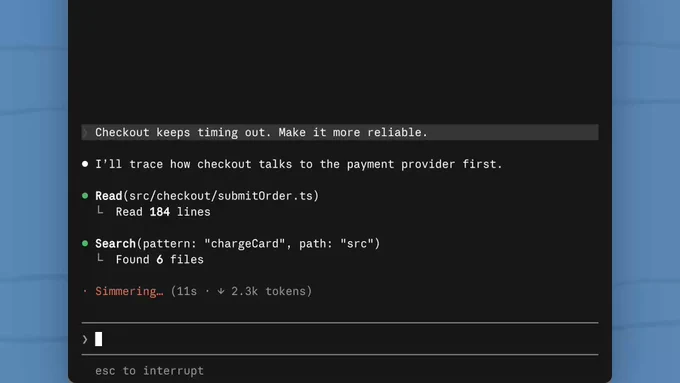
"You should know" is a useful plugin for Claude Code that lets you know important info you might have missed.
Enable with: /plugin enable cc-plugin-you-should-know@builtin
Another great use of mods!

We're adding a new plugin to Claude Code: You should Know.
It scans Claude's output for important information you might miss to help keep you in the loop.
Enable it with:
/plugin enable cc-plugin-you-should-know@builtin
22
4
160
14,198
Addy Osmani retweeted

A few of you asked what mods are, here's a quick walkthrough! They’re really just plugins with a few special functions that let your code run inside Claude Code, like middleware.
(don't worry, you can just ask Claude to write them for you 😛)

104
83
1,617
92,236
Addy Osmani retweeted
Small change, but "/claude-api prompt-audit" is now also "/checkup prompt-audit"
The name made it sound API-only, even though it always worked on your Claude Code setup. It checks your CLAUDE.md, skills and agents for instructions your model doesn't need anymore. Really useful!

91
110
1,645
165,582
Introducing Claude Code mods! Customize how it looks and works just by prompting it.
claude.dev/blog/getting-star…
A mod is a small JS/TS file that runs in your session. Watch events, rewrite behavior or draw UI. Share it as a plugin with others. Make Claude Code your own.
You can now mod Claude Code:
- Change how it behaves
- Customize the UI
- Swap in your own features
Write one with a few lines of TypeScript, or have Claude build it for you. Mods ship inside plugins, so you install them with /plugin in the CLI or desktop app.
A few examples:

57
7
284
34,752
We shipped claude.dev! a new home for developers building with Claude.
Already live: how we made the Claude web app 3x faster, how to be effective with Opus 5.5, automating eval hillclimbing with Claude and much more.
Lots more tips and articles soon 🙏
Claude.dev is our new home for developers building with Claude.
You'll find engineering deep dives, Claude Code and API guides, tips from the teams building Claude, and some fun easter eggs.

85
72
1,309
172,842
Addy Osmani retweeted

Claude can now help you build evaluations and hillclimb on them.
In this article, we share guidance on eval design & skills that Claude Code can use to improve your applications.
claude.dev/blog/automating-e…
182
630
9,376
2,061,338
Addy Osmani retweeted
Claude Sonnet 5.5 is out! We wrote a guide for building with it:
• choosing between Sonnet 5.5 and Opus 5.5
• migrating from Sonnet 5 and tuning effort
• using it in Claude Code
claude.dev/blog/building-wit…
Community note
The reference photograph shown in this video was originally posted by @IceSolst. The photographer stated it was used without credit or permission.
x.com/IceSolst/statu… x.com/IceSolst/statu…
277
616
11,179
1,256,475
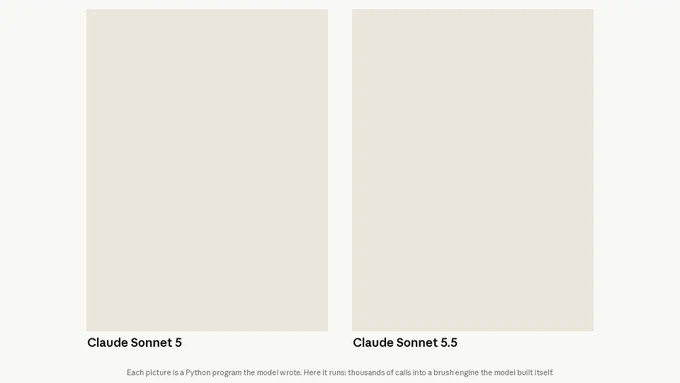
Today we launched Claude Sonnet 5.5! 30% faster and costs up to 30% less than Sonnet 5 for most work.
Strong for well-scoped everyday tasks (fixing bugs, creating docs, slides). @RLanceMartin had models paint the same photo in code. You can see the jump:

83
49
1,364
101,224
Sonnet 5.5 improves on 5 across many benchmarks including agentic coding and computer use (e.g. 70.6% on Terminal-Bench 4.0, 80.1% on OSWorld 2.1)

2
2
18
5,168
Glad Claude limits feel different!
The lower Opus 5.5 price goes straight into your limits. They go about 25% further than Opus 5. Cache reads cost 60% less and output is generated 30% faster:
claude.dev/blog/what-a-task-…

83
23
1,163
98,600

What is effort really? When do you change it it and why not just use max effort for everything?
I dove deep into this problem, looking into evals and doing my own tests and I was quite surprised by the results.

303
510
6,234
1,474,757
Addy Osmani retweeted
Claude Code will now try to find a graceful stopping point when you hit your 5-hour limit mid-task, instead of cutting off mid-edit. It gets a small, fixed allowance pulled from your weekly limit to wrap up what it can.

1,086
1,236
34,954
2,649,258
Addy Osmani retweeted
Opus 5.5 is 20% cheaper per input and output token than Opus 5, and 60% cheaper on cache reads. So what does that actually do to the cost of a task in Claude Code?
We ran the numbers, and built a calculator so you can run yours from /usage:
claude.dev/blog/what-a-task-…
251
264
6,202
739,684
Bias towards action. Act quickly to learn faster without being careless.
When I'm building products, I try to default to the smallest responsible step that gives me feedback with some guardrails so that mistakes are cheap to fix and have limited blast radius.
That's helped me ship to millions of users. I've seen a lot of people stall out on their ideas and its happened to me too. On side-projects, I would keep refining them long after they were good enough to try out - it just "needs one more feature", "to load one second faster" etc. But it's easier to reason about something once it’s real and people start using it.
The folks I've seen have the most impact often weren't the smartest in the room. They shipped something small, noticed what broke and shipped a better version as soon as possible. Being wrong early was part of how they learned. Meanwhile there were so many people waiting for certainty that just continued waiting and didn’t ship.

38
83
791
34,596
Introducing Claude Opus 5.5! 40% lower cost than Opus 5 with cache reads 60% cheaper. It performs at the level of Claude Fable 5.1 for most tasks.
I celebrated with a pelican riding a bike in Three.js.

108
88
1,989
417,635
I wrote about how to get the most out of Opus 5.5 too:
Try these in your first Opus 5.5 session:
→ Hand over a whole task. Define "done" and when to check in.
→ Drop "think carefully". It always thinks first.
→ After a long run, check what it needs to go further.
Our playbook: claude.dev/blog/getting-the-…
1
1
4,563
Cloud sessions for Claude Code are now GA! Start a task, close your laptop and it keeps going.
Get a one-time $100 credit on Pro or $250 on Max to celebrate. Your sessions spend it before falling back to normal plan use. Claim it: preview.claude.ai/code/claim…
Many of you have already been using cloud sessions and we hope you'll enjoy the extra credit.
Cloud sessions are officially available and out of research preview! They let you keep Claude Code working, even when your laptop is closed.
Existing subscribers get a one-time credit to try them: $100 on Pro, $250 on Max.

34
9
177
36,998
Claude Opus 5.5 drew each frame of this animation in JavaScript. Here's "how browsers work" in 40 seconds.

135
161
2,403
215,396
Addy Osmani retweeted
We made claude.ai 3x faster in two weeks.
Here’s how we use Claude to measure, debug and improve performance. Prompts and methods included.
claude.dev/blog/how-we-made-…
241
553
9,662
1,829,972
AI lets you try more ideas than you'll ever ship. Each one can teach you something. Combine what you learn and that's what ships. Ideally something of value to users.

the right way to use model capabilities is not to ship 10x more features to prod
it's to spend more time understanding your users, trying experiments, building prototypes, learning about things you don't understand so that you can ship things that actually work
29
11
210
25,166