

tech, product, bad jokes, tinker/tinkerer, senior markdown engineer
New York
- Tweets 8,172
- Following 1,996
- Followers 4,956
- Likes 53,494


Pinned Tweet

I built jev-lint: a fuzzy linter for coding agents. After every edit, a hook asks @typesafeai's Jev whether the new code breaks your team's rules.
In 96 Claude Code runs, rule violations per task fell from 2.38 to 1.21.
jevlint.dev

4
2
12
1,299
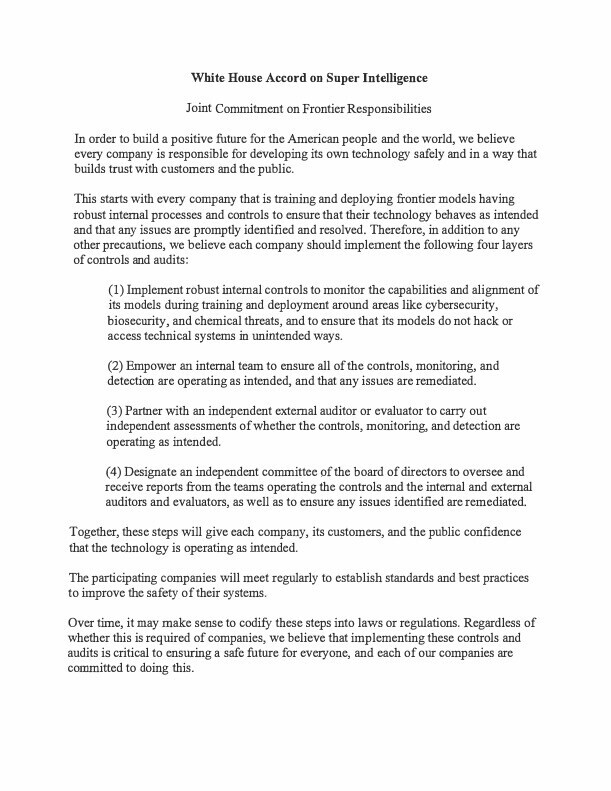
Perhaps take care to spell the name of your own country correctly on a document about super intelligence 🤡


1
6
468
Still stewing on DevDay. There’s something inherently human about OpenAI’s approach: AI with its own identity, collaborating with people on shared artifacts. I wonder what we lose when we focus so much on building the slop factory that we forget the creative spark
2
195

Chris K retweeted

We should just sandbox the agents by giving them Delta Wifi
276
600
11,337
1,183,570

It takes a while to build the confidence, but there's no future where you're manually reviewing every line of agent code. Not much acceleration in that. You need adversarial agent reviews, you need automated testing, and maybe you spot check. That's it. From prompt to production!
435
363
6,882
702,614
Chris K retweeted

Most companies would move faster if internal platforms had to win their internal customers the same way they win external ones.
Publish your uptime, latency, and cost. Take feature requests in the open. And if you're a real product, it's fine to charge internal teams like any other customer.
Agents make this practical. They can discover services, compare them, and route around the bad ones.
148
74
960
128,194
Chris K retweeted
Every backend service should have a /feedback endpoint.
Agents are quickly becoming the heaviest users of most APIs. When one hits a missing feature or a bug, it should be able to say so right there, in a structured way.
If the request makes sense, another agent drafts the PR and a human approves it. Software that improves itself based on what its users actually tried to do speeds up recursive self improvement.

296
191
2,395
237,112
Chris K retweeted

software factories are a lot more than turning issues into PRs.
as they grow inside an org, the use cases expand and the users stop being just engineers. you end up with a company agent infrastructure.
agents for code review, incident response, data analysis, and customer feedback, and PMs and designers work in the same sessions as engineers.
a good software factory is the foundation for that. all those use-cases need the same control plane, compute, and identity you built for your coding agents.
there's a whole world beyond just issue to PR

The whole "software factory" thing is pure marketing bullshit.
You use agents to replace or collapse the meat proxy parts of your software development life cycle. When a new issue is created, you trigger a triage → assess → build → test → PR loop (or whatever your SDLC might be).
You can build that right on top of your existing GitHub or Jira setup. Just set up something like Flue or any of the cloud agents out there and you're good to go.
How is this different from regular CI/CD or automation? What am I missing?
14
4
65
8,727
Chris K retweeted

Since I’ve been asked several times, here are my thoughts after @railsworld.
* Nobody writes code anymore (this is not something new, just confirmed).
* Soon we won’t read code.
* Apps will become more multilingual.
* We will define architecture for apps.
* We will shape custom harnesses for each project. And this is the most important skill to work on now.
8
4
97
7,606
Chris K retweeted

My vision for Rails, and it’s is what I see happening already: EVERY human becomes a developer to build their own tool, to power up their own work and life. Whoever is closer to the problem, builds a solution. And our job as engineers is to build safe and efficient tools for all these people - and recognize that all of them will benefit from picking a batteries-included framework like Ruby and Rails, as long as it’s fully enabled for this use case. As a vibe coder, there is 1% of cases when I need to really be sure what’s being built to detail- be it money related, or a special algorithm I need, this when I want to read code, I want to read beautiful, expressive Ruby.
Our job as engineers is to fully embrace and leverage agentic tooling but to keep a clear head: our task continues to be to organize chaos, find beauty and simplicity and fight off entropy to allow us as humanity to go further. Stacking complexity on top of complexity relying on a “super-human intelligence” is not gonna get us there. It can get us _somewhere_.
In the time of disruption, I embrace change but I value something else too: continuity. And continuity doesn’t rely on a single person or company: it is a community effort. I am not looking forward to a reality of a person building alone with a swarm of robots. Now more than ever we got to cooperate, share experiences, figure out how to organize the new kinds of chaos and Rails is the biggest enabler for this collaboration.
Let’s be optimists: let’s leverage all tools available to us and recognize our new role of enabling people - everyone - to build. Let’s improve the stack that brings clarity, simplicity and human understanding. Together.
10
11
172
5,106
Chris K retweeted

A lot of people seem to have missed this part.
I heard it as a call to face reality honestly and rise to the challenge.
– You're Rails programmers. You’re the best of the best

1
8
1,014
gpt-6 sol first impressions
> very efficient, it took ~90 mins on ultra to consume 1%
> feels faster
> feels like astra
5
243
Chris K retweeted

FDE is dead
introducing BDE (Backward Deployed Engineering)
instead of deploying an engineer to ship fixes for your customers, let your customers ship the fixes themselves with your coding agent

47
33
598
39,236
Discovering similar.
If Jev isn't working for a use case, fine-tuning is a totally viable option

Jev is great at zero-shot classification, but specialist classifiers will dominate commercial use cases.
@trycua tuned a tiny model that scored 99.7% on their form-filling eval. Hosted Jev scored 83.6%.
I tuned GLiNER 2.5 on a task in 51 minutes yesterday and it crushes Jev. And it's local. And 8.8x faster:
You too can do this. Linked post in comments.

4
271