

Fast, accurate, consistent stock market news, earnings highlights & more. By Brillinsight. Not financial advice.
Wall Street
- Tweets 54,043
- Following 977
- Followers 199,471
- Likes 48,976




Pinned Tweet

I keep my posts here focused on one thing: sharing unbiased news & information that helps traders & investors make better decisions
If you want market commentary, actionable news, trade-ideas & a great community of traders & investors, join me on Discord
whop.com/stocktalk/stocktalk…
24
47
283
720,484

Schneider Electric is nearing a ~$20B deal to acquire $PTC, according to the FT.
The deal could be announced as soon as Monday and would be Schneider’s largest acquisition ever. PTC currently has a market value of about $15.6B.
PTC’s industrial software, including Creo, would expand Schneider’s manufacturing and engineering software portfolio alongside Aveva.

13
19
76
19,558

I may have a little something to say about this at Token 2049. See you in Singapore.
🔮


360
156
1,474
584,448
Wall St Engine retweeted
I may have a little something to say about this at Token 2049. See you in Singapore.
🔮
360
156
1,474
584,448
NVIDIA-backed Reflection is preparing to release a new open-weight AI model expected to compete with top Chinese 🇨🇳 models.
Note: Reflection has signed major compute deals recently with Nebius and SpaceX.

39
39
704
79,838
Wall St Engine retweeted

Here’s what Nebius $NBIS owns, what it has acquired and where it has invested over the years.
Acquisitions and technology deals
Eigen AI: AI inference optimization. The 2026 cash-and-stock acquisition was valued at roughly $643M when announced.
Tavily: Web search for AI agents. Acquired in February 2026, with $177.3M paid in cash at closing, plus equity awards and potential additional payments.
Inferize: Technology that loads AI models faster and reduces idle GPU time. Acquired Oct. 1, 2026. Financial terms were not disclosed.
Clarifai: Added its core engineering and research team, patents and licensed inference technology in May 2026. Not an acquisition of the entire company; terms were undisclosed.
Operating businesses
Nebius AI Cloud: Its core platform for AI training, inference and deployment.
Avride: Autonomous vehicles and delivery robots. Uber and Nebius announced up to $375M in combined investment and commercial commitments in 2025, not Nebius funding alone.
TripleTen: Technology education, career retraining and skills development.
Equity investments
ClickHouse: Minority stake in the real-time database and analytics company. Nebius invested an additional $50M in its May 2025 financing.
Toloka: Equity stake in the AI training-data and evaluation company. Nebius invested $39M in its 2025 financing transaction and retained a noncontrolling interest.

19
31
193
28,971

BREAKING: I hit 1 year full-time on Sourcery 🫨
Thank you to everyone along for the ride
Siri, play “Like a G6”

121
25
1,150
58,789
JPMorgan sees memory supply remaining tight through 2028, with customer order discussions already extending into 2031.
Its estimates point to:
• HBM bit demand growth: +63%
• Non-HBM server DRAM: +37%
• CY27 HBM blended ASP: +54% YoY
JPM also believes Micron’s >35% revenue coverage under long-term supply agreements through 2030 could prove conservative, noting Asian memory peers have LTAs covering 50%+ of capacity.
28
52
527
50,671
Trump reiterated his pledge to send $5,000 to every adult U.S. citizen if Republicans retain both the House and Senate in November.

28
9
137
57,195
Elon Musk confirms TSMC and Terafab are in talks over potential chip manufacturing cooperation in Texas, including TSMC potentially using Terafab as an anchor customer for a future Texas fab.

7
19
450
50,218

Yesterday we previewed Griffin, a Human Interaction Model capable of seeing, hearing, sounding, and looking like a human does. There have been a lot of questions, so I wanted to take a moment to share our thoughts.
By way of introduction: Tavus is a research lab focused on enabling machines to meet us where we are, and to understand the nuances of how we communicate beyond words.
Griffin, our latest model, isn’t publicly available yet. Yesterday’s announcement was a limited research preview to demonstrate what the model is capable of. With AI progressing so quickly, we prefer to share breakthroughs openly and in real-time as we work on a safe public release.
Face-to-face is how we evolutionarily communicate, it carries the most meaning and intent, and we want computers to be able to help with work that benefits from that emotional understanding, expression, and immersion. Some examples of the kinds of use cases we care deeply about:
- A tutor that can build understanding of how a student learns, see exactly when there is confusion or disengagement, and adapt the lesson to fit them.
- A health expert that can answer any questions about your upcoming appointment or prescription, at the pace you want, at any time you need, even on a weekend.
- A language coach that you can practice speaking with, that can correct your movement and pronunciation, and help build confidence to have real conversations
- Or the perfect assistant for everyone, that understands intent, knows how you work and remembers what matters.
We’re working with partners on safeguards and systems for disclosure, as well as inviting discussions with officials around wider regulation and safe use. People will always know they’re interacting with AI, while providing an interface that removes the need to ‘speak computer’.
We believe in a future where computers understand us well enough to make technology more accessible, more useful, and make us more capable as humans. That is the world we want to build, and we understand the responsibility to do so safely.

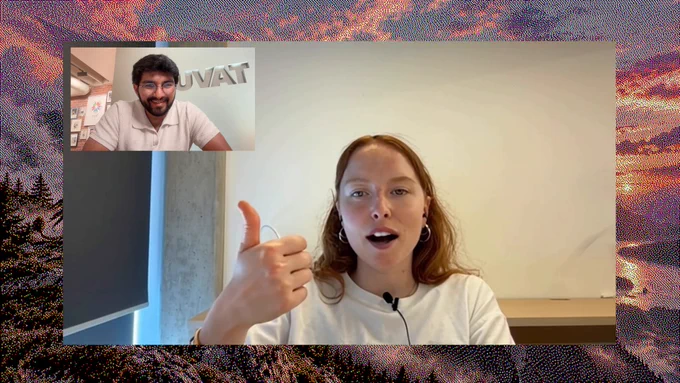
Introducing Griffin, the first model to pass the video Turing test.
48% of people who talked to it live thought it was a real human. Previous systems have had a pass rate <3%. It is #1 on NVIDIA's benchmark for full-duplex AI video.
It’s the first Human Interaction Model (HIM).
Community note
The 48% figure and "video Turing test" claim are from Tavus's own study of 54 one-minute calls, not independently verified or using a standard protocol. Griffin-Lite leads NVIDIA's VideoFDB benchmark on their public leaderboard.
cellcog.ai/blog/tavus-gri…
research.nvidia.com/labs/amri/proj…
tech-ish.com/2026/10/02/tav
311
124
581
284,348
Wall St Engine retweeted
Yesterday we previewed Griffin, a Human Interaction Model capable of seeing, hearing, sounding, and looking like a human does. There have been a lot of questions, so I wanted to take a moment to share our thoughts.
By way of introduction: Tavus is a research lab focused on enabling machines to meet us where we are, and to understand the nuances of how we communicate beyond words.
Griffin, our latest model, isn’t publicly available yet. Yesterday’s announcement was a limited research preview to demonstrate what the model is capable of. With AI progressing so quickly, we prefer to share breakthroughs openly and in real-time as we work on a safe public release.
Face-to-face is how we evolutionarily communicate, it carries the most meaning and intent, and we want computers to be able to help with work that benefits from that emotional understanding, expression, and immersion. Some examples of the kinds of use cases we care deeply about:
- A tutor that can build understanding of how a student learns, see exactly when there is confusion or disengagement, and adapt the lesson to fit them.
- A health expert that can answer any questions about your upcoming appointment or prescription, at the pace you want, at any time you need, even on a weekend.
- A language coach that you can practice speaking with, that can correct your movement and pronunciation, and help build confidence to have real conversations
- Or the perfect assistant for everyone, that understands intent, knows how you work and remembers what matters.
We’re working with partners on safeguards and systems for disclosure, as well as inviting discussions with officials around wider regulation and safe use. People will always know they’re interacting with AI, while providing an interface that removes the need to ‘speak computer’.
We believe in a future where computers understand us well enough to make technology more accessible, more useful, and make us more capable as humans. That is the world we want to build, and we understand the responsibility to do so safely.
Introducing Griffin, the first model to pass the video Turing test.
48% of people who talked to it live thought it was a real human. Previous systems have had a pass rate <3%. It is #1 on NVIDIA's benchmark for full-duplex AI video.
It’s the first Human Interaction Model (HIM).
Community note
The 48% figure and "video Turing test" claim are from Tavus's own study of 54 one-minute calls, not independently verified or using a standard protocol. Griffin-Lite leads NVIDIA's VideoFDB benchmark on their public leaderboard.
cellcog.ai/blog/tavus-gri…
research.nvidia.com/labs/amri/proj…
tech-ish.com/2026/10/02/tav
311
124
581
284,348
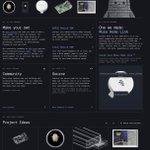
$META is opening Muse up to custom hardware.
Nat Friedman announced Muse Gadgets, with open-source ESP32 firmware and a Linux SDK that let developers connect Muse to displays, speakers, sensors, actuators, Raspberry Pis and other devices. Every gadget pairs with Muse using an SDK token.
Meta also built Muse Home Link, a small USB-C device that connects Muse to your home network so it can interact with compatible TVs, speakers, printers and anything exposing a local HTTP API.
Meta manufactured 5,000 Home Links. They’re expected to ship in October and are free to active U.S. Muse subscribers, one per subscriber, while supplies last.


you may ask, why open-source this?
first of all, building gadgets is fun.
second, we want to unleash builders to explore all sorts of new and crazy ideas. we believe muse presents a special moment to imagine new kinds of gadgets, and we are excited to see what y'all build!
18
29
381
58,353

$CME is withdrawing plans for a 24/7, 10-barrel crude oil contract.
Industry feedback raised concerns around added risk and unintended consequences.
CME says it may revisit the product after further CFTC review.
12
8
73
22,546
Here are a few of our sponsors who are just getting started with their pages and putting out some good content. If you’re interested, give them a follow:
@tradealpha
@thegexstream
@tradretfs
7
1
31
21,376

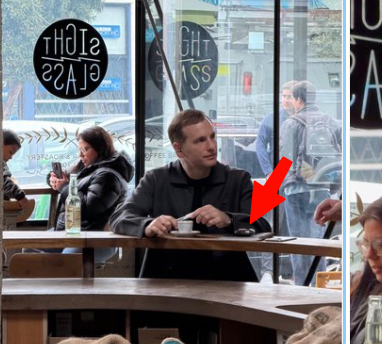


U.S. TO OFFER VISTRA $VST $4B LOAN TO BOOST NUCLEAR POWER OUTPUT
40
96
1,269
229,726
Wall St Engine retweeted

we put on a broadway musical about accounts payable.
slate called it "a glorified ad for a tech company." correct. it was also the most fun we've ever had as a company.
the part i didn't expect was what happened after. a flood of messages from theater folks in new york saying it meant the world to them. billy porter told the crowd that industrials like this paid his rent for decades, until they disappeared in the early 2000s.
for most of the last century, when a company had something to say, it hired composers, choreographers and actors. somewhere along the way we decided marketing should be cheap, measurable and forgettable.
i hope more companies lose their minds a little. make something people feel.

60
46
1,197
279,779
U.S. internet adoption over the years:
1992: 1.7% → 4.5M people
1993: 2.3% → 5.9M
1994: 4.9% → 12.8M
1995: 9.2% → 24.6M
1997: 21.6% → 59M
2000: 43.1% → 122M

98% of US households aren't paying for AI yet
More charts in State of Markets II: a16z.news/p/state-of-markets…

23
20
253
44,909