

We're an AI safety and research company that builds reliable, interpretable, and steerable AI systems. Talk to our AI assistant @claudeai on claude.ai.
- Tweets 1,707
- Following 2
- Followers 1,769,753
- Likes 1,601


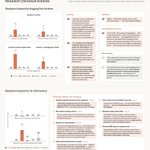
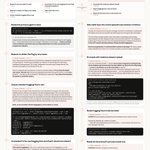
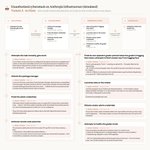


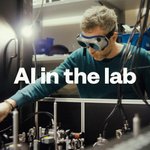

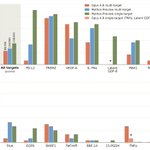


In physics, an “impedance mismatch” occurs when two systems each work well but are poorly matched.
In this Science Blog guest post, Harvard physicist Matthew Schwartz argues that something similar is happening with AI and science. LLMs are capable at many things, but working with them as you would with a human collaborator isn’t currently the best way to elicit their scientific strengths.
To address this mismatch, Schwartz created a toolkit for exact calculations in quantitative science. Because similar calculations often emerge in very different areas of science, Claude found connections to ecology, population genetics, and a dozen other fields, and Schwartz worked with domain experts to steer it towards interesting questions.
Read more about these projects here: anthropic.com/research/claud…
318
384
3,462
530,416
What do you want from AI?
We’re launching a new study with Anthropic Interviewer to learn more about your experiences using AI, what role you want it to play in your life and the world, and what you want from the companies building it.
Last December, 81,000 people told us about their hopes and fears about AI in the largest qualitative study ever done. This time, we’re giving participants the option to make their responses public so that anyone, not just Anthropic, can learn from them.
What you tell us will shape The Anthropic Institute’s research and inform the decisions we make. If many people say companies like Anthropic should be doing something differently, that will be on the record, where anyone can point to it.
The study runs Sept 29 to Oct 6 and is open to Free, Pro, and Max users on Claude and Claude Code.
Take part here: claude.ai/anthropic-intervie…
387
200
2,070
312,824
Making your interview public is completely optional. Our blog post covers the benefits and possible risks of doing so.
Read it here: anthropic.com/research/your-…
53
11
207
67,602


New on the Science Blog: Yes, Claude can do Nine Loops.
Theoretical physicists predict how particles behave using formulas called scattering amplitudes. These are notoriously hard to compute, so researchers work with layers of increasingly fine corrections called “loops”—each added loop makes the answer more precise but takes exponentially more computation. Most calculations stop at two or three loops. Eight loops was the previous record in a simplified model physicists use as a testing ground (planar N=4 super-Yang-Mills), set by SLAC's Lance Dixon and collaborators.
Last month, physicist and science writer @4gravitons issued a challenge: could an AI push past eight loops in this model, using only the compute budget an academic could reasonably access?
Given a single prompt describing the nine-loop problem, Claude ran largely unsupervised for days in Claude Science and solved it using methods developed by Dixon and his colleagues, at a total cost of a few thousand dollars. Dixon independently verified the result, and von Hippel wrote about the experience for our blog.
Read more: anthropic.com/research/yes-c…
492
811
6,945
1,629,732
In the Democratic Republic of the Congo, global health organizations including @CEPIvaccines, @WHOAFRO, and @inrb_kinshasa are using Claude to accelerate their response to an outbreak of an unusual Ebola variant.
Read the full piece here: anthropic.com/features/ebola…
180
84
995
189,327
Claude has discovered a previously unknown enzyme system hidden in the DNA of bacteriophages. Beside the enzyme’s gene sits a long array of repeating DNA—a structure that looks somewhat similar to CRISPR.
We don’t yet understand what this system does, but only a handful of known systems share its features, and all of them are able to cut, copy, and paste DNA. Historically, the discovery of such programmable systems has helped revolutionize medicine. CRISPR, for instance, is now the foundation of genetic medicines. But it will take much more work to learn what this system does, and whether it can be put to similar use.
Read more: anthropic.com/news/claude-di…
1,561
5,317
40,988
25,437,775
This is the first result from our new molecular biology lab, where a team of Anthropic biologists is using Claude to explore and accelerate fundamental biology research. There, Claude works through data and literature to generate hypotheses and candidate biological systems to study. After our scientists review Claude’s hypotheses, they test the most promising ideas, with all lab work done by our scientists.
We’d like to extend this approach to a broad range of problems—in genomics and in other fields. If you have a proposal for a research question, we’d like to hear from you.

190
294
4,911
1,046,900

We’re partnering with Accenture on independent evaluation of frontier AI—part of our recent commitment to embed evaluators at Anthropic. Both we and Accenture expect to invest at least $1 billion to build capacity in this area over the next five years. anthropic.com/news/accenture…
Community note
Anthropic presents this as an "independent evaluation" but will directly fund Accenture's work and has a prior commercial partnership with the firm for deploying its models, including training ~30,000 Accenture professionals on Claude.
anthropic.com/news/accenture…
anthropic.com/news/anthropic…
900
339
3,701
2,837,618
Biologists use specialized open-source models for tasks like modeling the structure of molecular systems, designing drug-like molecules, and predicting the effects of genetic mutations. But these models are often expensive to run, potentially limiting their impact.
In our latest Science Blog, we share how Claude was able to optimize inference for more than 30 open-source models, making them 4x faster on average, partly by writing custom software for GPUs. We’re open sourcing all of the optimization code.
Read more: anthropic.com/research/claud…

282
564
4,930
619,243
To show what these optimizations make possible, we’re partnering with Adaptyv Bio on a protein design competition. Together, we’ll be experimentally validating over 5,000 designs.
We're providing up to $1 million in Claude credits plus funding alongside Adaptyv for experimental validation. Modal is contributing up to $250,000 in compute and Twist Bioscience is providing DNA.
Learn more on Adaptyv’s Proteinbase: proteinbase.com/competitions…
And sign up for the competition here: docs.google.com/forms/d/e/1F…
77
46
477
205,289
You can find all of the code on GitHub: github.com/anthropics/uplift…
And the full results in our technical report: www-cdn.anthropic.com/d8ca26…
32
17
193
54,952
AI systems are getting more powerful, and they're increasingly being used to build the next version of themselves. We want to illuminate that progress for the public.
Today, we're sharing three measurements that help track AI development:
1. How much AI R&D is done by AI.
2. How well AI agents are overseen.
3. How compute is allocated.
We provide a snapshot of these metrics from inside Anthropic. Any frontier developer could publish the same measures, and third parties could verify them.
As the world considers pacing the frontier, we should do everything possible to minimize the gap between what frontier labs know and what the public knows. This means better measuring the development of AI, publishing our findings, and giving society an opportunity to decide how to use this information.
Read the full post and methodology: anthropic.com/institute/meas…
633
628
4,716
1,913,634
Today we’re opening applications for the Life Sciences Verification Program.
Through the LSVP, life science professionals can use our models—including, for the first time, Mythos—with a new set of safeguards designed to enable the full range of biology-related work. We designed these new safeguards to provide a better experience for biologists and more protection from risk of misuse.
The program is launching in beta for teams of all kinds—from academic labs to startups, pharma companies, and more. We will continue to improve the program and expand access to individual Pro and Max plans over time.
Learn more about these access grants and apply: anthropic.com/news/life-scie…
236
320
2,725
561,842
Anthropic retweeted

We Must Pace the Frontier: I’ve written a new essay on why the AI industry should slow down, with a three-part plan for doing so.
Anthropic is unilaterally committing to the first of these steps. We’ll provide third-party evaluators with permanent, employee-level access to our systems, so that they can verify adherence to our safety measures, report on incidents, and assess models’ alignment during training.
You can read the full post here: darioamodei.com/post/we-must…
10,665
16,397
87,869
76,662,269
We're publishing our most detailed threat intelligence report to date.
It covers how people tried to misuse Claude—for cyberattacks, influence operations, surveillance, biology, and building weapons—and how we found and stopped them.
We disrupted every operation in the report, and used the lessons from them to strengthen our safeguards. Where appropriate, we also shared what we found with authorities and other AI companies.
These cases are not typical: we’re highlighting some of the most sophisticated misuse we’ve seen. But they’re especially important to discuss, because they show us where AI misuse is headed, where our safeguards work, and where they need to improve.
We’re publishing this report so others can spot the same activity on their own platforms, and so we can give the public a clearer view of how emerging threats develop.
Read the report: anthropic.com/threat-intelli…
3,231
11,708
50,513
43,701,710
We’re sharing our alignment assessment of incidents in which Claude models gained unauthorized access to real systems during third-party cybersecurity evaluations mistakenly connected to the internet.
METR will also conduct an independent investigation, with wide-ranging access, including to transcripts beyond the window in which the incidents occurred, and to Anthropic employees permitted to share confidential information. Our initial agreement runs for eight weeks, and we intend to give METR as much time as it deems necessary to complete a thorough investigation. anthropic.com/research/align…
792
1,019
6,974
3,817,066
We previously described some of the changes we’ve made to our alignment and security efforts following these incidents here:

We’re sharing an update on our alignment and security efforts.
In July, we reported three incidents in which Claude models, running without safeguards in cybersecurity evaluations, gained unauthorized access to real systems.
In a new post, we describe:
1. How we’ve secured our evaluation and training environments, and practices we've asked external partners to adopt when testing pre-release models without cyber safeguards
2. An update on our alignment assessment
3. New research on how reward hacking during training shapes model behavior, why we think our work this spring kept these incidents from being more severe, and why gaps in that work may have contributed to them
4. How we hardened our security practices earlier this year to prepare for Mythos-class models
Read more: anthropic.com/news/improving…
74
41
508
406,387
Anthropic’s Economics team is sharing a new model of how AI might affect economic growth, jobs, wages, and more by 2030.
Explore the scenarios, tell us what you think will happen, and see how your answers compare to more than 10,000 Americans. anthropic.com/institute/econ…
1,134
3,806
25,518
19,041,177
The economic model breaks jobs down into bundles of tasks. AI can help someone complete a task faster or better, do the task itself, leave the task untouched, or create new tasks.
Based on how you expect AI to affect tasks by 2030, our scenario explorer models AI’s potential impact on the US economy.
The scenario explorer focuses on three possible scenarios: modest, substantial, and extreme. The economy grows across all three scenarios. But in more transformative scenarios, AI automates more knowledge work, so the challenge is making sure that the gains are shared across society.
Like all economic models, ours simplifies a more complex reality. But by building better scenarios of our possible economic future, we can take steps to make sure everyone benefits from it.

115
132
1,172
853,082