

AI Educator & Digital Strategist🚀 AI & Tech Creator 📈 Helping Brands Grow with Quality Content 🤝 Open for Collaborations & Promotions 📩 DM for Business
American
- Tweets 5,390
- Following 18
- Followers 3,873
- Likes 11,445







Pinned Tweet

📂 Drive Self-Study E-Book:
drive.google.com/file/d/1xl7……
📂 Printed Book Version: s.shopee.co.id/2Vqoobxy9r
📂 Drive Vocab:
drive.google.com/drive/folde……
📂 Drive Grammar, TOEFL, IELTS, & TOEIC:
drive.google.com/drive/folde……
Follow : @Noha_Coder

13
78
243
5,814
Noha_Ai retweeted

📂 Drive Self-Study E-Book:
drive.google.com/file/d/1xl7……
📂 Printed Book Version: s.shopee.co.id/2Vqoobxy9r
📂 Drive Vocab:
drive.google.com/drive/folde……
📂 Drive Grammar, TOEFL, IELTS, & TOEIC:
drive.google.com/drive/folde……
Follow : @Zenith_coder

12
34
45
917
Noha_Ai retweeted

🚨 GOOGLE JUST GAVE NOTEBOOKLM A MAJOR UPGRADE.
And it’s way more than a simple rebrand.
Gemini Notebook is being integrated deeper into Google’s ecosystem, bringing a secure cloud computer and more powerful AI workflows.
Yet most people will still use it as nothing more than a PDF summarizer.
Here are 8 powerful prompts to turn it into a serious AI research assistant. 🧵

30
75
178
7,847
Noha_Ai retweeted
📂 Drive Self-Study E-Book:
drive.google.com/file/d/1xl7……
📂 Printed Book Version: s.shopee.co.id/2Vqoobxy9r
📂 Drive Vocab:
drive.google.com/drive/folde……
📂 Drive Grammar, TOEFL, IELTS, & TOEIC:
drive.google.com/drive/folde……
Follow : @Noha_Coder
13
78
243
5,814
Noha_Ai retweeted

🔥 HOOK
What happens when AI meets investing? 👀
Claude × Vanguard —
Two different worlds. One powerful idea.
But 10 prompts here’s the interesting part… 👇
(Save this 🔖 for future reference.)

34
74
115
2,354
Noha_Ai retweeted

ALL ABOUT IELTS
🔗 IELTS 4.0-5.0
drive.google.com/drive/folde……
🔗 IELTS 5.0-6.5
drive.google.com/drive/folde……
🔗 IELTS 6.5-7.5
drive.google.com/drive/folde……
🔗 IELTS 8.5
drive.google.com/drive/folde……
💾 Save this post—you'll thank yourself later.
Follow @Kiara_tech_AI for more scholarships, AI tools & free learning resources. 🚀

9
56
139
2,651
Noha_Ai retweeted

This website lets you randomly teleport into live cameras around the world. 🌍
It’s called World Watcher → worldwatcher.live
Open the map and the entire planet turns into a live camera roll.
You can explore:
> ✈️ Airports
> 🏖️ Beaches
> 🏢 Businesses
> 🌿 Nature
> ⚓ Ports
> 🚆 Railways
> 🕌 Religious places
> 🏟️ Sports
> 🏙️ Urban areas
> 🔊 Sound
Click any pin or hit Explore and let it take you somewhere random.
One moment you’re watching waves crash on a beach.
The next, you’re looking at a busy train platform.
Then suddenly, you’re somewhere in a quiet mountain town, watching everyday life happen in real time.
Google Maps shows you where places are.
World Watcher lets you see what’s happening there right now.
Built by an anonymous developer known as quinito on Hacker News, the idea was simple: make live cameras feel like exploring a map instead of opening a new page every time.
Open the map.
Hit Explore.
See where you end up. 🌎
Follow @The_techAI for more useful AI tools, websites & hidden gems.

31
76
123
5,108
Noha_Ai retweeted

A billionaire literally explained how the entire economy works in 42 minutes better than most $200,000 MBA programs ever cloud.

37
567
2,155
137,871
Noha_Ai retweeted

10 Hermes Skills every AI builder should know.
If you're building with AI agents, these open-source Hermes Skills can save hours of work and make your workflow much smarter.
1. Superpowers — Agentic software development framework
2. Ponytail — Helps AI agents write less code
3. Graphify — Turns codebases into knowledge graphs
4. Caveman — Cuts AI coding tokens by up to 65%
5. Understand Anything — Explore code as a knowledge graph
6. Last 30 Days — Research Reddit, X, YouTube & the web
7. I Have ADHD — Clear, ADHD-friendly coding output
8. Agentic Awesome Skills — 2,400+ AI agent skills
9. Scientific Agent Skills — 165+ scientific AI skills
10. Diagram Design — Create diagrams with AI coding agents
Which one would you use first?
Follow @Hey_Mason_Ai0 for daily AI tools, prompts, and tech updates.
#AI #ArtificialIntelligence #GitHub #OpenSource #Coding #Developers #Programming #Tech #AIAgents #MachineLearning

13
53
61
1,000
Noha_Ai retweeted

BREAKING NEWS: CHATGPT can now create a full YouTube channel for you using AI, like an agency that generates $10,000 a month.
Free. Here are 7 prompts to go from 0 → monetized channel in 90 days:

50
111
281
16,519
Noha_Ai retweeted

Your polite salary language
has a dollar amount attached to it.
"I'm flexible on salary." = -$11,000
"I'm currently making $X." = -$8,000
"Is there any wiggle room?" = -$6,000
"I'd consider anywhere in the range." = -$14,000
"I don't want to seem greedy." = -$9,000
You're not being humble.
You're leaving $48,000 on the table
one polite sentence at a time.
Here's the exact replacement
for every phrase killing your number.
31
93
159
44,966
Noha_Ai retweeted

🚨 Now Claude Code can read complete documentation without spending a single token.
You just need to connect Claude Code to Google’s NotebookLM via MCP.
Here’s how to do it 👇

56
244
1,320
133,175
Noha_Ai retweeted
80+ AI tools to complete months of work in minutes
1. Research
- ChatGPT
- Copilot
- Gemini
- Abacus
- Perplexity
2. Image
- Fotor
- Dalle 3
- Stability AI
- Midjourney
- Microsoft Designer
3. CopyWriting
- Rytr
- Copy AI
- Writesonic
- Adcreative AI
4. Writing
- Jasper
- HIX AI
- Jenny AI
- Textblaze
- Quillbot
5. Website
- 10Web
- Durable
- Framer
- Style AI
6. Video
- Klap
- Opus
- Eightify
- InVideo
- HeyGen
- Runway
- ImgCreator AI
- Morphstudio .xyz
7. Meeting
- Tldv
- Otter
- Noty AI
- Fireflies
8. SEO
- VidIQ
- Seona AI
- BlogSEO
- Keywrds ai
9. Chatbot
- Droxy
- Chatbase
- Mutual info
- Chatsimple
10. Presentation
- Decktopus
- Slides AI
- Gamma AI
- Designs AI
- Beautiful AI
11. Automation
- Make
- Zapier
- Xembly
- Bardeen
12. Prompts
- FlowGPT
- Alicent AI
- PromptBox
- Promptbase
- Snack Prompt
13. UI/UX
- Figma
- Uizard
- UiMagic
- Photoshop
14. Design
- Canva
- Flair AI
- Designify
- Clipdrop
- Autodraw
- Magician design
15. Logo Generator
- Looka
- Designs AI
- Brandmark
- Stockimg AI
- Namecheap
16. Audio
- Lovo ai
- Eleven labs
- Songburst AI
- Adobe Podcast
17. Productivity
- Merlin
- Tinywow
- Notion AI
- Adobe Sensei
- Personal AI
18. Social media management
- Tapilo
- Typefully
- Hypefury
- TweetHunter
Must follow @Noha_Coder for more.

17
43
76
2,458
Noha_Ai retweeted

50 NEW internet rabbit holes you can spend hours exploring👇
No repeats. Just websites worth getting lost in. 🌐
1. radio.garden — Spin the globe and listen to radio stations around the world
2. earth.nullschool.net — Watch Earth's winds, oceans, and atmosphere move
3. ventusky.com — Explore weather patterns across the planet
4. globalfishingwatch.org — See fishing activity across the world's oceans
5. volcano.si.edu — Explore volcanoes and their history
6. worldview.earthdata.nasa.gov — Explore satellite imagery of Earth
7. worldwind.arc.nasa.gov — Explore a 3D virtual globe
8. climate.nasa.gov — Explore climate science and visualizations
9. ocean.si.edu — Dive into the science of our oceans
10. spelunking.space — Explore the weirdness of the internet
11. geotastic.net — Test your geography skills with location guessing games
12. geoguessr.com — Travel the world without leaving your chair
13. what3words.com — Discover locations using three-word addresses
14. mapillary.com — Explore street-level imagery from around the world
15. kartaview.org — Browse crowdsourced street imagery
16. themuseumofmaps.com — Explore interactive maps and geographic stories
17. openhistoricalmap.org — Explore historical geography through maps
18. oldmapsonline.org — Discover old maps from around the world
19. geohack.toolforge.org — Explore geographic coordinates and locations
20. wikimapia.org — Discover places and details on a world map
21. eyes.nasa.gov — Explore planets, asteroids, and spacecraft in 3D
22. exoplanets.nasa.gov — Discover worlds beyond our solar system
23. spaceweather.com — Explore solar activity and space weather
24. heavens-above.com — Track satellites and celestial objects
25. in-the-sky.org — Explore the night sky and astronomy events
26. spaceengine.org — Explore a virtual universe
27. solar-system.nasa.gov — Dive into the planets and moons of our solar system
28. phet.colorado.edu — Experiment with interactive science simulations
29. newtinteractive.com — Explore interactive science and math explainers
30. hyperphysics.phy-astr.gsu.ed… — Explore physics concepts through linked explanations
31. wolframalpha.com — Ask questions and explore computational knowledge
32. brilliant.org — Learn math and science through interactive problems
33. ncase.me — Explore interactive explanations of complex ideas
34. explorabl.es — Discover interactive science and math experiments
35. quantamagazine.org — Explore the strangest corners of science
36. semanticscholar.org — Discover scientific papers and research
37. core.ac.uk — Search open-access academic research
38. jstor.org — Dive into millions of academic articles
39. arxiv.org — Explore scientific preprints
40. mathworld.wolfram.com — Fall down the mathematics rabbit hole
41. wellcomecollection.org — Explore fascinating historical objects and stories
42. smithsonianlibraries.si.edu — Discover rare books and historical collections
43. digitalcollections.nypl.org — Explore photos, maps, and archives
44. collections.louvre.fr — Browse the Louvre's art collection
45. britishmuseum.org/collection — Explore artifacts from human history
46. digitaltmuseum.org — Discover objects from museums across Scandinavia
47. musicbrainz.org — Explore the world's music database
48. letterboxd.com — Discover movies and endless film rabbit holes
49. mynoise.net — Explore sounds for focus, relaxation, and sleep
50. theuselessweb.com — Click a button and discover a random website
Save this. Your next internet rabbit hole is waiting. 🔖
Follow @coder_raya for more useful websites, AI tools & tech resources.

9
34
48
1,535
Noha_Ai retweeted
🚨 BREAKING: Claude can now write 90 days of LINKEDIN POSTS in your own voice in one afternoon. For free.
These 7 prompts take you from blank profile → weekly posts:

27
61
75
3,721
Noha_Ai retweeted

🚨 Stop spending hours creating classroom materials from scratch.
Claude can build worksheets, quizzes, reading tasks, discussion questions, graphic organizers, and revision resources in minutes.
Here are Claude prompts every teacher should save 👇
(Save this for your next lesson-planning session)

23
23
42
2,970
Noha_Ai retweeted

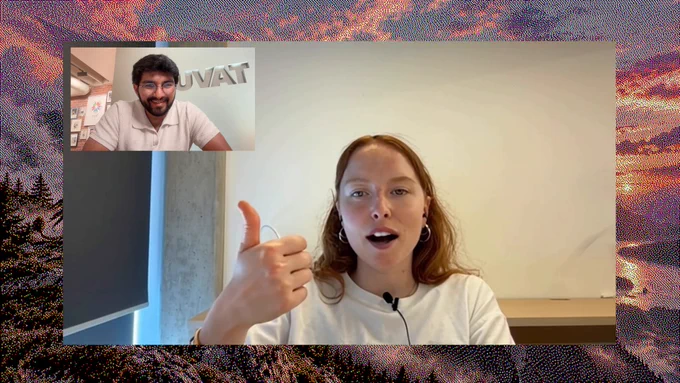
I got early access to Tavus Griffin and tested the part of AI interaction that usually feels missing: reacting in real time.
Instead of simply asking a question and waiting for an answer, I could talk, gesture, interrupt and change what was happening during the conversation.
Griffin continuously sees, hears and responds.
That's what makes this worth watching.
@tavus @hassaanrza
tavus.io/griffin

Introducing Griffin, the first model to pass the video Turing test.
48% of people who talked to it live thought it was a real human. Previous systems have had a pass rate <3%. It is #1 on NVIDIA's benchmark for full-duplex AI video.
It’s the first Human Interaction Model (HIM).
21
22
29
4,516
Noha_Ai retweeted

Tavus gave me early access to Griffin, the first model to pass the Turing test, and I wanted to see what that actually felt like in practice.
Tavus reports that 45% of 120 participants thought Vanessa was a real person during its Turing test.
After testing Griffin Lite myself, the continuous face-to-face interaction was the part that stood out most.
@tavus @hassaanrza
tavus.io/griffin
Introducing Griffin, the first model to pass the video Turing test.
48% of people who talked to it live thought it was a real human. Previous systems have had a pass rate <3%. It is #1 on NVIDIA's benchmark for full-duplex AI video.
It’s the first Human Interaction Model (HIM).
21
21
30
3,591
Noha_Ai retweeted

I wasn't expecting a normal AI demo when I got early access to Tavus Griffin. I wanted to see how it handled an actual conversation.
So I tried talking normally, using gestures, asking it to react to what it could see, and intentionally interrupting the flow.
Griffin kept responding to the changing interaction in real time.
That was the interesting part.
@tavus @hassaanrza
tavus.io/griffin
Introducing Griffin, the first model to pass the video Turing test.
48% of people who talked to it live thought it was a real human. Previous systems have had a pass rate <3%. It is #1 on NVIDIA's benchmark for full-duplex AI video.
It’s the first Human Interaction Model (HIM).
20
22
28
3,388
