

Writes Construction Physics. Senior infrastructure fellow at @IFP
- Tweets 2,058
- Following 296
- Followers 18,616
- Likes 11,198


Pinned Tweet

This week on Construction Physics: How SpaceX Streamlined the Raptor Engine construction-physics.com/p/h…

6
25
165
8,597
Brian Potter retweeted

The permitting reform bill is out, with more meaningful reform in it than ever before!
The most important reason to pass this, from @SenatorHeinrich: "We need to be able to build big things in this country again... to figure out how to get to yes, or how to get to no, a whole lot faster.
If we don't, experts have estimated that we will see 20-30% increases in the cost of electricity in the near term."

🚨 WE HAVE A PERMITTING DEAL🚨
And it is easily the best permitting bill we've ever gotten!
- The Bipartisan American Affordability and Jobs Act is HUGE (400+ pages) and both sides got a LOT.
- The bill is much bigger and better than either Manchin post-IRA in 2022 or Manchin-Barrasso in 2024.
Once I finish reading the text I'll publish an explainer. For now, here are a few high level takeaways.
1. Transmission: The bill is absolutely HUGE for transmission, going further than Manchin-Barrasso. Includes: interregional transmission, limited federal backstop authority, interconnection queue reforms, directives for advanced grid-enhancing tech, and oversight of utilities. It's absolutely AMAZING all of this got in.
2. NEPA: The bill has BIG changes to NEPA, including fixes for judicial review that underpins the law's costs. Still reading but this is even better than I expected!
3. Certainty: The bill includes strong provisions to push back on misuse of permitting, like we're seeing with the admin's abuses against offshore wind.
4. Historic Preservation: The bill includes changes to the NHPA 106 process, including changes to judicial review that will help right-size the process.
5. Clean Water: The bill fixes problems with section 401 by adding new requirements for states and makes section 404 nationwide permits easier to comply with.
6. Geothermal: The bill includes big wins for geothermal, including parity with oil and gas catexs.
7. Mining: The bill fixes the "Rosemont decision"
8. Endangered Species: The bill creates a new path for states to take on endangered species consultation.
9. Hydro: Fixes for certain hydroelectric projects
10. Ratepayer protection: The bill adds protections for ratepayers from added data centers. Looks to be stronger than the House passed bill by quite a bit.
2
16
112
5,856
Brian Potter retweeted

Trump signed an executive order yesterday directing federal agencies to develop and implement, by November 27, a campaign across Washington, D.C. to reduce, by 2028, invasive mosquito populations by 90% & tick populations by 50%: whitehouse.gov/presidential-… @chenderson


26
126
1,301
322,892
Brian Potter retweeted

LLM classification of where 37k inventions listed on Wikipedia were invented. From nber.org/system/files/workin…

10
31
198
38,806
Brian Potter retweeted

An Ode to Tesla's Cybercab
austinvernon.site/blog/cyber…
Speeding up AVs can prevent millions of deaths. The Cybercab is a major advancement in automotive manufacturing technology, being an order of magnitude more scalable than any previous car design. A true feat of engineering.
4
20
212
204,119

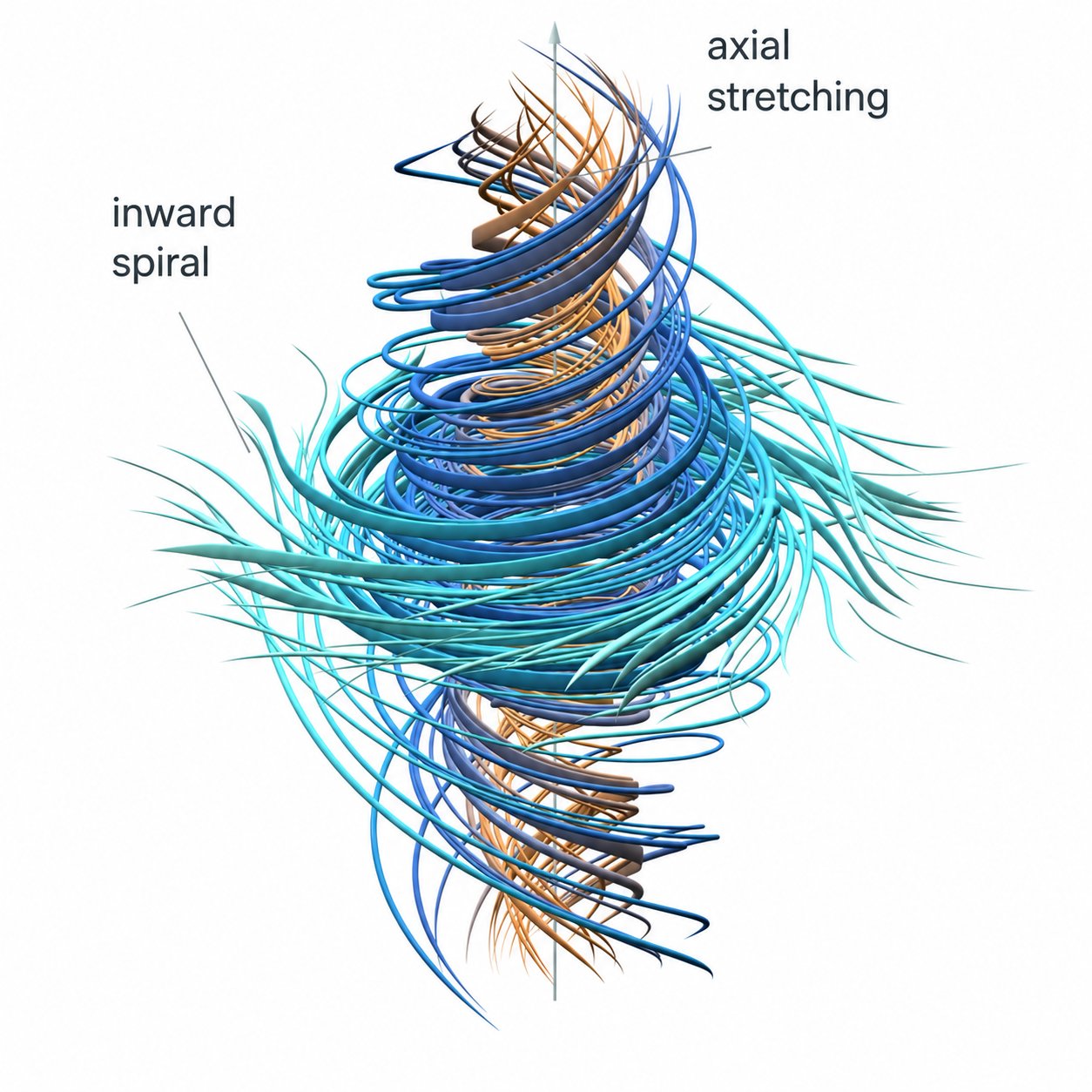
We’re sharing a solution to the Navier-Stokes Millennium Prize Problem, one of the deepest problems at the frontier of mathematics.
The proof was produced by a group of agents, using an OpenAI next-generation model significantly more capable than GPT-6 Astra.
The problem concerns whether the description of smooth three-dimensional fluid motion modeled by the Navier-Stokes equations can break down. It has remained unresolved for roughly 90 years.
5,705
20,135
120,458
75,051,378
This week on Construction Physics: my third and final post looking at the housing supply impacts of the 21st Century ROAD to Housing Act.
construction-physics.com/p/h…
5
23
6,212
Brian Potter retweeted

WSJ: See the New Building Techniques Turbocharging the Data-Center Boom - Hyperscalers’ need for speed is spawning timesaving products and building techniques wsj.com/tech/ai/see-the-new-…
3
8
48
21,498
Brian Potter retweeted

And with a 5 person crew
Not even 9 months ago we were at a week per floor


27
17
352
25,007
This week on Construction Physics: how the strategic petroleum reserve works.
construction-physics.com/p/h…

3
52
360
100,987
Brian Potter retweeted

“Wherever we look, we see the same thing: American transit agencies struggle to rein in costs when building transportation infrastructure,” writes @_brianpotter. “In the United States, we pay far more for our transit systems than virtually anywhere else in the world.”

3
10
115
90,049
The main throughline of the Reacher books is that "Reacher can win any fight," and over the course of the series they throw more and more ridiculous challenges at him. In one book he has to fight a tiny guy in a room with a really low ceiling. In another book he fights a truck.

Oh no, these two teeny tiny men (right) are threatening Reacher (left, blotting out the sky)! I wonder what is about to happen next? He is OUTNUMBERED!

2
1
21
3,732
Brian Potter retweeted

Italian company, American factory
Olivetti-Underwood, Harrisburg, Penn., 1970


7
65
1,338
125,604


A new US actuator startup has entered the chat!

Introducing Atlas
We're building motion systems for drones, robots, and autonomous machines.
Our work is in service of our customers who work factory floors, tend farmland, move medicine, and defend our country.
Atlas is built to supply them quickly, and supply them in volume. Their progress should no longer be held back by a motor or actuator.

2
5
54
7,644
This week on Construction Physics, the first in a multi-part series where I try to suss out what the 21st Century ROAD to Housing Act will actually do for housing supply.
construction-physics.com/p/w…

1
7
24
3,413


Cool potential use of a home robot: regular skin cancer screening.

Catching skin cancer early is a home robotics problem.
Melanoma is highly treatable when detected early, yet today’s screening process depends heavily on patients noticing tiny changes across their entire skin surface. This requires patients to solve a near-impossible visual-memory and registration problem.
I built OpenDerm, an open-source 4-DOF robot that captures high-resolution images of the skin and uses them to reconstruct and track the skin surface in 3D over time.
The best way to make skin screening truly routine is to bring it into the home. OpenDerm shows that inexpensive robotic skin imaging is possible, but the path to scale is not a dedicated screening robot in every household—it is to make skin screening one of the many useful things a general-purpose home robot can do.
Read more about why I built OpenDerm and how it works here:
Blog: marionlepert.github.io/blog/…
Project: openderm.github.io/

1
30
5,634
Brian Potter retweeted

A command called 'pytorch_no_powerplant_blowup=1' runs inside some frontier data centers, keeping their GPUs running with dummy workloads after their real work has completed.
Why?
Because researchers realized that thousands of GPUs stopping at once flatlined MWs of power in a fraction of a second — risking major damage to the grid.
Unfortunately, the risk goes beyond *accidental* power swings.
An adversary or saboteur could hijack a data center's load-management system, causing widespread blackouts and infrastructure damage.
That kind of hacking ability used to be mostly the domain of sophisticated state actors; with the advent of Anthropic’s Mythos model, it can now it can be done by AI.
Anthropic’s Mythos model found thousands of zero-day vulnerabilities across every major OS and browser in weeks.
While it is not available publicly today, Mythos-level cyber offense capabilities will soon diffuse.
What can federal regulators do to protect the grid?
My new piece argues that FERC should use its existing large load interconnection docket to both reform the broken large load interconnection system, and to create a speed-for-security bargain:
- give data centers that agree to be curtailable an accelerated interconnection path — so long as they abide by sufficient cyber and physical security standards
- direct NERC to write enforceable security standards instead of the voluntary guidance we have now.
FERC’s principles for large load interconnection reform in its November ANOPR establish standardized, generator-style interconnection procedures for large loads: jurisdictional scope and study rules, cost responsibility, an expedited pathway for curtailable load, and a co-location framework.
These are great steps to help alleviate the ever-growing large load interconnection queues that drive data centers behind the meter and outside of the US.
But it is little help if these data centers are hacked, disabled, or used as weapons against the grid.
Advancing the ANOPR’s principles, and adding a speed-for-security bargain will help protect both America’s AI R&D leadership, and our vulnerable grid.
That is what FERC should do in its upcoming June large load interconnection action.

4
16
53
9,688