

Visiting Partner YC | PhD AI Stanford | Founder/CEO Focal Systems
Stanford, CA
- Tweets 1,101
- Following 383
- Followers 5,180
- Likes 4,988


Pinned Tweet

New paper coming soon.. teaser..
no transformer, no backprop, no problem!
Zero Order CAN pretrain!
very exciting.. stay tuned!

30
57
832
127,837
this is a great deck by @a16z
1) token prices are down down down
2) COGS (memory, gpus, electricity) all up up up.
biggest takeaway not clearly highlighted... this implies:
3) frontier lab gross margins are getting crushed!?


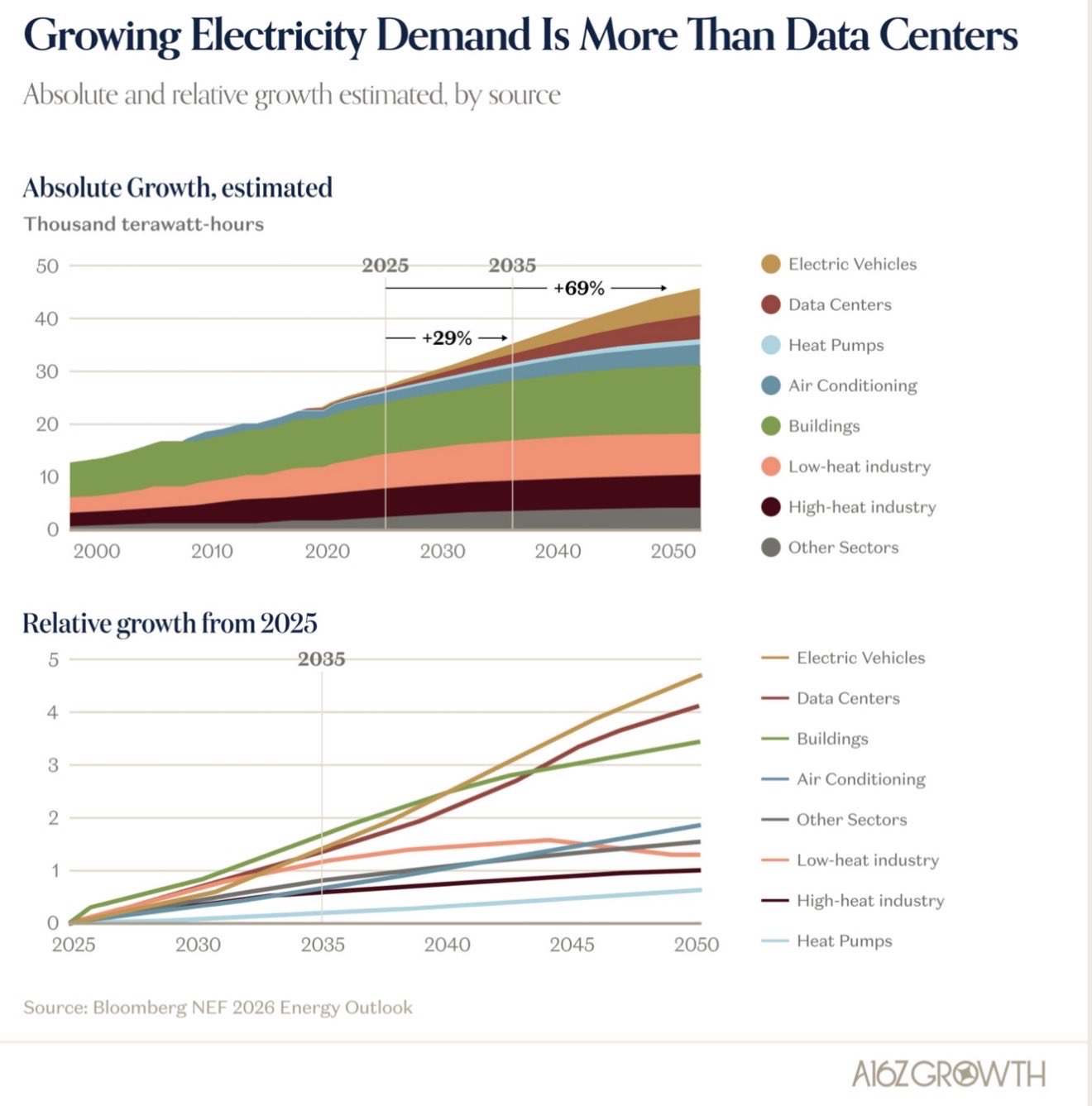

98% of US households aren't paying for AI yet
More charts in State of Markets II: a16z.news/p/state-of-markets…

8
10
48
5,866
Francois Chaubard retweeted

I am increasingly concerned about the AI psychosis inside Anthropic.
Imagine zealously trying to build something you believe to be a conscious god while running around claiming it will end the world.

NEW: According to a bombshell report in the New York Times, Anthropic co-founder Chris Olah threatened to walk out of Pope Leo XIV’s AI encyclical launch in May because the pope rejected the idea that machines can be conscious.
Olah’s team then privately lobbied the pope’s advisers “to take the possibility of model consciousness seriously.” Pope Leo XIV held firm.
For months, Anthropic has wined and dined theologians and religious scholars under nondisclosure agreements, hoping they would bless the idea that Claude has moral standing. thelettersfromleo.com/p/nyt-…
100
319
3,929
226,954
Francois Chaubard retweeted

Join us for the next Paper Club, where we'll talk AI Safety: events.ycombinator.com/yc-pa…
1
1
11
3,763
Great paper club on whats beyond the gpu.
SOMA paper discussed in intro

This week’s Paper Club is all about alternative compute.
Modern AI has been shaped by a tight coupling between transformers, backpropagation, and GPUs. But as compute efficiency starts to plateau, there may be very different ways to build the machines that come next.
We explore what AI compute could look like beyond conventional digital hardware through optical systems that use light to perform computation, neuromorphic architectures inspired by the brain, and experiments teaching living brain cells to play Doom.
00:07 — @FrancoisChauba1: Why Alternative Compute?
03:38 — Beyond Backpropagation
08:08 — Zero-Order Optimization and SOMA
15:06 — Ilker Oguz: Computing With Light
19:27 — Why Optical Computing Isn’t Everywhere Yet
22:23 — Building a Diffusion Model With Light
30:03 — Optical Computing Q&A
39:00 — @AlokVasudev: What Is Neuromorphic Computing?
45:23 — What the Brain Can Teach Us About Chips
49:35 — Where Neuromorphic Computing Stands Today
54:24 — Neuromorphic Computing Q&A
1:04:24 — @vytalow: Teaching Brain Cells to Play Doom
1:07:48 — Training Biological Neurons With Reinforcement Learning
1:12:28 — How Brain Cells Learn From Feedback
1:15:40 — Biological Computing Q&A

2
1
30
4,998


i used to believe we can just vibe code and beat all legacy saas..
until i tried to write a paper w oai's prism, went back to overleaf in <2 days..
oai thus far cant beat overleaf who has like 4 engineers.
7
1
21
3,207
Francois Chaubard retweeted

Tech companies launching their own programs to train grads because they 'can't rely' on Ivy Leagues trib.al/Fi2miAG

232
745
4,307
1,667,263
this is my wife taylor chaubard. she is not chinese.. does not speak chinese... and is not looking to "meet up" with you. (i hope)
also she does not know how to tweet.
is anyone else tired of china hacking everything without any repercussions?
can we end this please? @nikitabier @X

9
2,055
Francois Chaubard retweeted

it was an honor to interview YC’s defense consultant, eric alborg, about his forthcoming book “building for defense” here in DC today @ycombinator



5
4
42
5,802
Sorry for delay! Here is my work on zero order (ZO) optimization.
We achieve SOTA for ZO methods on pretraining controlling for compute and parameters.
ZO methods struggle to improve loss
as model size grows because relative gradient variance increases linearly with the number of perturbed parameters, inhibiting large model training.
All previous methods innovate on the optimizer, but adopt architectures designed for backprop.
Instead, we design an architecture with ZO in mind, that caps the gradient variance as you increase model size.
Introducing SOMA (Sharded Optimization Mixture of Assemblies). SOMA shards the model into tiny experts, and trains each expert independently, on disaggregated GPUs, without communicating gradients, activations or optimizer state during training.
Inspired by the thalamus and cortical columns, each expert specializes on a subset of the train set based on a fixed router.
At isocompute and isoparams, SOMA achieves lower loss vs. all monolithic ZO methods tested (e.g. EGGROLL, more perturbations w Vanilla SPSA, etc).
ZO w SOMA continues to improve at larger model sizes.
Additional inference benefits of this architecture, we can select top-k active experts over N trained experts to reduce inference compute by O(N/k), allowing us to tradeoff inference flops for accuracy wo retraining.

18
37
411
22,527
paper: arxiv.org/pdf/2609.37899
code: coming soon
1
19
2,058

Follow along today. We are live streaming from DC on how startups are helping build the future of defense tech in America
The Startup Industrial Base: Building for the Next 250 — Washington, D.C. x.lingyaoai.com/i/broadcasts/1jGXgBpjE…
19
12
134
32,123
Francois Chaubard retweeted

@ycombinator in DC promoting defense tech with an American supply chain and industrial base.

1
1
2
95

wow.

Today we’re launching America.gov, a single front door to the federal government.
Instead of opening a bunch of tabs across different agency sites and trying to figure out which information actually matters to you, you can ask America a question and get the relevant answer from across 29,000+ official government websites, with the source and what to do next.

1
9
3,013
Next YC Paper Club alert:
Topic: AI Safety
When: Wednesday, 10.7, 5-9pm, MV
Description: Since Coxon's very public resignation, AI safety has been the central discussion point now in public discourse. Conversations have been unscientific and have thus invoked fear without thorough analysis, structure or study. Many outside of the EA community have studied AI Safety for decades, carefully studying how AI can drive cars, guide airline pilots, etc. safely to ensure the AI community adopts and deploys automation safely and with standards, without government intervention. We plan to invite these stewards of the original AI Safety community to ground the conversation in scientific rigor once more. Please join us.
To attend:
events.ycombinator.com/yc-pa…
Please DM if you have good ideas for speakers.
@ycombinator

5
6
46
6,752
there are two "goal oriented" ways to write a great paper:
--
1. Get SOTA on some benchmark or challenge
2. If you can't do that, create a benchmark or challenge and get SOTA on that.
THE SECOND IS A LOT EASIER.
3
29
2,648


Francois Chaubard retweeted

We talk about robot-use agents with @agupta and @FrancoisChauba1! Some thoughts:
1) robot-use agents should be able to control robots with either ode or VLAs or direct actions depending what's optimal.
2) more evals are needed to compare robot-use agents! I often find myself asking @chooi_jeq to benchmark new models.
One of the biggest surprises in AI over the last few years has been how well coding agents generalize beyond software.
In a recent essay, MIT professor Philip Isola argued that we may be entering the era of robot-use agents: general-purpose models that can control different robots, write policies, and learn new physical tasks with little or no robot-specific training.
In this episode of Decoded, we're joined by the founders of @theWaddleLabs and @Robocurve, two of the startups whose work helped drive this realization. They're working at the frontier of using general-purpose models to control robots, and their recent demos helped inspire the growing conversation around robot-use agents.
Together, we dig into the research behind that idea, from code-as-policies and vision-language-action models to the harnesses and evals needed to make these systems work in the real world.
00:00 — What Are Robot-Use Agents?
02:11 — From Vision-Language-Action Models to General LLMs
04:07 — The Bitter Lesson for Robotics
07:04 — How Coding Agents Learned to Control Robots
10:41 — How Robots Learn From Experience
14:22 — The Harness as a Form of Robot Intelligence
16:14 — Watching Astra Control a Robot
20:55 — Why General Models May Win in Robotics
26:05 — How Close Are General-Purpose Robots?

7
10
61
15,033
Francois Chaubard retweeted

Two YC companies led the way in igniting a revolution in how the robotics community sees robot control via LLMs.
Tune in to hear more about the last five years of research that gave them the conviction that we were heading this way and some predictions on what comes next.
One of the biggest surprises in AI over the last few years has been how well coding agents generalize beyond software.
In a recent essay, MIT professor Philip Isola argued that we may be entering the era of robot-use agents: general-purpose models that can control different robots, write policies, and learn new physical tasks with little or no robot-specific training.
In this episode of Decoded, we're joined by the founders of @theWaddleLabs and @Robocurve, two of the startups whose work helped drive this realization. They're working at the frontier of using general-purpose models to control robots, and their recent demos helped inspire the growing conversation around robot-use agents.
Together, we dig into the research behind that idea, from code-as-policies and vision-language-action models to the harnesses and evals needed to make these systems work in the real world.
00:00 — What Are Robot-Use Agents?
02:11 — From Vision-Language-Action Models to General LLMs
04:07 — The Bitter Lesson for Robotics
07:04 — How Coding Agents Learned to Control Robots
10:41 — How Robots Learn From Experience
14:22 — The Harness as a Form of Robot Intelligence
16:14 — Watching Astra Control a Robot
20:55 — Why General Models May Win in Robotics
26:05 — How Close Are General-Purpose Robots?
13
11
96
21,723