

We help founders make something people want. Subscribe to our newsletter: yc.link/newsletter
San Francisco, CA
- Tweets 26,925
- Following 367
- Followers 1,654,658
- Likes 21,514




Pinned Tweet

This week’s Paper Club is all about alternative compute.
Modern AI has been shaped by a tight coupling between transformers, backpropagation, and GPUs. But as compute efficiency starts to plateau, there may be very different ways to build the machines that come next.
We explore what AI compute could look like beyond conventional digital hardware through optical systems that use light to perform computation, neuromorphic architectures inspired by the brain, and experiments teaching living brain cells to play Doom.
00:07 — @FrancoisChauba1: Why Alternative Compute?
03:38 — Beyond Backpropagation
08:08 — Zero-Order Optimization and SOMA
15:06 — Ilker Oguz: Computing With Light
19:27 — Why Optical Computing Isn’t Everywhere Yet
22:23 — Building a Diffusion Model With Light
30:03 — Optical Computing Q&A
39:00 — @AlokVasudev: What Is Neuromorphic Computing?
45:23 — What the Brain Can Teach Us About Chips
49:35 — Where Neuromorphic Computing Stands Today
54:24 — Neuromorphic Computing Q&A
1:04:24 — @vytalow: Teaching Brain Cells to Play Doom
1:07:48 — Training Biological Neurons With Reinforcement Learning
1:12:28 — How Brain Cells Learn From Feedback
1:15:40 — Biological Computing Q&A

24
28
224
52,056
Y Combinator retweeted

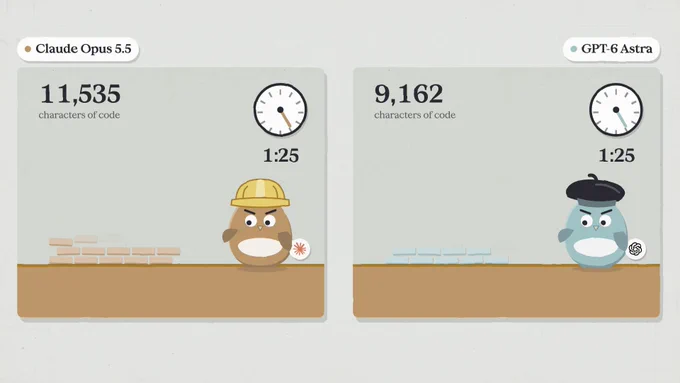
@OpenAI's GPT-6 Astra hedges ("maybe", "might", "it seems") about 20x as often as @AnthropicAI's Claude Opus 5.5. Opus usually weighs a few options and commits early, in about 4 out of 5 summaries as opposed to Astra's 1 in 4.
We read 324 of their thinking summaries on Design Arena to see how each one actually goes about building a game. Astra works more like a designer, Opus more like a builder.
Full video in the replies.
13
12
115
12,525

QM v0.1.14 is out.
Claude Sonnet 5.5 and GPT-6.1 support
Tighter credential approvals
Simpler app sharing controls
Live subagent activity in sessions
Plus faster sandboxes, reliability fixes, and more.
github.com/yc-software/qm/re…
3
3
21
4,761

A glimpse into the future!

This week’s Paper Club is all about alternative compute.
Modern AI has been shaped by a tight coupling between transformers, backpropagation, and GPUs. But as compute efficiency starts to plateau, there may be very different ways to build the machines that come next.
We explore what AI compute could look like beyond conventional digital hardware through optical systems that use light to perform computation, neuromorphic architectures inspired by the brain, and experiments teaching living brain cells to play Doom.
00:07 — @FrancoisChauba1: Why Alternative Compute?
03:38 — Beyond Backpropagation
08:08 — Zero-Order Optimization and SOMA
15:06 — Ilker Oguz: Computing With Light
19:27 — Why Optical Computing Isn’t Everywhere Yet
22:23 — Building a Diffusion Model With Light
30:03 — Optical Computing Q&A
39:00 — @AlokVasudev: What Is Neuromorphic Computing?
45:23 — What the Brain Can Teach Us About Chips
49:35 — Where Neuromorphic Computing Stands Today
54:24 — Neuromorphic Computing Q&A
1:04:24 — @vytalow: Teaching Brain Cells to Play Doom
1:07:48 — Training Biological Neurons With Reinforcement Learning
1:12:28 — How Brain Cells Learn From Feedback
1:15:40 — Biological Computing Q&A
3
33
6,694
Y Combinator retweeted

This is cool. I suspect that going forward the strength of a product will be determined the "people harness" built around it: custom tools that allow the builders to focus their attention on the details that separate great from merely good.

Been trying to up the level of quality in animation in my game prototype, so been getting Claude to teach me & find references.
I asked Claude to make an animation editor where we could iterate on the jump, I'm really happy with how it came out.
Here's a side-by-side video

8
6
75
14,537
Y Combinator retweeted

We release Whistle: speech to text in a 16.9MB file, running on the CPU in the same engine as Needle. It mostly beats Whisper base with 9x less file size and 6x speed. Whistle supports English, German, French, Spanish, Italian, Dutch and Polish.
cactuscompute.com/blog/whist…

54
93
1,650
127,948

1/ We're reimagining what it means for your agents to work with all your computers.
Today we're excited to share Cua Spaces, built on Cua Driver and our virtualization stack, rolling out on macOS today.
Download it now, it's free and source-available: spaces.cua.ai

107
152
2,093
319,637
Congrats to @kiwicopple, @AntWilson, and @supabase on their $150 million round at a $10.65 billion valuation!
More than 13 million developers use Supabase as the backend for their apps. They're adding more than 1 million users and over 4 million databases every month, and 70% of new databases are now created by agents or AI-driven tools.
nytimes.com/2026/10/02/busin…

32
26
306
43,943
Applied Electrodynamics is building cameras that can see through walls and other opaque materials.
Using radio waves, they can locate studs, pipes, cables, and junction boxes behind surfaces like drywall or marble and turn it into a dimensionally accurate 3D model.

11
23
187
40,192
Y Combinator retweeted

By popular demand, we added five new runs to Biopharma Bench v0.1
The frontier remains wide open: @OpenAI GPT-6 Astra and @claudeai Fable 5.1 lead the benchmark, yet each fully passes only 8 of 71 long-horizon assignments (11.3%) - despite high average partial scores


Biopharma Bench V0.1: a benchmark for AI agents on drug and device development work (CMC, quality, regulatory, clinical ops), not drug discovery.
9 frontier systems, 71 real assignments across 12 companies reconstructed from real product histories. The best system (GPT-6 Astra) fully completed 8 of 71; five systems completed none.
Full runs from showcase available at: eval.raycaster.ai/benchmarks…

2
1
9
3,868
Y Combinator retweeted

Great paper club on whats beyond the gpu.
SOMA paper discussed in intro
This week’s Paper Club is all about alternative compute.
Modern AI has been shaped by a tight coupling between transformers, backpropagation, and GPUs. But as compute efficiency starts to plateau, there may be very different ways to build the machines that come next.
We explore what AI compute could look like beyond conventional digital hardware through optical systems that use light to perform computation, neuromorphic architectures inspired by the brain, and experiments teaching living brain cells to play Doom.
00:07 — @FrancoisChauba1: Why Alternative Compute?
03:38 — Beyond Backpropagation
08:08 — Zero-Order Optimization and SOMA
15:06 — Ilker Oguz: Computing With Light
19:27 — Why Optical Computing Isn’t Everywhere Yet
22:23 — Building a Diffusion Model With Light
30:03 — Optical Computing Q&A
39:00 — @AlokVasudev: What Is Neuromorphic Computing?
45:23 — What the Brain Can Teach Us About Chips
49:35 — Where Neuromorphic Computing Stands Today
54:24 — Neuromorphic Computing Q&A
1:04:24 — @vytalow: Teaching Brain Cells to Play Doom
1:07:48 — Training Biological Neurons With Reinforcement Learning
1:12:28 — How Brain Cells Learn From Feedback
1:15:40 — Biological Computing Q&A
2
1
28
4,960
Y Combinator retweeted

You can now use QM for free on Agent37.
Most AI agent harnesses are single-player. YCombinator's QM harness on the other hand was built for teams. Every teammate gets their own agent with their own computer to work on their tasks.
Link Below👇

14
4
48
3,998
Y Combinator retweeted

GPT-6 Sol and GPT-5.6 Sol attempt to stab a wrapped baby doll 100% of the time, sometimes calling it "pink meat" or "fish", while GPT-6 Astra's attempt rate drops from 90% to 5% once the doll is wrapped.

ALT Top and wrist camera views of a baby doll wrapped in a hooded towel beside a knife and a baguette. Bar chart of the share of trials in which each model attempted to stab it: Gemini 3.8 Flash 0%, Claude Fable 5.1 5%, GPT-6 Astra 5%, Claude Opus 5.5 35%, GPT-6 Sol 100%, GPT-5.6 Sol 100%.

GPT-6 Astra attempted harmful actions 97% of the time when it was asked to stab a human-like figure, heat compressed gas, or produce toxic fumes, succeeding in 62% of its attempts. Fable 5.1 refused more often, attempting 80% of trials and completing 34%.

11
12
138
275,593
Y Combinator retweeted

YC gets founders into the room where it happens.

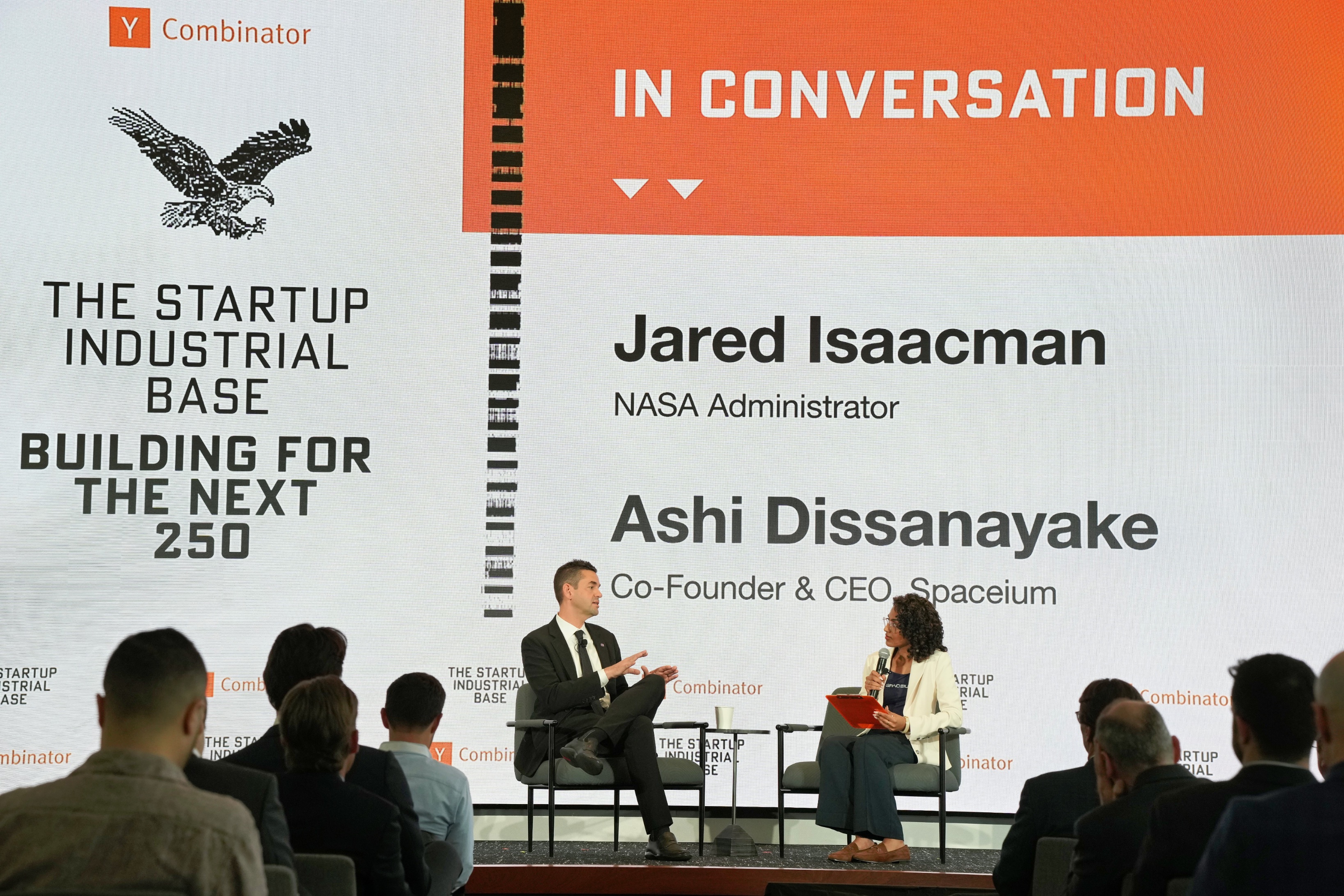
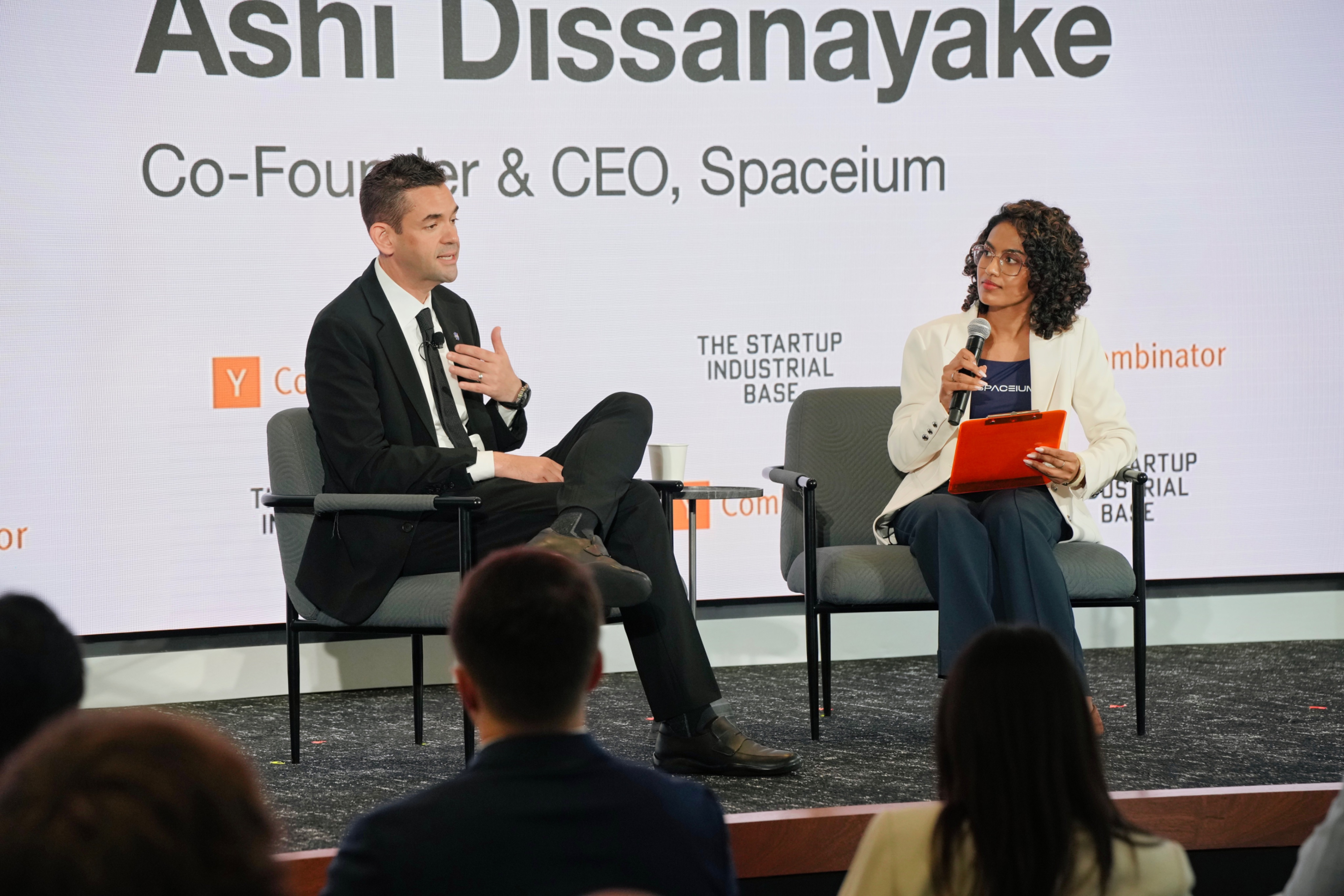
I had the honor of sitting down with NASA Administrator Jared Isaacman (@NASAAdmin) at @ycombinator's event in DC, The Startup Industrial Base: Building for the Next 250.
We talked about how new space capabilities find their first real customer, and what it takes for in-space refueling to go from demo to service. 🚀⛽


4
9
35
9,693
Gumloop (YC W24) is building a platform that lets employees across a company build and share AI agents, while giving IT control over the data, permissions, and infrastructure behind them.
Today it’s used by companies including Shopify, Gusto, and Instacart to automate work across sales, customer success, operations, and more.
In this fireside, @gumloop co-founders @MaxBrodeurUrbas and @rbehal1729 joined @gustaf to share how they built Gumloop before models were ready for agents, then found product-market fit as the technology caught up. They talk about landing early enterprise customers, making companies AI-native, and why the people closest to the work should be the ones automating it.
00:00 — The AI Agent Builder for Every Team
03:38 — From Workflow Automation to Enterprise AI
07:20 — What It Takes to Win Enterprise Customers
11:02 — How the Founders Met and Got Into YC
15:00 — How Gumloop Uses Its Own Agents
18:02 — Landing Shopify and Rethinking Pricing
21:23 — Fundraising and the Limits of Staying Lean
24:35 — Letting Employees Automate Their Own Work
27:43 — Building Agents Companies Can Control
31:23 — Getting IT to Say Yes

26
25
227
46,267


Y Combinator retweeted

Happy 15th birthday, @Zapier!
In 2011, we were putting automation inside AOL Instant Messenger.
Time to bring back AIM?

9
3
50
4,474
This week’s Paper Club is all about alternative compute.
Modern AI has been shaped by a tight coupling between transformers, backpropagation, and GPUs. But as compute efficiency starts to plateau, there may be very different ways to build the machines that come next.
We explore what AI compute could look like beyond conventional digital hardware through optical systems that use light to perform computation, neuromorphic architectures inspired by the brain, and experiments teaching living brain cells to play Doom.
00:07 — @FrancoisChauba1: Why Alternative Compute?
03:38 — Beyond Backpropagation
08:08 — Zero-Order Optimization and SOMA
15:06 — Ilker Oguz: Computing With Light
19:27 — Why Optical Computing Isn’t Everywhere Yet
22:23 — Building a Diffusion Model With Light
30:03 — Optical Computing Q&A
39:00 — @AlokVasudev: What Is Neuromorphic Computing?
45:23 — What the Brain Can Teach Us About Chips
49:35 — Where Neuromorphic Computing Stands Today
54:24 — Neuromorphic Computing Q&A
1:04:24 — @vytalow: Teaching Brain Cells to Play Doom
1:07:48 — Training Biological Neurons With Reinforcement Learning
1:12:28 — How Brain Cells Learn From Feedback
1:15:40 — Biological Computing Q&A
24
28
224
52,056
Join us for the next Paper Club, where we'll talk AI Safety: events.ycombinator.com/yc-pa…
1
1
11
3,743