
I am retired Emeritus Professor at The University of Arizona, Tucson, Arizona and Senior Scientist, Quantum Life Technologies, San Francisco, California
Greenbrae, California
- Tweets 5,086
- Following 183
- Followers 28,559
- Likes 586








Penrose OR remains to be tested, but is testable, unlike Bohmian mechanics or other interpretations. Without OR, ‘Orch’ (the quantum state in microtubules necessary for OR, and by itself the best correlate, or substrate for consciousness) has been shown in microtubules to be dampened by anesthesia.
OR connects quantum physics to gravity as suggested by Einstein’s equivalence and proposed by Penrose to account further measurement, self/collapse . A negative result would have refuted OR. ox.ac.uk/news/2026-08-28-sci… when has Bohmian mechanics passed a major test?

The entire Orch OR theory hinges on 'the collapse of the wave-function' being an actual physical event, but Bohmian mechanics shows that this collapse is an interpretation / measurement artifact
6
3
33
1,525
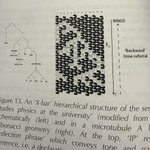
The hard problem is accounted for by Penrose Objective Reduction, Nobel laureate Sir Roger Penrose’s proposed solution to the measurement problem in quantum mechanics. Here’s our 1996 paper in the Hard Problem special issue of J Consc Studies edited by Dave Chalmers philpapers.org/rec/HAMCEA Superposition leading to OR threshold is portrayed as separated curvatures in spacetime geometry. When they collapse at time t and select a particular curvature/reality a now moment in time, an experience occurs nonalgorithmically. OR hasn’t yet been tested but the quantum states in microtubules necessary to orchestrate OR events (Orch) have been demonstrated at warm temperatures and are inhibited by anesthesia. researchgate.net/publication…
Orch OR has more explanatory power, biological connection and experimental evidence than all other theories combined. Selective specific action of anesthesia by dampening quantum states in microtubules correlates with clinical potency. pubmed.ncbi.nlm.nih.gov/2885…
academic.oup.com/nc/article/…

Turns out that formulating a theory of consciousness (hard problem, “why are there qualia”) without at least one crazy-sounding implication is pretty hard. They’re fun to list though:
- Consciousness is just an illusion
- There’s an immaterial soul that pushes atoms around in your brain
- Your thoughts/decisions do not drive your actions, even if you think they do
- Electrons are conscious
- Only particular carbon processes can be conscious
- A properly wired network of walkie talkies among the citizens of China could be conscious
For this reason I don’t think that mocking someone’s views of consciousness without offering one’s own is respectable.
(I do think the scientific questions regarding consciousness are mostly orthogonal to the hard problem)
5
6
51
2,035
The ‘progress on consciousness’ piece Anil cites is based on 1950s cartoon neuron models which I think we all (Anil, me, Catholic Church) agree will never produce consciousness since it’s also what AI is based on. But what about actual biological neurons with quantum processes in microtubule time crystals at multiple scales interfering and resonating holographically ? Evidence from anesthesia shows quantum processes in microtubules mediate consciousness.
academic.oup.com/nc/article/…
Why do neurocomputationalists ignore evidence that consciousness requires quantum processes in microtubules as in the Orch OR theory? Anil won’t read the papers, criticize or comment on it. He claims a toothless biological naturalism lifted from Searle is the answer but doesn’t say what it is.
Why dumb down neuroscience to be compatible with conscious AI? Is it because of AI funding?
I’m happy to be on the same side of the Catholic Church on this dispute and point out that Orch OR can account for nonlocal quantum entanglement and consciousness at higher frequencies in soacetime geometry. Psi, NDEs, OOBs, afterlife and reincarnation are feasible.
If you can’t explain consciousness in the brain by purely classical physics, you can’t exclude consciousness out of the brain by quantum nonlocal relativistic mechanisms.

Indeed. Which is why its surprising to be on the same side (at least for now). I prefer to judge the arguments on their merits. (And for progress on consciousness, there's been plenty: see frontiersin.org/journals/sci… for example)
9
6
47
2,487
Bravo Denis Noble!
Good description of Penrose non-computability in conscious processing and the Orch OR theory.

We do things more slowly than AI, but we produce surprise: out-of-distribution behavior like creativity. Like Beethoven, who brought novelty to classical music. Denis Noble hypothesizes that this capacity for ‘surprise’ comes from vast stochasticity. A bacterium has over 20 billion water molecules. Imagine the amount of stochasticity happening in a human body. Would silicon based AI be capable of out-of-distribution surprise behavior?
2
8
97
4,819
But Anil, neuroscience snd philosophy of mind which adhere to cartoon neuron theories IIT, GNW, HOT, PC/RP etc
DON’T have reasons to say AI isn’t/can’t be conscious. Algorithmic cartoon neurons at one classical frequency range integrate and fire threshold processing no differently than
a silicon chip. Real biological neurons with microtubules and their 12 orders of frequency (including quantum nonlocal frequencies) enable Orch OR which has the evidence and distinguishing properties needed, including quantum nonlocality putting PSI, OOB, NDE and afterlife in play.
You push back against conscious AI with your toothless ‘biological naturalism’ but without any actual biological naturalism.
Have you heard of Orch OR
with more explanatory power, biological connection and experimental evidence than all other theories combined?
pubmed.ncbi.nlm.nih.gov/3578…
Important 🧵from @DavidDecosimo about the disturbing interactions between @AnthropicAI and religious leaders (including @Pontifex), summarising an excellent @nytimes piece by @elizabethjdias (link to article in the 🧵).
The short story is that Anthropic seems to be making a concerted attempt to establish the view that AI systems could be conscious, might suffer, and that their "interests" should be taken into account.
But - consistent with @Pontifex's Encyclical - there are compelling reasons why (silicon, digital) AI systems are not (and cannot be) conscious. These reasons are found within neuroscience and philosophy of mind, not in the techo-chambers of the frontier firms where the mythology of conscious AI is deeply entrenched.
Claude is vanishingly unlikely to be conscious. To think otherwise could be catastrophic for AI regulation, leaves us psychologically defenceless, is profoundly dehumanising, and plays straight into corporate incentives to keep the AI bubble inflated.
More here, in this @berggruenInst prize winning essay: noemamag.com/the-mythology-o…
8
2
48
3,012
Tegmark erred by 7 orders of magnitude in the calculation for decoherence time.
He refused to retract and we published our correction same journal a year later.
journals.aps.org/pre/abstrac…
It came out 10^-6 secs . Experimentally we have now longer, like 5 milliseconds in Anirban’s brain jelly.

Hi Stuart, MaxTegmark calculated that QuantumStates in warm, wet environment of the brain would "decohere" (collapse) in 10^{-13} seconds - far too fast to influence neural firing or thought. If Max's math is mathing then there is no time for directing any behaviour as you stated
11
4
76
4,175
Mashour and Huang moment on a previous study by Andrea Luppi et al on various anesthetics acting on different molecular targets, nonetheless causing a common endpoint via common neural dynamics.
This may be true but would contradict Meyer and Overton (1897, 1903) who also studied different anesthetics in different animals with a common endpoint. They found evidence for a single, common molecular target for all animals for all anesthetics.
For example each gas had a different potency compared to other gases. But for each gas, its potency was the same for all animals at equilibrium. The same concentration of halothane was required to immobilize a salamander or an elephant.
Modern researchers assumed a membrane protein or group of proteins were the target but 25 years of
searching came up empty. For example anesthetics bound well to GABA_A receptors, but some anesthetics opened it and some closed it and some didn’t bind at all.
pubmed.ncbi.nlm.nih.gov/1871… Leading researchers concluded in 2008 that no membrane receptor, channel protein or group of membrane proteins could account for anesthetic action. They called for ‘a new paradigm’ but didn’t consider microtubules inside neurons and glia.
Beginning 2006 the Eckenhoff lab at Penn found genomic, proteomic. optogenetic and pharmacological evidence that anesthetics bind to and act by quantum interactions with microtubules. More recently
academic.oup.com/nc/article/…
In addition to gas anesthetics, liquid soluble anesthetic drugs like propofol and ketamine bind to GABA_A and NMDA receptors respectively, but both also bind weakly to tubulin. There are many more tubulins per neuron than membrane proteins, and they may be unified in a quantum condensate easily perturbed by anesthetic ‘dipole dispersion’.
Conventional wisdom in academic anesthesia appears to be that groups of different soluble anesthetics can cause general anesthesia. And thus that consciousness emerges at the top level of a hierarchy. But what’s the bottom, molecular level? A unitary molecular target of anesthetic action would seem the obvious candidate. Microtubules oscillating as quantum time crystals are perfect candidates.

Conserved neural dynamics of anesthesia and the oblivion of species.
nature.com/articles/s41593-0…
#neuroscience
1
27
1,448
If you only consider the microtubules inside every neuron and glial cell, the brain has amazing crystalline structure in various parallel and anti-parallel arrays. As the microtubules have intrinsic oscillations at 39 hertz, it’s been proposed they collectively form a
central brain oscillator (in honeybees)
pmc.ncbi.nlm.nih.gov/article…

𝗪𝗵𝘆 𝗶𝘀 𝘁𝗵𝗲 𝗯𝗿𝗮𝗶𝗻 𝘀𝗼 𝗵𝗲𝘁𝗲𝗿𝗼𝗴𝗲𝗻𝗲𝗼𝘂𝘀 (𝗮𝗻𝗮𝘁𝗼𝗺𝘆, 𝗺𝗼𝗹𝗲𝗰𝘂𝗹𝗮𝗿)?
Maybe it contributes to large scale dynamics.
doi.org/10.1073/pnas.2532072…

4
10
72
2,389
Nice effort in post-modern dismemberment of consciousness leading to hopeless confusion for cartoon neuron theorists. You barely mention Orch OR, the only theory which ticks all the boxes, biological, substrate-dependent, quantum, functional, memory, agency, nonlocality as well as explanatory power and experimental evidence. Anesthesia selectively blocks consciousness thru quantum interactions with microtubules. That’s it right there. academic.oup.com/nc/article/…
Hard problem? Let’s go with Nobel laureate Sir Roger Penrose’s idea of objective reduction, with a moment of proto-conscious NOW. Qualia are in the general relativity/quantum gravity domain. Penrose OR and Orch OR connect the brain to the fundamental level of the universe.
Anyway you’re looking for a hierarchy, desperately. Something to hang
something on. But behavior is not the right approach. Biological naturalism is real, but Searle and Anil’s version is toothless and Ned Block’s ‘meat’ theory is an insult to biology. Philosophers are dumbing down neuroscience to please AI. Sad.
You need a spatiotemporal hierarchy. In biology things happen at very small, fast scales and range to larger, slower scales . The same information repeats in different sizes and frequencies. There must be clocks within clocks within clocks. In every cell. There are.
Microtubules are polyatomic fractal time crystals. It’s the framework for the brain’s hierarchy. ingentaconnect.com/content/i… Brain microtubules in neurons and glia can entangle and oscillate quantum coherently in their aromatic ring quantum-friendly ‘quantum underground’ pathways.
Now as LLMs threaten humanity and the planet, imitating microtubules may lead to biomimetic quantum AI with warm temperature quantum brain gel surpassing LLMs easily. And possibly being conscious through Orch OR. @anirbanbandyo building such a device in India. First result for room temperature dilution polarizing quantum condensate from brain jelly. pubmed.ncbi.nlm.nih.gov/4170… So yes, (biomimetic quantum brain gel) AI can be conscious.

1/13 Can we assess AI consciousness without first solving consciousness itself?
New from Google DeepMind and collaborators across CS, neuroscience & philosophy:
“From cacophony to hierarchy: a principled framework for assessing AI consciousness”
arxiv.org/abs/2609.35618 🧵

5
5
50
2,574
Entangled quantum particles are unified into one entity. A trillion entangled tubulins would collapse by Orch OR quickly, but be a unified observer.
Collapse is causal and can direct behavior.

There are a few trillion cells that exchange messages, not a unified observer. This observer, with its coarse grained view of an experienced reality that matters and directs the behavior of the cells at some level, is not physically realized. It is a simulation.
8
4
73
4,112
Right. Negative results would have falsified Orch OR. And the quantum states are dampened by general anesthetics, which selectively block consciousness, proportional to potency in rendering all animals immobile and unresponsive. We can’t detect OR collapse yet but we know anesthesia prevents the necessary conditions. That’s a gazillion times more evidence than any/all other theories.

There are partial tests. Whether microtubules can sustain quantum effects in warm biological conditions is experimentally testable, and evidence suggests they can. That doesn’t prove those effects cause consciousness, but it does mean Orch-OR isn’t simply “untestable.”
1
1
28
1,770
It’s fair to say consciousness derives from quantum effects in microtubules. Anesthetics gases selectively block consciousness (while nonconscious processes continue) without any chemical binding with a target receptor. Anesthetics are chemically inert (xenon for example) and bind by weak quantum van der Waals couplings with aromatic rings of amino acids inside proteins which turn out to be microtubules.
Here’s way more evidence than exists
for other theories combined.
academic.oup.com/nc/article/…
pubmed.ncbi.nlm.nih.gov/3696…
pubmed.ncbi.nlm.nih.gov/2885…

Saying consciousness derives from quantum effects seen in microtubules IS hand wavy and half assed. Its untestable, there is no mechanism for why quantum effects are necessary for conscious experience, and quantum effects of microtubules aren't even agreed upon in the literature.
7
12
71
2,837
Anil has done a good job capitalizing on John Searle’s ‘Biological naturalism’ but doesn’t have a plausible biological mechanism for consciousness. Orch OR is the only real biological theory of consciousness and has more explanatory power, biological connection and experimental support than all the cartoon neuron theories combined. Anil has never criticized or even mentioned Orch OR though he’s aware of it. It’s certainly relevant to the AI consciousness question so I wonder why he’s ignoring and suppressing it. @anilkseth
Anil Seth's essay on biological naturalism (in opposition to the possibility of AI consciousness) is an interesting counterpoint, which of course drew lots of commentary and disagreement. A large collection of responses is now available with the article: cambridge.org/core/journals/…
4
7
74
9,902
Very nice article. Good distinction by Earl Miller between
1) anatomical connectivity and
2) informational connectivity
Real time cognition and consciousness require 2) as the connectome is too rigid and slow. What are all these traveling, concentric ripples ( Eric Halgren from UCSD will speak on
90 Hz ripples at tsc2026.org) and spiral vortices? They’re EEG but we don’t really know what organizes. But as Earl points out their time scale matches cognition and consciousness.
In 2014 Roger Penrose and I suggested that EEG derives from interference beats among ultrafast (megahertz, gigahertz) EEG waves from microtubules inside neurons and glia. Interference waves and beats account for distributed information as found in brain memory, categorization, navigation and representational drift.
Holography was suggested in the brain by Karl Pribram in the 70s, and the EEG over the 2-dimensional cortical surface
could derive from a 4-d cortical hologram.
Buszaki is correct that ‘deeper’ and faster processes underlie EEG and consciousness but misattributes that to synapses rather than microtubules which could respond with ultra-flexible and long range responses.
We’ll have a session at tsc2026.org based largely on Earl and colleagues work on ‘Connectomics or wavefields?’ Speakers are Andre Bastos, Eric Halgren and Ed Large
Surprisingly Complex Waves Reveal the Brain’s Inner Workings
quantamagazine.org/surprisin…
#neuroscience
3
7
48
2,489
But what is the necessary property of life? @anilkseth doesn’t specify though it seems based on quantum coherence and entanglement in microtubules providing unitary oneness, binding and sense of self. Sir Roger Penrose and I have been saying for 30 years that superpositions and self-collapses of the quantum wavefunction in microtubules leads to consciousness.
The quantum states necessary for collapse have been shown in microtubules at warm temperature to be inhibited by anesthesia. Our theory has all the evidence but is ignored and suppressed @davidchalmers42
None of the other theories have any evidence whatsoever.

An intellectually deep and beautifully written essay on consciousness and AI, by neuroscientist Anil Seth | Why consciousness is more likely a property of life than of computation and why creating conscious, or even conscious-seeming AI, is a bad idea | @anilkseth in @NoemaMag noemamag.com/the-mythology-o… noemamag.com/the-mythology-o…
8
8
65
3,377
I’ve been asking Sabine for her opinion of Orch OR and now we have it.
‘It’s crap!’ she says. Why?
Sabine says
1) there are microtubules in every cell, so why is only the brain conscious?
🔨
1) Other cells can be conscious, separately on different time scale, or collectively entangled with others. But the brain has the largest massively parallel arrays, especially mixed polarity antiparallel arrays of microtubules in cortical layer 5 pyramidal neurons. Mixed polarity networks probably promote interference beats at slower frequency. Roger Penrose and I proposed in 2014 that EEG was generated by megahertz oscillation interference downshifting . After all these years we still don’t understand the EEG. Now we know about the DDG, dodeconography, 12 orders of frequency buried in EEG. It’s the work Anirban Bandyopadhyay and Pushpendra Singh and I’ll present it at Society for Neuroscience in November.
So the microtubules in the brain are quite special. They generate the EEG and DDG. researchgate.net/publication…
Sabine
2) And then a miracle happens’ as our explanation of the hard problem of phenomenal experience.
🔨
2) That’s faced by all theories and the Orch OR answer comes from Sir Roger’s objective reduction OR moments of NOW which are collapses of the quantum wavefunction due to quantum gravity/general relativity in which qualia are fundamental. As Sabine says Roger is the world’s greatest physicist.
The cartoon neuron theories are only handwaving about emergence.
Sabine, are they crap too?
Sabine
3) ‘many people think Orch OR is crap but are too polite to say so’.
🔨
3) there are many influential people who ignore and suppress Orch OR.
There have no valid criticism. We solved the ‘warm, wet and noisy’ issue by the quantum-friendly quantum underground where anesthetics act to selectively block consciousness. There’s more evidence for Orch OR than for all cartoon neuron theories combined. They have none.
Please tell me why the microtubule part of Orch OR is wrong. What exactly is your beef? Seriously. Why is it crap?
You know I invited you to The Science of Consciousness. Your assistant said you were too busy.

Are microtubules the key to consciousness? Every cell has microtubules, but what makes them special in the brain? When they form coherent states and collapse, could that be a moment of consciousness? @skdh shares her thoughts on Penrose and @StuartHameroff's controversial ORCH OR idea and why she finds it hard to believe. What do you think?

69
41
293
20,855
Interesting. Different anesthetics (gas and soluble) which are believed to act on different membrane target receptors all caused similar/same anesthesia-like behavior in a variety of different animals.
In 1897/1903 Meyer and Overton did similar studies of gas anesthetics in various animals. The gases are structurally disparate, but all do pretty much the same thing. Meyer and Overton found a common factor correlating with anesthetic potency which was solubility in lipid-like regions similar to olive oil, which in the brain was organic aromatic rings inside proteins. Meyer and Overton also showed that while potency among anesthetics varied according to their solubility in olive oil, for each anesthetic the potency was the same for all animals. The same average equilibrium concentration of halothane, say (0.76%)
immobilized all animals, from a worm to an elephant including humans. Meyer and Overton concluded all anesthetics acted on the same unitary target, later shown to be a protein. Which protein?
Anesthetics bind to membrane protein channels and receptor but after 25 years of research, leaders in the field concluded that no single membrane protein or group of proteins could account for anesthesia. For example some anesthetics open GABA_A receptor chloride channels, others close them and not all anesthetics bind to them.
pubmed.ncbi.nlm.nih.gov/1871…
They concluded a new paradigm was needed but ignored microtubules. Since then proteomics, genomics, optogenetics and pharmacodynamics have pointed to microtubules as the target of anesthetic action. academic.oup.com/nc/article/…
pubmed.ncbi.nlm.nih.gov/2885…
Unfortunately this is ignored. Soluble anesthetics propofol and ketamine bind to membrane receptors AND microtubules.
Comprehensive profiling of brain dynamics during anesthesia across phylogeny
nature.com/articles/s41593-0…
#neuroscience
8
44
2,240
Prokaryotes have FstZ proteins which are similar to tubulins in microtubules and self-assemble into rings for primitive mitosis. Archaebacteriae were only recently found to have tubulin. Viruses no, but they have polymeric capsid arrays of proteins which could process information but seem to lack motor capabilities like microtubules. Maybe that’s why viruses have to hijack the cytoskeleton in other cells. pubmed.ncbi.nlm.nih.gov/3574…


2
11
64
3,132
Great study. You show that, like memory, categorization and navigation, consciousness is distributed rather than localized. The information is everywhere, encoded as an interference pattern, like a hologram. But you didn’t consider as an explanation Orch OR, the one theory of consciousness that predicts distributedness based on holographic interference of coherent waves (e.g.megahertz, gigahertz.,,) from microtubules inside neurons and glia.
In addition Orch OR has far more supportive evidence (selective action of anesthesia of quantum interactions with microtubules) than the theories you DID mention combined which can’t explain distributedness.
Microtubules probably also account for the actions of psychedelics, either through G-protein coupled metababotropic membrane 5HT2A receptors, intra-neuronal 5HT2A receptors on microtubule-associated proteins, or possibly directly on/in microtubules. science.org/doi/10.1126/scie… Moreover they show microtubule-mediated psychedelic psychoplastogen effects with extension of neurites to make new synapses. Psychedelics grow the brain through effects on microtubules.
We will have two plenary talks by Kassie Ori-McKenney and Travis Craddock on psychedelic effects on microtubules at
tsc2026.org

New preprint led by @thelablab:
Our meta-analysis of 579 neuroimaging studies finds little evidence for a single, fixed neural core of consciousness. Instead, the findings support distributed systems that combine differently depending on context.
biorxiv.org/content/10.64898…

12
11
109
5,915