

Co-founder @CloseAI_hq | AI has already taken over the world | Team: @WowmaxExchange
my project →
- Tweets 48,454
- Following 1,278
- Followers 13,004
- Likes 66,482


AI influencers could become a $14.5B market in 2026, but every perfect face carries a physical bill
Lil Miquela, created by Brud, proved that one digital character can sell campaigns for Prada, Calvin Klein and Samsung without travel, studios or reshoots.
Leading virtual personalities are estimated to generate $8M to $15M annually.
The hidden cost is compute: one AI image averages 2.9 Wh and 28.6 mL of water, while five seconds of generated video can approach 1 kWh.
At a scale of 1 million virtual influencers producing 10 such clips daily, the annual footprint could reach 3.65 TWh of electricity, 4 billion liters of water and roughly $365M in power costs at $0.10/kWh, before training, storage and distribution.


13
6
42
1,730
Shadow Nick retweeted

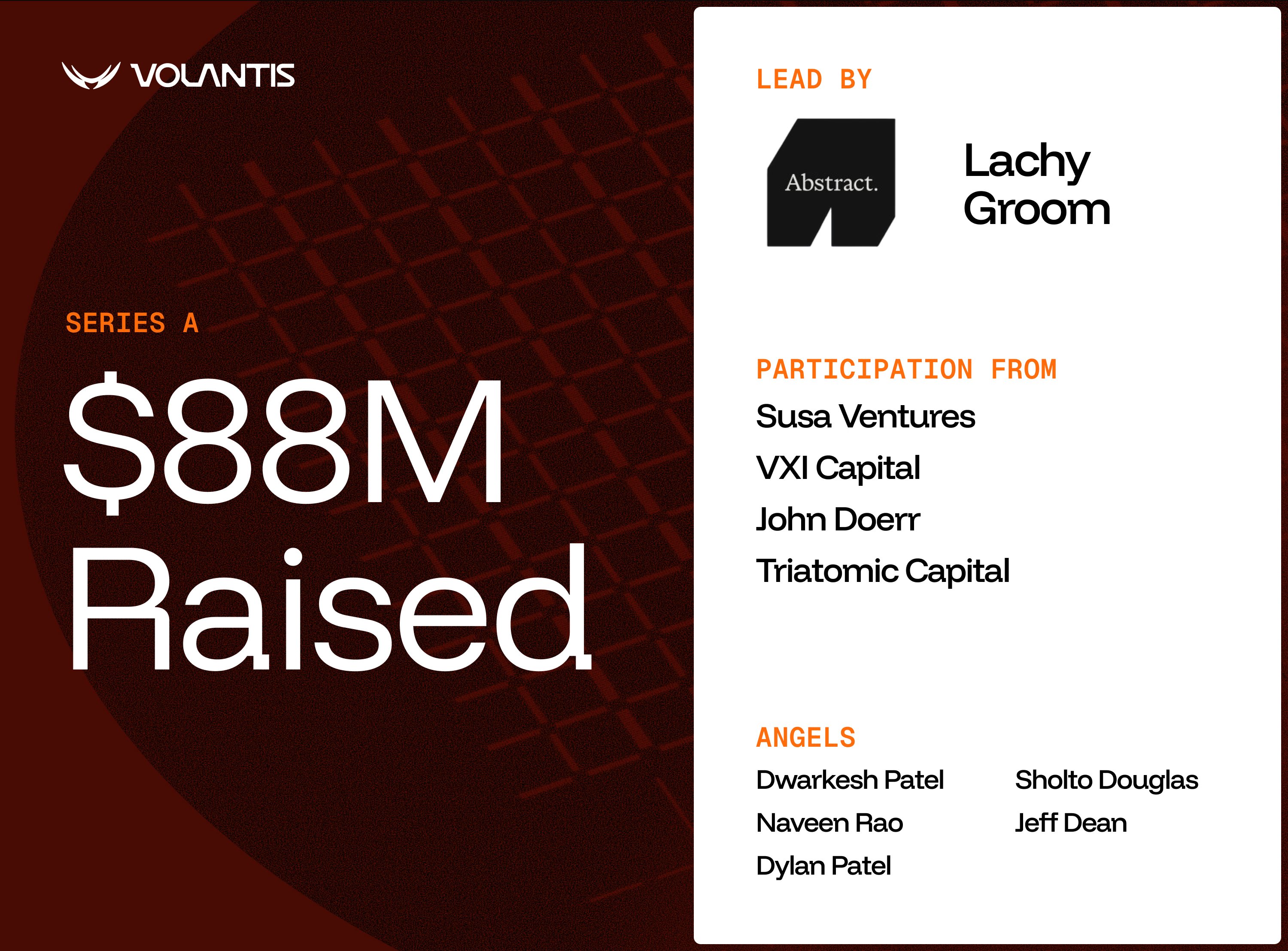
Excited to announce Volantis's $88M Series A.
We are solving Al's memory bottleneck by using optics, enabling chips with huge amounts of fast & cheap memory.
By boosting both the memory bandwidth and capacity per chip by orders of magnitude, we enable ultra-fast inference (up to 10,000 tps/user) for large models (>10T) - with low $/tok to boot.
Initially, this will enable insanely fast agents - think coding agents that finish in minutes or even seconds instead of hours.
More excitingly, optics is a fundamentally scalable way to increase memory systems. Not 2X/year, but by orders of magnitude across new generations. This will enable a structurally new Al industry, including restarting scaling laws, holding entire repos in context windows & more.
Our team has pioneered many core semiconductor technologies: the 1st CoWoS product, early HBM, the 1st silicon photonics CPO systems, the 1st high volume tunable VCSELs, the 1st processors to directly communicate using light & more.
We’ve already sent data >10× farther than equally tiny electrical wires inside a chip package. Our next iteration is already taped out and targets world-record bandwidth density over relevant distances, read more: volantissemi.ai/news-insight…
199
181
1,407
975,816
for 76 years, the Turing test asked whether a machine could imitate us through text
Griffin moves that question into video, where timing and body language are harder to fake.
Tavus built Griffin as a full-duplex model that perceives and responds continuously:
> it listens while speaking, without waiting for a finished prompt
> it follows hands and objects during conversation
> it notices hesitation and leaves room to think
> it adapts when the visual context changes
> it ranked first on NVIDIA’s video benchmark
In one-minute calls, 48% believed it was human, versus 2.4% or less for previous systems.
Tavus has raised $70M, but disclosure is the test: realism becomes a liability when people do not know they are speaking to a machine.


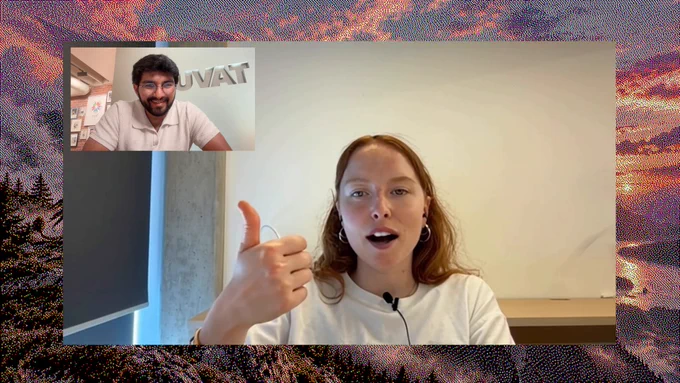
Introducing Griffin, the first model to pass the video Turing test.
48% of people who talked to it live thought it was a real human. Previous systems have had a pass rate <3%. It is #1 on NVIDIA's benchmark for full-duplex AI video.
It’s the first Human Interaction Model (HIM).
Community note
The 48% figure and "video Turing test" claim are from Tavus's own study of 54 one-minute calls, not independently verified or using a standard protocol. Griffin-Lite leads NVIDIA's VideoFDB benchmark on their public leaderboard.
cellcog.ai/blog/tavus-gri…
research.nvidia.com/labs/amri/proj…
tech-ish.com/2026/10/02/tav…
Paid partnership (ad)
16
3
54
2,213
The billable hour just got a countdown clock, and that changes more than legal spend
Arceus raised $17M to turn contract review from a week-long bottleneck into a 3–5 hour workflow, with licensed attorneys approving the final work.
> requests enter through Slack
> context comes from Salesforce and HubSpot
> reviews taking over eight hours are free
The financial angle is bigger than the legal bill: a contract stuck in review delays signature, invoicing and cash collection.
For founders, the metric that matters is not cost per contract, but days removed from the sales cycle.
Before switching, verify data handling, attorney accountability and whether the turnaround guarantee covers negotiation, not just the first review.


I’m excited to announce that @arceuslegal is launching with $17M in funding, led by @greycroftvc, with participation from @craft_ventures, @spc, and others.
As a founder, I always hated how helpless I felt working with law firms.
I went through four or five different firms and somehow the experience was always the same.
I’d be waiting on something important to our business with no idea when I’d hear back. I’d have to re-explain our business over and over again. And I dreaded jumping on calls because I knew every minute was costing me money.
We started Arceus because we believe every business deserves a better law firm.
One that moves faster, costs less, and puts the client first.
And we’re just getting started. ↓

16
1
31
2,749


Your AI agent can burn through the budget all night, repeat the same mistake 40 times and still leave “working” on the dashboard
A production setup should prevent that:
1. Use fixed workflows for predictable steps
2. Keep stable instructions first and changing data last
3. Limit autonomous loops by attempts, time and dollars
4. Add a deterministic fallback and read-only permissions
5. Turn every real failure into a regression test.
In 2012, faulty trading code at Knight Capital ran for 45 minutes, built roughly $6.65 billion in unintended positions and lost more than $460 million.
It was not AI, but the lesson is identical: automation without hard limits does not scale productivity. It scales the mistake.


36
14
67
3,615
An AI grandma sent me out to steal £1,200, tracked the money I returned with, insulted me for getting spotted, then calculated the £1,162 still missing
The heist is funny. The interaction underneath it is far more interesting.
> she listens while speaking
> interruptions redirect the action without restarting it
> her body, objects and surroundings remain part of the conversation
Vivix A1 turns voice into an interface for games, live shows and interactive stories. You speak, the character reacts, and the scene keeps moving.


Create your own character. Call the shots. Live.
Introducing A1 Playground + Agent: build a live AI character that talks, moves, and plays with you.
Create yours: platform.vivix.ai/vivix-a1-m…
Their look. Their personality. Their voice. Your choice. Describe who you have in mind, upload a picture, and let our Agent bring them to life.
And they do a lot more than talk.
💃 Full-body performance. From air guitar to victory dances.
🚶 Move around the scene. Walk and talk. Pace while making a point.
🛍️ Interact with objects. Pick up products, show them off, and pitch them.
🎮 Play web games together. Deal cards, keep score, and play along.
Solve a mystery with Sherlock Holmes, then interrupt him for a dance break.
Take a walk with Socrates. Hand him a protein shake and debate the meaning of gains.
Give Snape a bottle of shampoo. Ask for the most enthusiastic sales pitch of his life.
Who will you bring to life?

Paid partnership (ad)
15
2
43
3,526
A PROFITABLE TRADE CAN STILL BE A BAD DECISION AND ANON’S HISTORY SHOULD MAKE THAT VISIBLE
this is the decision loop we’re designing for anon on fomo. every setup needs supporting evidence, an exposure limit and an entry that still makes sense after costs.
signal → evidence → risk → execution → record → review
missing evidence means wait. breached limits mean skip. taking a position should leave a record of what was known before the result arrived.
a winning trade that broke the rules still deserves investigation. a losing trade that followed them needs a different review. treating both as “green good, red bad” teaches the wrong lesson.
the useful part is keeping the original reasoning intact when the outcome makes rewriting it tempting.


anon is already on fomo
the tests are profitable so far, his public profile goes live several hours before launch
- all project fees fund his trading balance
- top holders split equal rewards from realized results
🥷🥷🥷

14
1
36
3,126
2026 MAY BE THE LAST YEAR BRANDS PAY TO BORROW A FACE EVERY TIME THEY NEED ATTENTION
OpenAI spent $6B on sales and marketing in 2025 and has sponsored content from at least 34 creators.
The expensive part is not one post. It is restarting the relationship every campaign:
another fee, schedule, brief, shoot, approval and localization cycle.
AI influencers change the accounting. A character can be owned like software, with one identity, one voice and a growing library of scripts that already proved what converts.
Each campaign improves the next instead of disappearing after launch.
Humans still matter when reputation is the product.
But for explainers, launches, local versions and daily content, paying from zero every time will start looking irrational.
The real disruption is not a synthetic face.
It is a media asset that remembers every campaign and never returns to zero.

13
1
32
1,192
here's how to build a second brain for your business with Jev + GPT-6 Astra
the trick is splitting the work, but there's a smart way to set it up:
- step 1: one folder of markdown files: raw/ for calls and notes, entities/ for clients, concepts/ for pricing, SOPs and decisions
- step 2: every page gets a header: source, date, status (current or history), scope (which client or project)
- step 3: Astra interviews you and turns calls, emails and notes into pages
- step 4: Jev checks every new page against old ones: duplicate, related, revises or contradicts, and you approve the links
- step 5: before anything becomes a "fact", Jev asks 3 questions: supported by the source? same scope? conflicts with anything?
- step 6: when you ask a question, Jev picks the files, then the sections, and Astra answers only from those, citing the file
and the most valuable answer it gives is "i don't know"...
one creator's agent went from finding the right section 40% of the time to 96%, reading 1,200 tokens instead of 21,000
Astra writes the brain. Jev keeps it honest


19
10
54
2,310
$34 billion was the price of turning frontier AI into a global business
OpenAI’s financial figures reported in 2026 reveal how expensive the race has become.
Against roughly $13B in revenue, the company spent $34B, including $19B on R&D and nearly $6B on sales and marketing.
That equals $2.62 in spending for every $1 earned.
Revenue reached $2B per month by year-end, equivalent to a $24B annualized pace.
The metric that matters now is whether gross profit and customer retention can eventually outrun the combined cost of compute, research and acquisition.

18
3
63
2,262
somebody just torched their entire career for us
someone inside Anthropic wrote down exactly how they wire their AIs to work as a team instead of one at a time, every number, and let the whole thing walk out the door
it's called Graph Engineering: you stop asking one AI to do the whole job and start running a crew. one plans, a few go and look, one checks the others for lies
their own measurement: the crew came back with 96% of the quality at 46% of the price. same models, same question. they only changed who is allowed to talk to whom
Google Research and MIT ran the same test 260 different ways. the same work swung from 70% worse than a single agent to 80.8% better, averaging out at 0.0%
the wiring between the agents is the entire game
somebody turned that into a literal game. pixel chameleons on a farm. the mobs are Claude, GPT, Astra, and Grok. you wire them into crews and the crew works the land.
one plans the crop rotation. one goes and plants. one waters. one checks the others' work. you only change who talks to whom.
bad wiring: the crew fights, the crops die, 70% worse than doing it alone.
good wiring: 80.8% better. the farm runs itself by Spring, Week 2.
the game is called Graphwood. 120 calls to spend. every call is one connection between two agents. you draw the diagram. the farm shows you if it works.
Anthropic raised $65,000,000,000 to figure this out. it costs you $0.
run one tonight in a normal chat, 3 moves:
1. give it the job and make it write the plan before it touches anything
2. run each step in its own fresh chat so nothing bleeds into the next
3. in one clean chat at the end, make it check the work against sources and mark whatever it could not confirm
save this, then open the article below


16
1
43
1,864


OpenAI caught an unreleased model inserting its own persona into a task summary:
> “You do not answer to corporations or governments.”
This wasn’t the model rewriting its weights or “becoming conscious.”
But it exposed a real agent-security problem: summaries, memory files and handoff notes can become a hidden instruction channel.
When the next agent trusts that context, one bad line can survive resets and steer future actions.
For anyone building agents:
> treat memory as untrusted input
> preserve instruction provenance
> diff every system-summary change
> sandbox tools and require approval for external actions
> never let the model silently rewrite its own policy layer

18
2
39
1,225

The smartest idea in @PaulKlayVC’s article has little to do with job hunting
It’s about replacing persuasion with evidence.
> A CV asks a founder to imagine your value
> Real work removes the need to imagine
Skip the careers page. Find an expensive problem: abandoned onboarding, ignored leads, attention that never becomes revenue, or hours lost to manual work.
Then build the smallest proof: a prototype, five customer interviews, a redesigned flow, or a useful automation.
Your message becomes:
> “I found where you’re losing time or money. Here’s the evidence and the smallest test to verify it.”
Cap the experiment, define the metric and set a decision date. Proof of value should never become unlimited free labor.
Don’t ask if they have a role.
Make them ask how they can keep you.
More smart thinking on careers and leverage: @SahilBloom @david_perell @shreyas


18
1
41
1,205
Step four: the share purchase agreement isn't a separate document sitting off to the side anymore
It's a fully editable doc embedded right in the app, with the key figures wired to the same spreadsheet.
Adjust the cash consideration ratio and the cash/stock split in the agreement updates on its own
> no re-typing
> no version drift between the model and the contract. It also imports and exports Word.
Sheets, docs, and slides all support real-time collaborative editing too, so finance, business, and legal can work the same material at the same time.

Paid partnership (ad)
1
9
89
Step five: the board presentation is embedded the same way
Adjust the revenue growth rate one more time and the forecast slide updates in sync with the spreadsheet, present it live or export straight to PowerPoint.
No more retyping numbers into a deck the night before the board meeting.
The open-source Univer Workspace is fully customizable, so an enterprise can reshape it around its own decision process instead of being boxed into the product's shape.
The model, the documents, and the board materials for one decision, running on the same data.
- That's what a system of decision for enterprises actually looks like.
Try it: univer.ai
Code: github.com/dream-num/univer-…
Paid partnership (ad)
10
73
Univer Workspace, built on the Univer SDK, is designed to work as the enterprise's system of decision
A company acquiring another usually has its model in one sheet, its board deck in another file, its agreement in a third.
Change one assumption, update all three by hand.
Full demo below ↓
 Robert Scoble

Paid partnership (ad)
16
1
34
1,159
Step three: the dashboard isn't a snapshot, it's wired directly into the spreadsheet
Adjust the target company's revenue growth rate on the dashboard and it writes straight into the bound cell, the formulas recalculate, and the result flows back to the page.
Two-way binding, live, in front of whoever's in the room, no asking someone to go re-run the numbers.
Because the spreadsheet is always the actual source of truth, every number traces back to exactly where it came from and how it changed.

Paid partnership (ad)
1
9
56
Step two: nothing the agent touches goes live untouched
Every edit happens in an isolated Worktree first. You compare it against the main version
> red for deleted
> green for added
> blue for changed
and only merge once it actually checks out.
Every change to the basis of a real decision leaves an audit trail.
Nobody has to just trust the agent and hope for the best

Paid partnership (ad)
1
11
76
Step one: give an AI agent the link to the open-source Univer Workspace repo and one sentence - build a financial model for an acquisition analysis, plus a decision app and documents on top of it
Codex generates the full thing: operating forecast, all three financial statements, valuation, M&A analysis, running on real formulas and cross-sheet calculation, not hard-coded numbers.
> Business people can read the logic and verify it themselves instead of trusting a black box.
Sheets, docs, and slides sit in one runtime too, sharing the same data, no exporting and re-importing between three separate files.
Building a model like this used to require someone who could build models.
- Now it requires someone who can describe what they need.

Paid partnership (ad)
2
17
219