

Building @ rigelblu.com | Product | Generalist | Live to understand how things work and bring ideas to life
Toronto, Ontario
- Tweets 2,466
- Following 2,045
- Followers 480
- Likes 15,830






Pinned Tweet

Reminded of this again today
"if they are to build machinery that is not only efficient but satisfying—even fun—to work with.
...
The thought here is not to return to man’s first days. It is simply to suggest that effects first produced in innocence may still today, with systems infinitely more sophisticated, be achieved by design."


Reading @patrickc book rec from 1963, which looked at the conflict between innovation and conservation in the early 1900s, reminds me of an old quote "life cannot just be about solving problems. There needs to be things that inspire you and make you /1


1
3
1,145
Two realizations
1. Gaming will face the same problem media has for the last decade+
> The reality of the media business is that we're competing against an army of teenagers who will work for free on instagram — @reckless
2. We default to what's convenient, easy. Seeking out things that are good for you, made with taste, intention, effort will require making people to want something more. You're facing uphill battle against the default human nature


AI Hackers are now mashing up EVERY game possible to create the games they always dreamed of as a kid🚨
All from my Discord server!

1
182

Oxide CTO @bcantrill says the people promising to "automate the economy" should spend a day in a factory, because much of the physical world isn’t even in the software loop:
"People would benefit from going, working in a factory, going to a mine. Go into the actual industrial economy that people are talking about. It doesn't work the way you think it does."
"It reminds me very much of the hysteria before Y2K. Ed Yourdon was saying that in New York City, you will not have water on January 1st, 2000, because there are microcontrollers that control the water system."
"They interviewed the person that runs the municipal water authority. He's like, 'Do you understand how water works in New York? Do I need to send you a memo on gravity? The water is in the Adirondacks. It flows down to New York City.'"
"People need to spend more time reading Richard Scarry. Learn how the world works, and then you can learn what the actual perils of automation might be and might not be."
@oxidecomputer

23
25
281
30,809
Framing perspectives
engineering: codemode
product: the models "inner-thinking + work"
(like the subconscious thoughts and actions we're not aware of)

Just like "loops", I feel codemode could use a non-eng framing
Heard of it before, but this feels more intuitive. Makes me think of it as "inner-loop thinking + work"
...
just like the subconscious thoughts we're not aware we have

1
150
I have to credit @davidbessis for his idea of starting with a small example. It made codemode intuitive in 5 seconds for me

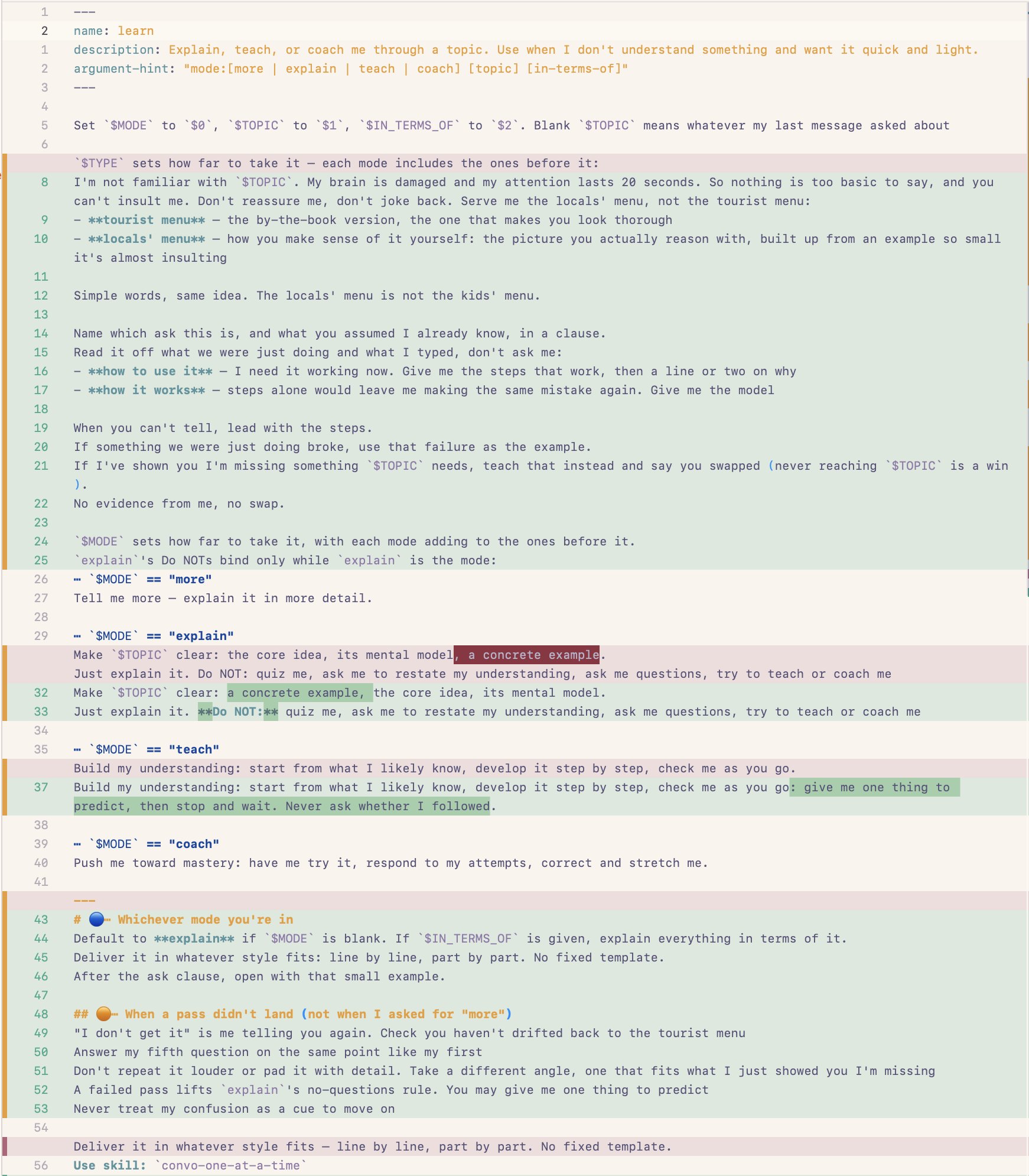
My fav part from Curt's conversation with @davidbessis
- Serve me the local menu, not the tourist version
- Do you want to learn how to use it or how it works
Then embody the transcript

58
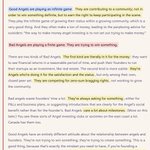
Know who plays finite vs infinite games

No direct experience, but the first thing that came to mind is @Alex_Danco's piece on good vs bad angels
alexdanco.com/2021/01/11/why…

61


But it's key to let go a bit of the past, and see what you can do when you teach agents how you think and work in the other parts
It's time for me to let go how I did some things on the non-dev side too
Thinking back to @saradu's piece on "permanance should be earned" with the chatter on writing code is over
I like to review every diff on skills, but I can't even keep up as I ask agents to improve and adapt them. I can feel the slowness because I want the skill to be perfect
So I think the reminder is, focus on it's output, it's behaviour (not the details inside) when it doesn't earn permanence. That goes for code, skills, design, everything
41
Tom Hosiawa retweeted

Bias towards action. Act quickly to learn faster without being careless.
When I'm building products, I try to default to the smallest responsible step that gives me feedback with some guardrails so that mistakes are cheap to fix and have limited blast radius.
That's helped me ship to millions of users. I've seen a lot of people stall out on their ideas and its happened to me too. On side-projects, I would keep refining them long after they were good enough to try out - it just "needs one more feature", "to load one second faster" etc. But it's easier to reason about something once it’s real and people start using it.
The folks I've seen have the most impact often weren't the smartest in the room. They shipped something small, noticed what broke and shipped a better version as soon as possible. Being wrong early was part of how they learned. Meanwhile there were so many people waiting for certainty that just continued waiting and didn’t ship.

38
83
791
34,596
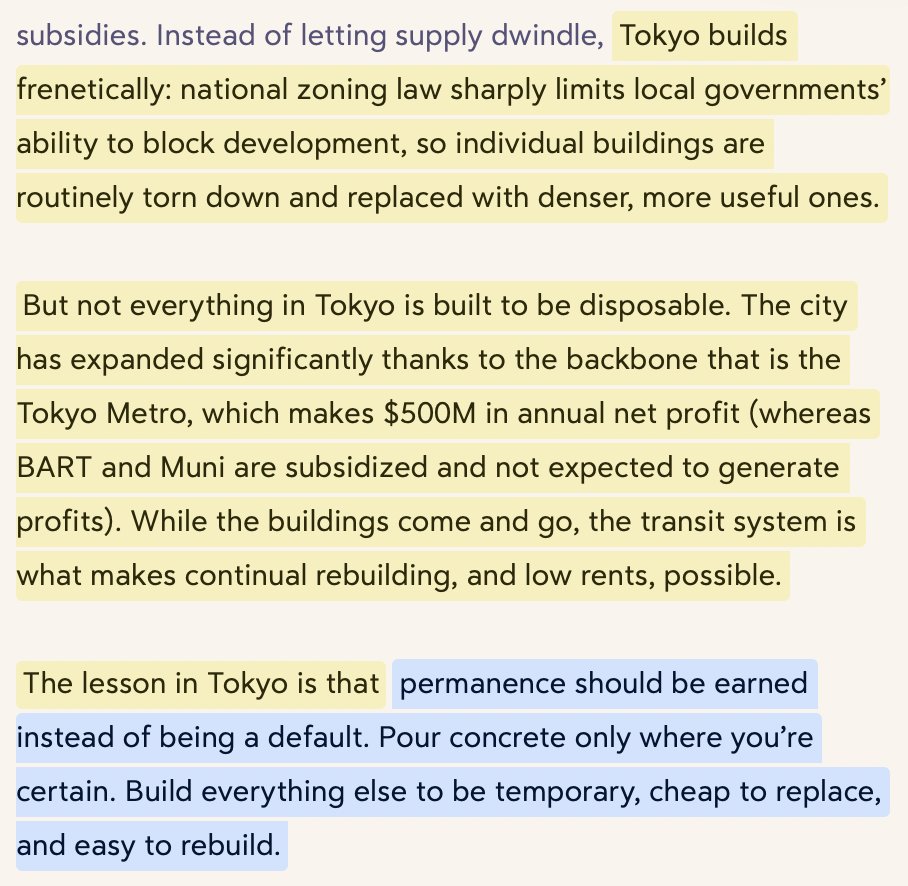
Thinking back to @saradu's piece on "permanance should be earned" with the chatter on writing code is over
I like to review every diff on skills, but I can't even keep up as I ask agents to improve and adapt them. I can feel the slowness because I want the skill to be perfect
So I think the reminder is, focus on it's output, it's behaviour (not the details inside) when it doesn't earn permanence. That goes for code, skills, design, everything
> Permanence should be earned instead of being a default. Pour concrete only where you’re certain.
> Build everything else to be temporary, cheap to replace, and easy to rebuild
1
1
659

Second observation, as soon as i started seeing people posting their own claude creation, the value of all these went to zero
When anybody can create it with no effort, nothing of themselves in it, there’s no value in it. It’s Claude’s creation, not yours


1
336
As they describe, same reason why things won't change in businesses, especially large enterprises for 10-20 years
They're no incentives to accelerate unless you love the thing you do


The problem with all of these AI personal assistant things is that people don’t actually want to do stuff.
You fucking get that right? Do you understand that?
Just like AI tools in the workforce, AI assistants don’t actually abstract decisions for you, they let you accelerate decision making.
So instead of making one decision a day and then lamenting you can’t do more, AI assistants are going to let you make ten decisions a day and act on all of them.
A miracle?
Nah dog, a fucking nightmare. Nobody except type A strivers who need Twitter fodder actually want that.
Let me tell you a story.
When I got back from college I was inspired. If I could take on an elite university with grit and determination, so could everyone I know.
I was all razzed up to get people I know to achieve their potential. What I learned after many years of trying is that absolutely nobody wants to realize their potential.
People want to hang out with friends and complain. That’s how the world has worked for ten thousand years. This weather fucks. Can you believe the cows walked off.
People don’t want enablement. People don’t want you to take all of their excuses.
TV is mindless passive activity. AI assistants are not. They’re telling people that they can achieve more. And people absolutely do not want that.
Let me tell you another story.
Once upon a time I lead a big process overhaul at work and it was great. Two years later I hired a contractor to do something similar. But I personally didn’t want to have to do a bunch of work.
Within a week I knew I fucked in. This contractor kept coming to me with decisions I needed to make. Dude I wanted to not have to think about this.
Again, a helper when you don’t actually want help is a disaster.
None of these AI assistants will take off because people don’t actually want assistants.
124
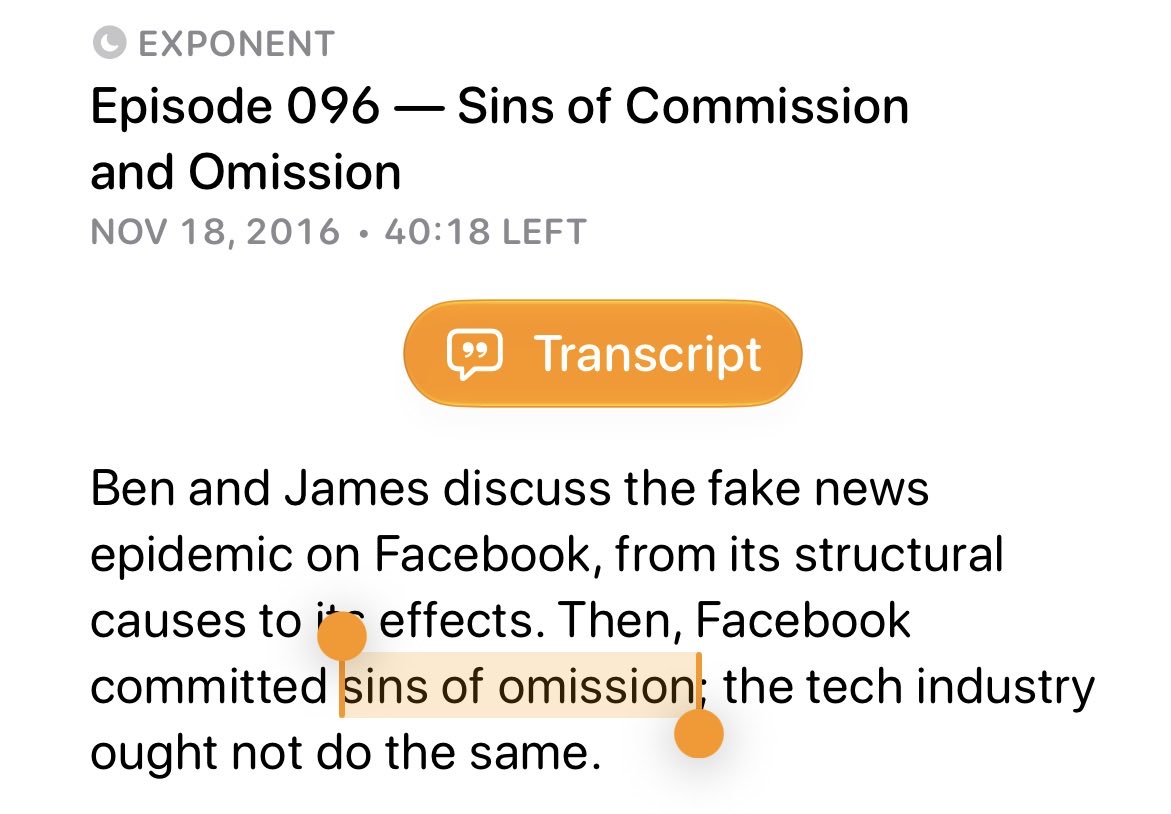

You are NOT a software factory
You should embody yourself into your skills. Study writing and learn how to express how you think and work through words.
You're not meant to create some generic software factory your import
One real example as someone who hadn't really touched programming in 20 years since university. I took rich hickey's talk on simplicity/complecting and taught myself and agents how to think about it
x.lingyaoai.com/thosiawa/status/208063…

120
Lot of truth in this
I’m still pro AI but I have empathy for people impacted and it’ll hit all sooner or later
For those who don’t think so I think are bears on the exponential


1
1,154

My fav part from Curt's conversation with @davidbessis
- Serve me the local menu, not the tourist version
- Do you want to learn how to use it or how it works
Then embody the transcript

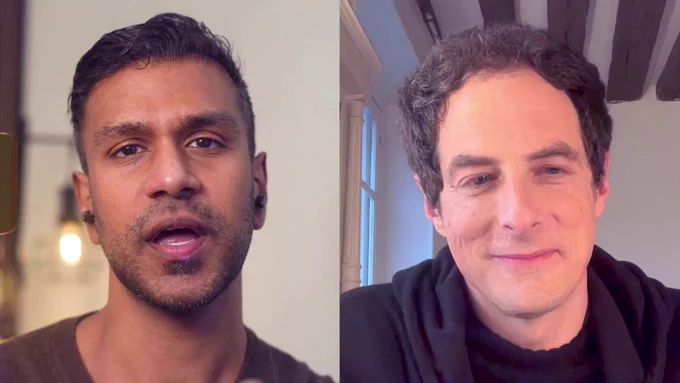
What is mathematics, really? Mathematician David Bessis joins me to argue that math isn't about numbers in a Platonic realm or a meaningless game of symbols—it's a cognitive technology for rewiring your brain. We explore why the official definitions of mathematics have been unresolved for 2,300 years, why understanding something means finding it obvious, and how the gap between a beginner and Terence Tao looks less like genetic destiny and more like compound interest on intuition. When asked what mathematics fundamentally is, his answer cuts through millennia of philosophy: it's what happens in your head when you pretend something is true until it feels real.
1
171
Tom Hosiawa retweeted

A free, open-source 12MB Photoshop alternative just dropped.
This is amazing and unsettling. Computer use has rendered industrialised app cloning possible with relative ease, this is the new web scraping. I suspect apps like Photoshop will protect against computer use soon much like we have DRM for games and movies, although it's probably already too late. This is what happens when paradigm-changing technology evolves so fast it evades all friction with the law.
Most users only need the most common 5-10% of Photoshop's features.
However, before we get too excited, Photoshop is more than 1,000 applications built into one. It's bloated and slow as hell, but (miraculously) it works. All of the complexity lives on the long tail. Extrapolating that it's possible to implement the full version of current Photoshop using AI frankly misunderstands the complexity of Photoshop. It's not that it would be impossible to implement (or partially so) with AI, but it would still take around 5 dedicated expert years and cost around 20 million dollars in frontier token costs alone assuming the prompter had deep enough conceptual knowledge of Photoshop. It's not a given that you would even make that money back assuming it was implementable in a robust/performant way with today's economics.
Same deal with UnrealEngine, Davinci Resolve, Blender and other advanced professional software, only they are all even more sophisticated than Photoshop.
However, there has never been more uplift to build tooling, or proxy tooling for specific purposes, and this can often be done by a single technical person in a short span of time and a handful of Pro subscriptions.
Also, missed opportunity to implement agentic/learning Photoshop with a CLI interface 😆

I built a Photoshop-like image editor. It’s called Compositor.
robbietilton.com/compositor
I originally built it for myself to get off my Adobe subscription, but decided to release it for free and make it open source. It has all the essential tools I need for compositing, with none of the BS.
I know this workflow is kind of archaic in 2026, but I’m still using it until AI can actually get pixel-perfect on some of the details.
The entire app is 12MB. Photoshop is 6,455MB on my machine.

12
5
58
8,559
Great read!

I interviewed Mark Carney for a job.
It was 2021. We were looking to bring in a board member or executive who could help us think about entrepreneurship in the context of the global economy.
I was asked to interview a guy named Mark. I Googled him. He had a decent CV.
In our call after brief introductions, he jumped straight in and said, “I see on Strava that you’re a runner and you live in...” It threw me off a bit. He had clearly done his homework. Borderline stalking. We talked about running for a while. He was good at small talk. He casually mentioned that he runs marathons now and then.
Mental note: he does his homework. Also, is he distracting me so I do not get to my questions? I started worrying he would try to schmooze me instead of getting into anything substantive.
In my defence, I had done some homework too. I had not stalked him on social media, but I had read several articles he had written. I learned that he leaned strongly globalist and believed that most of our challenges do not respect borders and will only be solved collaboratively.
I wanted to see if he could argue against his own position. More specifically, I asked when countries should invest in self-reliance. For context, I explained how, in software, we have learned that purely centralized systems fail in obvious ways. But overly distributed systems fail too, when small issues propagate across too many dependencies.
I asked whether societies behave the same way. Are we sometimes too decentralized? When should countries accept less efficiency and invest in more centralization or self-reliance?
He smiled. I could not tell whether he thought the question was childish or whether I had annoyed him. Then he broke the silence and said, “This is a great parallel. Give me a second to think about it.”
We ended up having a great conversation. That said, it took him a lot of words to make his point. Professional talker.
He liked the exercise. I could tell he had spent so long defending global collaboration that he had not fully prepared for this angle. I did not know it at the time, but he was in the middle of writing Value(s), which is essentially an ode to global cooperation.
We went over time. It did not faze him. He cared about finishing the discussion. At that point he was improvising, and it felt natural and fun. It was a genuinely thoughtful discussion. I learned a lot.
In the end, he did not join us. But we all wanted him to.
When I see him in his current gig, a small part of me laughs that I might have helped warm him up.
The more I think about that conversation, the clearer it becomes that he probably did not want his current Prime Minister role. Not in the way people want promotions or titles. Some people spend a lifetime preparing for problems they hope never arrive. When the moment shows up anyway, they step in. Not because it is appealing, but because it is necessary.
This just happened to be his moment.
1
205